



|
Getting your Trinity Audio player ready...
|
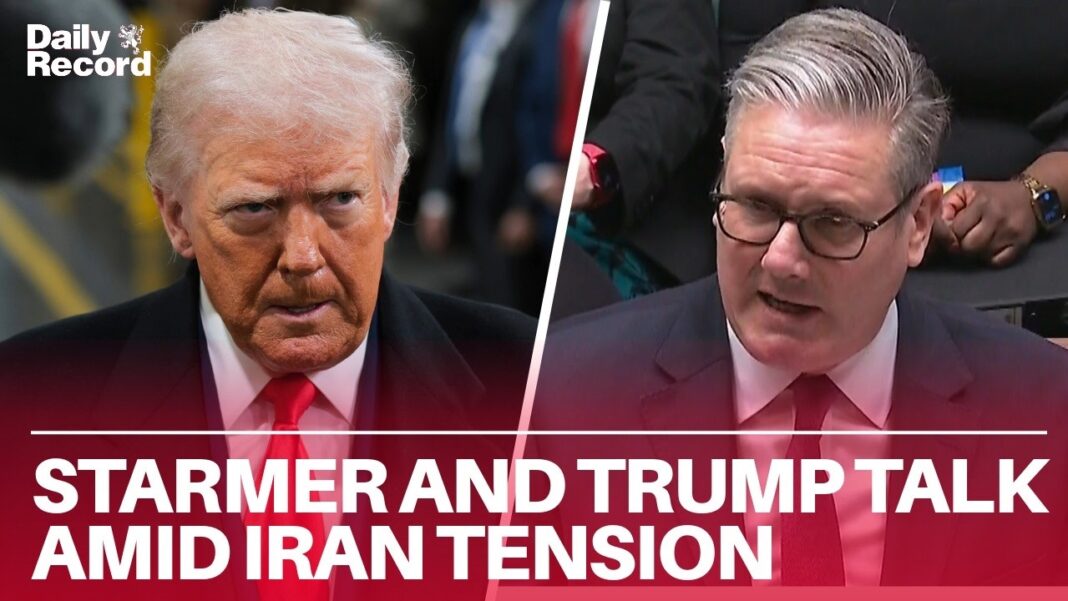
Trump Rebukes U.K.’s Starmer Over Iran War Posture as Transatlantic Tensions Surface Amid Middle East Conflict
By: Fern Rosenblatt
A rare and pointed diplomatic dispute has emerged between Washington and London as President Donald Trump sharply criticized British Prime Minister Keir Starmer for what he described as a belated and unnecessary effort by the United Kingdom to deploy military assets to the Middle East following American and Israeli strikes against Iran. The exchange has revealed a widening divergence in strategic outlook between the two long-standing allies at a moment when the regional conflict continues to reshape global security dynamics.
According to a report by Fox News Digital, Trump delivered the criticism in a statement posted on his Truth Social platform on Saturday, expressing frustration that Britain appeared to be considering a more robust military presence in the region only after the United States had already achieved what he characterized as decisive military success.
“The United Kingdom, our once Great Ally, maybe the Greatest of them all, is finally giving serious thought to sending two aircraft carriers to the Middle East,” Trump wrote. In remarks cited by Fox News Digital, the president added that such a deployment would be unnecessary at this stage of the conflict. “That’s OK, Prime Minister Starmer, we don’t need them any longer — but we will remember. We don’t need people that join wars after we’ve already won.”
Trump’s comments followed reports that Britain’s Ministry of Defense had placed one of the country’s two aircraft carriers on heightened readiness at the naval base in Portsmouth, preparing it for possible deployment to the Middle East as tensions with Iran intensified. According to British media reports referenced by Fox News Digital, the carrier could be dispatched if the security situation in the region deteriorates further.
The Royal Navy destroyer HMS Dragon has also reportedly been positioned in Portsmouth and is awaiting departure for Cyprus, where it would support regional defense operations. British fighter jets are already operating over several key locations—including Jordan, Cyprus, and Qatar—as part of what London describes as a defensive posture aimed at protecting allied interests and monitoring developments in the conflict.
Despite these preparations, Prime Minister Starmer has emphasized that the United Kingdom has not participated directly in the initial wave of strikes carried out by the United States and Israel against Iranian military and nuclear infrastructure. Instead, Starmer has framed Britain’s involvement as limited to defensive measures and logistical support.
In a national address cited by Fox News Digital, Starmer condemned what he called “indiscriminate” Iranian attacks in the aftermath of the American strikes. He argued that the most effective way to neutralize the threat posed by Iran’s missile arsenal is to destroy the weapons systems at their source.
“The only way to stop the threat is to destroy the missiles at source,” Starmer said, explaining that Britain had agreed to allow the United States to use certain British bases for limited operational purposes. However, he stressed that London’s participation would remain carefully circumscribed.
Starmer has repeatedly underscored that Britain intends to avoid direct involvement in offensive military operations against Iran unless there is a clear legal and strategic justification. The prime minister has also emphasized the importance of diplomacy and international law in addressing the Iranian nuclear issue.
Speaking before Parliament earlier in the week, Starmer warned against repeating the mistakes of previous conflicts in the Middle East. According to comments reported by Fox News Digital, he referenced the controversial legacy of the Iraq War when outlining his government’s cautious approach.
“We all remember the mistakes of Iraq, and we have learned those lessons,” Starmer told lawmakers. “Any U.K. actions must always have a lawful basis and a viable, thought-through plan. This government does not believe in regime change from the skies.”
The prime minister’s remarks reflected a longstanding position within British foreign policy circles that emphasizes negotiated settlements and multilateral diplomacy. Starmer reiterated that London continues to support a diplomatic solution under which Iran would abandon its nuclear ambitions in exchange for international engagement.
“The longstanding British position is that the best way forward for the regime and the world is a negotiated settlement with Iran where they give up their nuclear ambitions,” he said.
Yet Trump’s public rebuke suggests that Washington views Britain’s cautious stance with increasing frustration. According to the Fox News Digital report, the president also expressed disappointment in a separate interview with the British newspaper The Telegraph, where he complained that Starmer had taken too long to authorize the use of British bases for American military operations.
Trump’s frustration reflects broader tensions over the pace and scope of Western responses to the Iranian threat. The United States and Israel launched their coordinated campaign against Iran on Feb. 28, targeting key elements of the country’s nuclear program and military infrastructure. Since then, American officials have claimed significant success in degrading Iran’s missile capabilities and strategic assets.
Within the White House, the campaign has been portrayed as a decisive blow against Tehran’s ability to threaten regional stability and pursue nuclear weapons development. Trump has repeatedly asserted that the operation has already achieved many of its primary objectives.
In that context, Trump’s remarks about Britain “joining wars after we’ve already won,” appear to reflect a belief that the conflict’s outcome is largely settled.
Nevertheless, the situation in the Middle East remains volatile. Iran has continued to launch retaliatory drone and missile strikes against Israeli and American targets in the region, while allied forces have maintained heightened alert levels across several countries.
British defense officials argue that the deployment of naval and air assets is intended to deter further escalation rather than to participate directly in offensive operations. The Royal Navy’s potential carrier deployment would likely focus on surveillance, intelligence gathering, and the protection of shipping lanes and allied installations.
Starmer has framed his approach as one of steady leadership amid regional chaos. In remarks highlighted by Fox News Digital, he said his priority is ensuring the safety of British citizens while preserving stability.
“While the region has been plunged into chaos, my focus is providing calm, level-headed leadership in the national interest,” Starmer said. “That means deploying our military and diplomatic strength to protect our people.”
The prime minister also emphasized that Britain must remain steadfast in its principles, even in the face of intense geopolitical pressure.
“It means having the strength to stand firm by our values and our principles, no matter the pressure to do otherwise,” he said.
The transatlantic disagreement has already drawn commentary from political figures in Britain. Former Prime Minister Liz Truss publicly sided with Trump, reposting the president’s Truth Social comments on the social media platform X and describing them as both “justified and damning.”
Her endorsement of Trump’s criticism reflects ongoing divisions within British politics regarding the country’s role in global military operations and its relationship with Washington.
For decades, the United States and the United Kingdom have maintained one of the closest strategic partnerships in international affairs. The two nations have fought alongside each other in numerous conflicts, from World War II to the wars in Iraq and Afghanistan.
However, as Fox News Digital has observed in its coverage of the current dispute, the Iran conflict is revealing subtle but significant differences in how the two governments perceive the risks and responsibilities associated with military intervention.
Washington’s approach under Trump has emphasized rapid, decisive military action aimed at dismantling Iran’s nuclear capabilities and weakening the regime’s regional influence. London, by contrast, appears determined to maintain a more cautious posture that prioritizes legal frameworks and diplomatic solutions.
Despite the sharp rhetoric exchanged in recent days, analysts suggest that the underlying alliance between the two countries remains strong. Military cooperation continues through intelligence sharing, logistical coordination, and the use of British bases for American operations.
Whether the public disagreement will have lasting consequences for the transatlantic partnership remains uncertain. For now, the episode underscores the complex diplomatic balancing act facing Western leaders as they navigate a rapidly evolving conflict with global ramifications.
As Fox News Digital has reported, the war with Iran is not merely a regional confrontation but a geopolitical crisis with the potential to reshape alliances, redefine strategic priorities, and test the resilience of long-standing international partnerships.
