



|
Getting your Trinity Audio player ready...
|
“The Decision Has Been Made”: A Gathering Storm as Washington Weighs the Moment for War With Iran
By: Fern Sidman
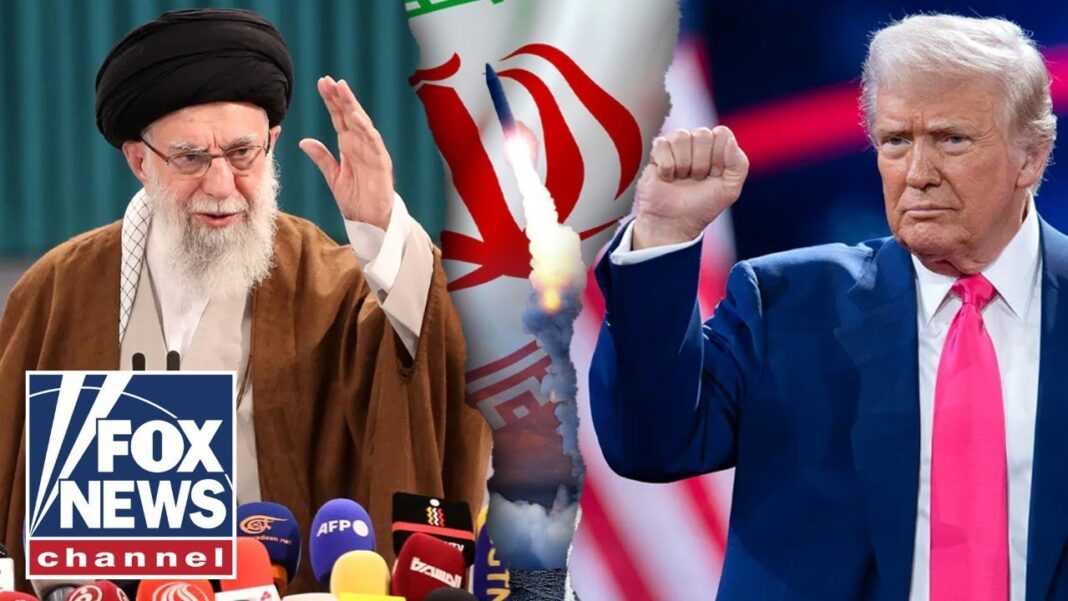
A sense of irreversible momentum is now coursing through Washington, according to a report that has sent tremors across the Middle East and far beyond. The White House has already resolved to undertake military intervention against the Iranian regime, a Western source has claimed, with President Donald Trump and his closest advisers now focused not on whether to strike, but on when and how. As World Israel News reported on Sunday, the alleged shift marks a decisive rupture with years of American policy that sought to restrain Tehran through diplomacy, sanctions, and indirect pressure rather than open confrontation.
The disclosure emerged Friday through Iran International, an anti-regime outlet with deep ties to Iranian dissident networks abroad. Citing an unnamed Western source familiar with high-level deliberations, the report asserts that Washington has moved past the paradigm that long dominated U.S. engagement with Tehran: the pursuit of a “new agreement” designed to curb Iran’s ambitions while avoiding a direct military clash. According to the source, that framework has now collapsed under the weight of Iran’s violent crackdown on dissident protesters earlier this month and the regime’s continued defiance of Western warnings.
The World Israel News report noted that the report paints a picture of an administration that has crossed an internal Rubicon. “The decision has been made. This will happen. The only question is when,” the source was quoted as saying. Such language, if accurate, suggests that discussions inside the Trump White House have narrowed to tactical and political considerations rather than strategic hesitation. The focus, the source emphasized, is now on identifying the optimal window for launching American strikes—balancing operational readiness, regional dynamics, and the broader geopolitical calendar.
The timeline remains fluid. According to the same source, the window of opportunity could open within days, or it could take several weeks to materialize. That ambiguity has only heightened anxiety across the region, particularly in Israel, which is reported to be on full alert in anticipation of potential Iranian retaliation. Israeli defense officials have reportedly been briefed on various scenarios, ranging from limited proxy attacks to a broader regional conflagration should Tehran choose to respond directly or through its network of allied militias.
Multiple reports indicate that President Trump has instructed his advisers to prepare options capable of inflicting decisive damage on Iran’s governing apparatus. Unlike past considerations that focused narrowly on nuclear facilities or specific military assets, the current deliberations appear to aim far higher. The unnamed Western source told Iran International that the primary objective articulated by American planners is nothing less than the collapse of Iran’s ruling structure. Such an ambition, if pursued, would represent one of the most consequential uses of American military power in the Middle East since the early 21st century.
“This time, we will be facing an attack the likes of which have not been seen before,” the source said, describing the prospective operation as “unprecedented.” The World Israel News report has underscored the gravity of that characterization, noting that it implies a scale and intensity surpassing previous U.S. strikes in the region, including targeted operations against terrorist leaders or limited punitive raids. The language evokes a campaign designed to overwhelm Iran’s command-and-control capabilities, cripple its security forces, and shatter the institutional pillars that sustain the Islamic Republic.
For years, critics of Tehran have argued that incremental pressure has only emboldened the regime, allowing it to weather sanctions while brutally suppressing internal dissent. The recent wave of protests inside Iran—met with lethal force by security services—appears to have reinforced that view within segments of the Trump administration. World Israel News has reported extensively on the crackdown, which dissident groups say has left hundreds, possibly thousands, dead and countless others imprisoned or disappeared. For proponents of intervention, these events have crystallized the moral and strategic case for decisive action.
Yet the prospect of war carries profound risks, particularly for Israel. The Western source cited in Friday’s report warned that if Israel is drawn into the conflict—as many analysts expect—the scope of the operation would expand dramatically. In that scenario, the source said, the scale of hostilities would make the 12-day conflict in June appear “very small” by comparison. The World Israel News report highlighted this remark as a stark reminder of Iran’s capacity to unleash its proxies across multiple fronts, from Hezbollah in Lebanon to armed groups in Syria, Iraq, and Gaza.
Israeli officials, speaking anonymously to regional media, have emphasized that the country’s defenses are prepared for a range of contingencies. Air defense systems have been reinforced, reserve units placed on standby, and coordination with U.S. forces intensified. Israeli planners are particularly concerned about the possibility of sustained missile and drone barrages, cyberattacks, and efforts to target critical infrastructure. The memory of previous confrontations, though limited in duration, looms large as a cautionary tale of how quickly escalation can spiral.
Inside the United States, the reported decision has already begun to reverberate through political circles. Supporters of the administration argue that decisive action could finally end decades of instability emanating from Tehran and deliver a blow to a regime they describe as the world’s leading state sponsor of terrorism. Critics, however, warn that an attempt to engineer regime collapse through military force could unleash chaos, empower extremist elements, and entangle the U.S. in another protracted conflict. World Israel News has observed that these debates echo earlier arguments over intervention in the Middle East, though the stakes in Iran—a country of more than 80 million people with a complex social fabric—are arguably even higher.
What distinguishes the current moment, according to analysts cited by World Israel News, is the convergence of internal Iranian unrest and external military pressure. The protests that erupted earlier this month, sparked by longstanding grievances over economic hardship, corruption, and repression, appear to have shaken the regime’s confidence. While Tehran has repeatedly survived such challenges in the past, the scale and persistence of the dissent have fueled speculation that the Islamic Republic is more vulnerable than at any point in recent years.
The Western source’s claim that Washington now seeks the regime’s collapse rather than behavioral change suggests a recalibration of American objectives. For years, U.S. policy oscillated between containment and engagement, with successive administrations debating whether Tehran could be moderated through incentives or deterred through pressure. If the source’s account is accurate, the Trump administration has concluded that neither approach has succeeded—and that only a decisive rupture can alter the trajectory.
Still, the fog of uncertainty remains dense. The White House has not publicly confirmed the report, and officials have declined to comment on specific operational plans. As the World Israel News report has cautioned, anonymous sourcing and the high stakes involved demand careful scrutiny. Yet the consistency of the claims with other recent signals—such as heightened U.S. military deployments and increasingly blunt rhetoric from senior officials—has lent the report a measure of credibility among regional observers.
For Iran’s leaders, the prospect of an American assault poses a stark dilemma. A restrained response could be interpreted domestically as weakness, potentially emboldening protesters and internal rivals. An aggressive retaliation, however, risks triggering the very conflagration that Washington appears prepared to unleash. The World Israel News report noted that Tehran’s strategic calculus will likely hinge on its assessment of American resolve and the extent of Israeli involvement.
As the world watches, the question of timing looms large. Days or weeks could separate tense anticipation from open warfare. Markets, diplomats, and military planners alike are parsing every signal, searching for clues about when—or if—the moment will arrive. Regardless of the outcome, the current juncture represents one of the most perilous in recent Middle Eastern history.
If the unnamed source is correct, the era of ambiguity is drawing to a close. The decision, as he put it, has been made. What remains uncertain is whether the coming campaign will indeed achieve its stated aim of collapsing Iran’s governing structure—or whether it will unleash forces that reshape the region in ways no one can fully predict. In the meantime, the world stands on the edge of a precipice, awaiting the moment when deliberation gives way to action and history takes a sudden, violent turn.
