



|
Getting your Trinity Audio player ready...
|
By: Fern Sidman
In the shadow of rising antisemitic violence both in the United States and abroad, Jewish institutions are grappling with the pressing question of how best to secure their congregants. On Tuesday, the Secure Community Network (SCN), widely recognized as the security arm of the organized Jewish community in North America, issued a significant policy report addressing one of the most sensitive aspects of synagogue safety: whether firearms should play a role in worship settings.
The report, titled Weapons at Worship, arrives at a time when synagogues face heightened security anxieties. As VIN News reported on Tuesday, incidents ranging from arson attempts to violent attacks on Jewish individuals and institutions have underscored the fragility of communal safety. Against this backdrop, SCN’s findings are both sobering and pragmatic: firearms, if used at all, must only be incorporated within tightly controlled, highly professional frameworks.
The central thrust of SCN’s recommendations is unequivocal. Firearms are not to be casually introduced into synagogue life by individual members carrying weapons on their own initiative. Instead, the organization insists that if guns are to be present, they must fall under the auspices of a synagogue-sanctioned security team.
“All firearms should be under structured oversight,” the report declares. According to the information provided in the VIN News report, SCN stresses that uncoordinated weapon carrying by congregants increases the risk of tragic accidents, legal liability, and even the erosion of communal trust. The report notes that the very presence of unvetted armed individuals could undermine the carefully cultivated sense of sanctuary that houses of worship are meant to provide.
The SCN recommends that synagogues institute formal security programs, built on careful planning and constant coordination with law enforcement. Firearms should only be entrusted to a select group of vetted members or trained professionals who operate under synagogue authority.
Key recommendations include:
Armed team members must undergo comprehensive training, including regular refresher sessions.
Synagogue leadership must establish clear rules of engagement, ensuring accountability at every stage.
Security teams should maintain active communication with local police departments.
Synagogues must consult attorneys to ensure compliance with both local and federal firearm laws.
As the VIN News report highlighted, SCN also encourages hiring off-duty, retired, or even on-duty police officers when available, noting their expertise and legal standing.
Importantly, SCN clarifies that firearms are by no means required for effective security. Many congregations can bolster safety through non-lethal tools and proactive planning. Pepper spray, tasers, and reinforced entryways provide significant defensive value, especially when paired with threat assessments, surveillance cameras, and emergency drills.
As VIN News has reported in multiple instances, Jewish communities nationwide are turning to layered approaches—trained volunteer guards, security dogs, reinforced perimeters, and low-profile event locations—as means of deterring attackers without necessarily resorting to firearms.
The report cites the example of Magen Am, a Los Angeles-based organization that trains Jewish volunteers for synagogue security. Volunteers complete rigorous initial training followed by mandatory refresher courses, and they operate under strict guidelines. This program, SCN notes, demonstrates that with discipline and oversight, armed civilian teams can contribute effectively to communal safety.
Yet, as the VIN News report pointed out, SCN is equally clear that smaller congregations or those hesitant about firearms need not feel compelled to adopt such measures. Effective security can be constructed through protocols, technology, and partnerships with local authorities.
The urgency behind SCN’s recommendations is underscored by a series of recent incidents that have shaken Jewish communities across the United States.
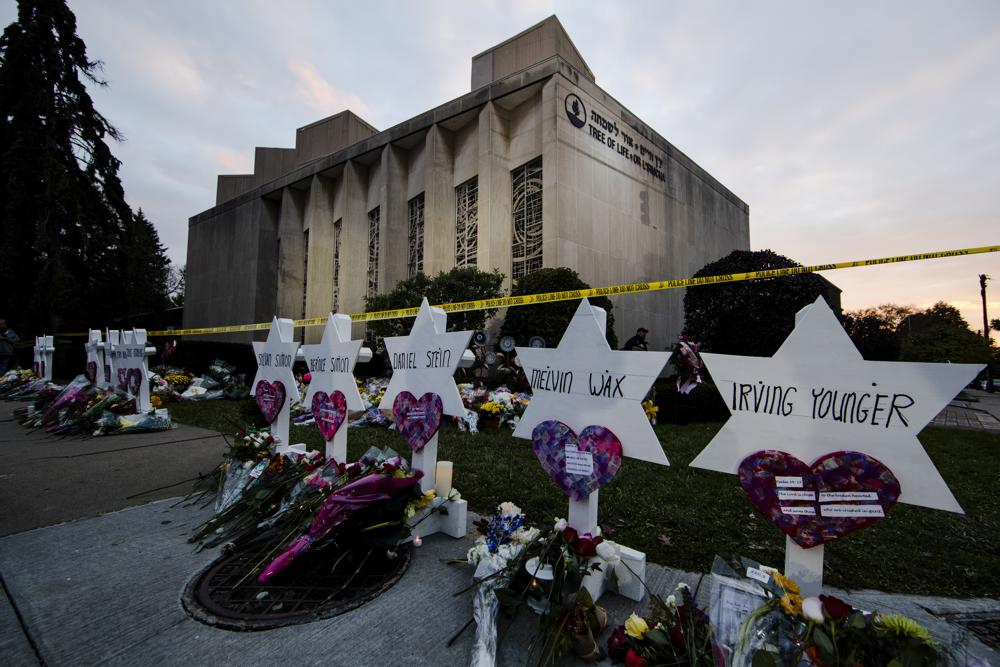
The Pittsburgh Massacre: The 2018 shooting at the Tree of Life Synagogue, which claimed 11 lives, remains the most searing example of synagogue vulnerability. It has reshaped security planning nationwide.
The October 2023 Hamas Attacks: The brutality of Hamas’s cross-border massacre in Israel reverberated throughout Jewish communities worldwide, intensifying fears of copycat violence or retaliatory attacks.
Recent U.S. Incidents: As VIN News has documented, attacks such as the arson attempt on Pennsylvania Governor Josh Shapiro’s home, the killing of Israeli embassy staffers in Washington, D.C., and the firebombing of a synagogue-linked site in Boulder, Colorado, have made clear that Jewish institutions remain a target of anti-Israel and antisemitic animus.
In this volatile environment, SCN’s report emphasizes that careful planning—whether armed or unarmed—is not optional but a moral and practical imperative.
For congregations that do choose to implement firearms, SCN lays out precise operational standards:
Emergency Roles: Each armed team member must have a defined responsibility during crises, reducing confusion.
Regular Drills: Security teams should rehearse emergency scenarios alongside synagogue staff and local police.
Identifiable Markers: Members should wear distinctive clothing or markers to distinguish themselves from worshippers.
Protective Gear: Helmets, vests, and first aid kits should be standard issue.
Communications: Radios or secure phone lines must ensure constant contact during emergencies.
As the VIN News report observed, these recommendations mirror protocols used in law enforcement, reinforcing SCN’s insistence that armed teams must never operate casually or without institutional backing.
Perhaps the most delicate dimension of this debate is the balance between faith and fear. Synagogues are sacred spaces, meant to inspire spiritual connection and communal unity. The visible presence of weapons can create unease among worshippers, potentially shifting the focus from prayer to paranoia.
SCN acknowledges this tension. The report emphasizes that communal trust must guide every decision. Congregations are encouraged to weigh their unique circumstances, consulting both their members and law enforcement, before deciding whether to integrate firearms into their security plans.
SCN’s broader message is that synagogue security cannot rest solely on armed volunteers or hired guards. It must be a communal endeavor. Threat assessments, congregant safety workshops, and drills ensure that every member of the synagogue knows how to react during an emergency.
As VIN News reported, simple measures—such as reinforcing entryways, installing cameras, or ensuring ushers know emergency protocols—can be as valuable as firearms in deterring or mitigating an attack.
The Weapons at Worship report arrives at a pivotal moment for Jewish institutions across the United States. With antisemitism on the rise, communities must adapt proactively rather than reactively. SCN’s guidance does not call for blanket policies but for tailored strategies rooted in discipline, legality, and partnership with law enforcement.
For some synagogues, this will mean building formal armed security teams. For others, it may mean focusing on non-lethal defenses and emergency planning. But for all, the principle is the same: safety must be structured, supervised, and never left to chance.
As the VIN News report emphasized, the threats facing Jewish life today demand vigilance and professionalism. Synagogues, long the beating heart of Jewish identity, must also become fortresses of resilience—not by walling themselves off from the world, but by preparing responsibly for its dangers.
The SCN’s Weapons at Worship report is less a directive about guns than a call for disciplined strategy. It reminds Jewish communities that security is not a matter of individual bravado but of collective responsibility.
In the words of the report, “Individual, informal carrying of weapons creates significant risks to safety, legal accountability, and communal trust.” Synagogues must instead embrace structured oversight, lawful coordination, and comprehensive planning.
As VIN News and other outlets continue to highlight, the threats are real, persistent, and evolving. But so too is the Jewish community’s resolve to protect its sacred spaces. With careful planning, discipline, and unity, synagogues can ensure that prayer and peace remain at the center of Jewish communal life, even in an age of uncertainty.

This is a major step in the right direction. American Jews must be prepared to physically defend themselves with deadly force.