



|
Getting your Trinity Audio player ready...
|
(TJV NEWS) A sharp increase in U.S. military airlift activity toward Europe and the Middle East has drawn attention from open-source analysts and regional observers, prompting speculation about a potential military buildup tied to rising tensions with Iran.
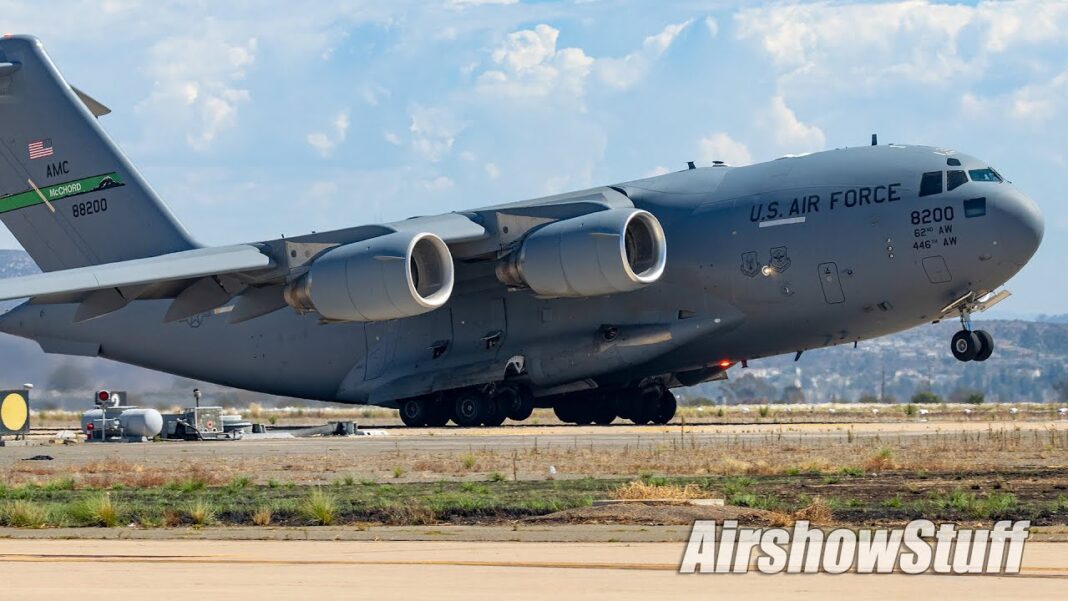
As Zero Hedge pointed out, flight tracking data reviewed by independent monitors shows an unusually large number of U.S. Air Force C-17 Globemaster III transport aircraft either already in the Middle East or en route to the region. One regional watcher remarked that as many as 112 C-17 aircraft have been identified in recent movements, describing the scale as comparable to the U.S. military buildup ahead of the 1991 Gulf War.
According to the open-source intelligence account Armchair Admiral, which cited publicly available flight data on Friday, at least 112 U.S. Air Force C-17s have either arrived in the Middle East or are currently en route. An additional 17 to 18 flights were reported to be in progress. The account also noted increased logistics flights by the Royal Air Force from RAF Marham in the United Kingdom to RAF Akrotiri in Cyprus, along with activity involving U.S. Air Force CORONET operations, which are typically associated with large-scale aircraft deployments.
The surge in airlift activity has been underway since mid-January, according to analysts tracking the movements. The C-17 Globemaster III is one of the U.S. military’s largest transport aircraft, capable of delivering substantial quantities of equipment or large numbers of troops in a single mission. The aircraft has a payload capacity exceeding 170,000 pounds, can operate on short and austere runways as small as 3,500 feet, and has intercontinental range that can be extended through aerial refueling. Its rapid loading and unloading design allows for quick turnaround in high-pressure environments.
The reported military movements come as Washington and Tehran recently concluded an initial round of indirect talks mediated by Oman. While both sides issued cautiously optimistic statements following the discussions, significant disagreements remain. U.S. officials have continued to press Iran to curb its ballistic missile program, a demand Tehran has repeatedly rejected. A second round of talks is expected in the coming days, barring a further escalation.
#USAF United States Air Force / #RAF Royal Air Force – Middle East Activity
7 February 2026 – 1700zA total of 112 U.S. Air Force C-17’s have now either arrived or are en route to the Middle East with a further 17-18 in-progress flights, a number of Royal Air Force logistics… https://t.co/7Twe8eyoP2 pic.twitter.com/7Elg9P7etE
— Armchair Admiral 🇬🇧 (@ArmchairAdml) February 7, 2026
Iranian Foreign Minister Abbas Araghchi has publicly questioned whether the United States is negotiating in good faith. He suggested that the talks could be serving as cover for additional military preparations in the region. “This raises doubts about the other party’s seriousness and readiness to engage in genuine negotiations,” Araghchi said, adding that Iran is closely monitoring developments before deciding whether to continue the talks.
In earlier remarks, Araghchi warned that while Iran lacks the capability to strike U.S. territory directly, any American attack would lead Tehran to target U.S. bases across the region, potentially dragging neighboring countries into a wider conflict. He emphasized that Iran does not seek to attack regional states, but would respond directly to U.S. military assets if hostilities begin.
