



|
Getting your Trinity Audio player ready...
|
Stefanik & Langworthy Introduce Legislation to Strip Funding from Sanctuary Cities Amid Rising Public Safety Concerns
By: Fern Sidman
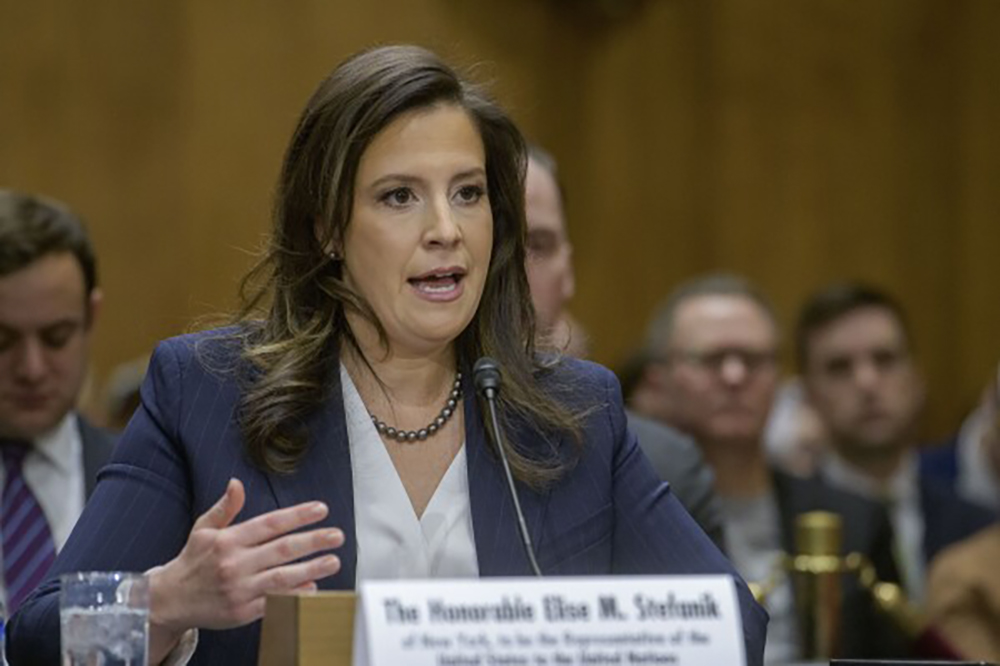
In a renewed effort to confront what they describe as the dangerous consequences of sanctuary city policies, House Republican Conference Chairwoman Elise Stefanik (R-NY) and Congressman Nick Langworthy (R-NY) introduced the Stop Dangerous Sanctuary Cities Act on Tuesday. The legislation, which mirrors a Senate bill previously introduced by Senator Ted Cruz (R-TX), aims to strip federal funding from jurisdictions that refuse to comply with federal immigration enforcement requests.
The move comes amid growing Republican criticism of local and state governments — particularly in blue states like New York and California — that refuse to cooperate with Immigration and Customs Enforcement (ICE). Such jurisdictions, known as sanctuary cities or states, bar local law enforcement from honoring detainer requests that would otherwise allow ICE to take custody of undocumented immigrants charged or convicted of crimes.
“Sanctuary cities in New York State shield criminal illegals while hurting law-abiding citizens,” Stefanik declared in a sharply worded statement announcing the legislation. “Under the failed Far Left Democrat leadership of Governor Kathy Hochul, sanctuary cities incentivize illegal migration into New York State, overrunning social services, driving up housing costs, and reducing wages.”
Stefanik’s remarks reflect a growing frustration among GOP lawmakers who view these jurisdictions as flouting federal law and undermining the rule of law for political gain. Echoing her concerns, Rep. Langworthy warned of the risks associated with sanctuary policies.
“The violence we are seeing happen in LA right now is a cautionary tale for New York,” Langworthy said, referring to recent riots and clashes in Los Angeles that he linked to lax immigration enforcement. “State and local governments MUST comply with federal immigration enforcement efforts, and if they don’t, the Stop Dangerous Sanctuary Cities Act would withhold federal financial assistance from them.”
Langworthy added, “We must stand with our heroic ICE officers, our men and women in blue, and with the American people who cry out for safety and common sense in their local governments.”
The bill not only seeks to eliminate federal financial support for sanctuary jurisdictions, but it also addresses several legal gray areas that Republican lawmakers argue have tied the hands of local authorities.
Under current law, many municipalities argue that they are not legally obligated to comply with ICE detainer requests, often citing constitutional concerns or liability issues. The proposed legislation seeks to resolve these concerns by explicitly stating that local and state law enforcement officers who comply with ICE detainers are deemed to be acting under federal authority.
This provision would offer legal immunity to officers and departments that cooperate with immigration enforcement, shielding them from lawsuits or civil rights claims that may arise from detainment actions taken at ICE’s request.
“This legislation gives local law enforcement the clarity and protection they need,” Stefanik said. “It’s about empowering our police, not handcuffing them.”
At the core of the legislation is a simple proposition: jurisdictions that decline to assist ICE should not receive federal funds. The bill mandates the withholding of certain federal financial assistance — including public safety grants — from sanctuary cities and states.
According to the lawmakers, the logic is rooted in accountability. “Federal tax dollars should not subsidize local governments that openly obstruct federal law,” Langworthy stated. “It’s time for real consequences.”
The bill targets not just passive non-compliance but active defiance. It specifically cites the refusal to honor detainer requests and the deliberate release of individuals ICE seeks to remove as grounds for sanctions.
The legislation enters an already heated national debate on immigration, border security, and the role of local law enforcement in federal operations. Proponents argue that cooperation between levels of government is essential for public safety, particularly in light of violent crimes committed by individuals who were previously in custody and later released due to sanctuary policies.
Critics, including many Democrats and civil rights organizations, view the bill as punitive and politically motivated. They argue that compliance with ICE detainers may lead to violations of due process and could erode trust between immigrant communities and local police.
But supporters of the bill point to what they see as an alarming pattern of avoidable violence. “Across the country, Americans are paying the price for local jurisdictions that shield violent offenders and flout federal law,” Stefanik said. “We’ve seen it time and again — tragedies that could have been prevented if only local officials had done their jobs.”
The introduction of the Stop Dangerous Sanctuary Cities Act follows a series of high-profile incidents that have galvanized the right’s opposition to sanctuary policies. These include cases in which undocumented immigrants with prior arrests or convictions were released from local custody, only to commit further crimes.
Republicans have long argued that such policies jeopardize public safety and reward unlawful behavior. The legislation also aligns with former President Donald Trump’s immigration platform, which made opposition to sanctuary jurisdictions a central theme.
Whether the bill gains traction in the current Congress remains uncertain. With the Senate under Democratic control and President Joe Biden unlikely to support such measures, the act may serve more as a political marker than as imminent policy. Nevertheless, its introduction signals a clear intent by House Republicans to put immigration enforcement front and center in the lead-up to the 2026 midterms.
For now, Stefanik and Langworthy are focused on building momentum for the bill. They are expected to rally support from conservative organizations and law enforcement advocacy groups who have long pushed for stronger ties between ICE and local authorities.
In a political climate sharply divided on immigration, the Stop Dangerous Sanctuary Cities Act reignites a familiar battle — one that pits federal authority and public safety against local autonomy and immigrant advocacy.
As Stefanik concluded, “The American people deserve a government that puts their safety first. This bill is a step toward restoring order, enforcing our laws, and standing up for citizens over criminals.”
