



|
Getting your Trinity Audio player ready...
|
By: Svetlana Pincus
As the United States’ military campaign against Iran enters its second week, President Donald Trump has issued a stark warning that American authorities are closely monitoring potential threats linked to Tehran, including the possibility that Iranian-aligned operatives may already be present within the United States.
The comments, delivered to reporters on Wednesday evening shortly after the president returned to Washington from a political trip to Kentucky, come amid rising domestic security concerns following intelligence warnings about possible Iranian retaliation. According to reporting highlighted by Newsmax, federal agencies are actively investigating potential risks associated with the escalating conflict overseas, particularly as the U.S. continues its offensive against Iranian targets under the banner of Operation Epic Fury.
Trump’s remarks signal that the conflict, while geographically centered in the Middle East, may carry implications for American security at home.
During his exchange with reporters, Trump addressed growing speculation that Iran could attempt retaliatory attacks within the United States.
“I have been [briefed on Iranian sleeper cells], and a lot of people came in through Biden with his stupid open border, but we know where most of them are,” Trump said, according to statements cited by Newsmax. “We got our eye on all of them, I think,” the president added, suggesting that U.S. intelligence agencies are tracking individuals suspected of links to Tehran.
The comments reflect a growing concern among national security officials that Iran—or groups aligned with it—could attempt to strike targets beyond the traditional theaters of conflict. While authorities have not confirmed the presence of operational Iranian sleeper cells in the United States, Trump’s remarks underscore the seriousness with which federal agencies are approaching the possibility.
Trump emphasized that the situation remains under active investigation by federal law enforcement and intelligence agencies. “It is being investigated, but you have a lot of things happening, and all we could do is take them as they come,” he told reporters, according to Newsmax.
The president’s comments suggest that the government is maintaining heightened vigilance as the conflict with Iran intensifies. Security analysts say that such precautions are typical during periods of military confrontation, particularly when dealing with adversaries known to rely on asymmetric tactics.
Iran has historically used proxy groups and covert networks to retaliate against adversaries, making the possibility of unconventional attacks a persistent concern for intelligence officials.
Trump also used the opportunity to defend the ongoing military campaign against Iran, portraying the operation as highly effective. “The war itself is being prosecuted as well as anyone has ever seen,” he said, according to Newsmax.
Operation Epic Fury, the joint U.S.-Israeli effort targeting Iranian military infrastructure and nuclear facilities, began earlier this month following a series of escalating confrontations between Western forces and the Iranian regime. The campaign has included airstrikes on Iranian military installations, missile launch sites, and strategic infrastructure linked to Tehran’s nuclear program.
According to administration officials cited in Newsmax, the operation aims to significantly degrade Iran’s military capabilities and prevent the regime from developing nuclear weapons.
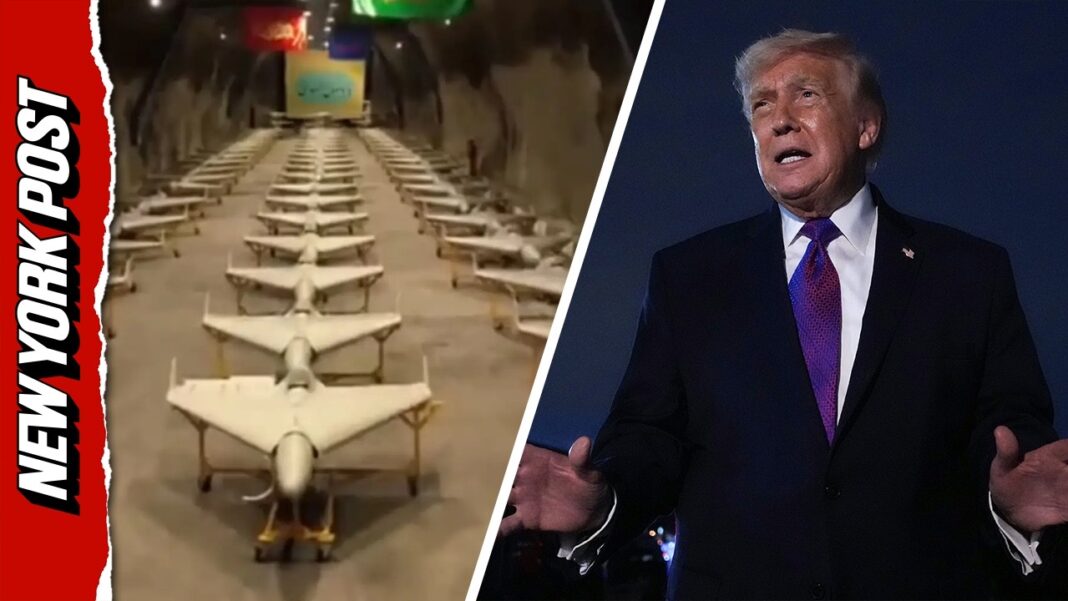
Trump’s comments come on the heels of a warning issued by the Federal Bureau of Investigation (FBI) earlier in the week. The bureau alerted law enforcement agencies about intelligence suggesting that Iran had explored the possibility of launching a drone attack against the United States.
According to information cited by Newsmax, the FBI recently obtained intelligence indicating that Iranian operatives may have considered using unmanned aerial vehicles (UAVs) launched from a vessel off the U.S. West Coast. The potential targets of such an attack were not specified, though the intelligence suggested that locations in California could be among the intended objectives.
The FBI said the alleged plan was linked to the possibility of retaliation if the United States conducted strikes against Iran.
Despite the seriousness of the warning, officials have stressed that the intelligence remains preliminary. “We have no additional information on the timing, method, target, or perpetrators of this alleged attack,” the FBI said in a statement referenced by Newsmax.
The bureau emphasized that the information does not necessarily indicate an imminent threat. However, the warning has prompted federal and state agencies to review security protocols and increase coordination in monitoring potential risks.
Law enforcement officials say such alerts are often issued as a precaution, allowing local authorities to prepare contingency plans in the event that additional intelligence emerges.
The possibility of Iranian retaliation within the United States has raised broader questions about domestic security. Experts note that modern conflict increasingly involves hybrid forms of warfare that extend beyond conventional battlefields. Cyberattacks, drone strikes, and covert operations have become key tools for adversaries seeking to respond to military pressure.
According to analysis cited by Newsmax, Iran has invested heavily in drone technology over the past decade, deploying unmanned systems in conflicts across the Middle East. These capabilities have allowed Tehran to conduct operations at relatively low cost while maintaining plausible deniability.
The potential use of drones launched from maritime platforms represents a tactic that analysts say could bypass traditional air-defense systems.
Trump’s remarks also reignited the political debate over immigration and border security. By linking potential Iranian sleeper cells to what he described as the “open border” policies of the previous administration, the president suggested that vulnerabilities in immigration enforcement could have allowed hostile actors to enter the country.
The comments reflect a broader argument frequently made by Trump and his supporters that lax border controls can pose national security risks. Critics, however, caution that there is currently no publicly available evidence confirming that Iranian operatives have entered the United States through migration channels. Nevertheless, the issue has become part of a wider discussion about how geopolitical conflicts intersect with domestic security policies.
For now, federal agencies appear to be adopting a posture of heightened vigilance rather than alarm. Officials say they are monitoring a wide range of potential threats, including cyberattacks, drone operations, and activities linked to foreign intelligence services.
According to the Newsmax report, the FBI and other security agencies are coordinating with state and local authorities to ensure rapid response capabilities should any credible threat emerge. Security experts say such coordination is essential in an era when attacks can originate from decentralized networks or individuals acting independently.
The concerns surrounding potential domestic threats underscore the broader implications of the war between the United States and Iran. While the conflict’s primary battleground lies thousands of miles away, its consequences could reverberate across multiple domains—from global energy markets to domestic security.
Iran has long demonstrated its willingness to retaliate through indirect means, including cyber operations and support for terrorist groups. As the campaign against Tehran continues, analysts warn that the risk of asymmetric responses may increase.
Despite the warnings, officials emphasize that Americans should not assume an immediate threat is imminent. The intelligence cited by the FBI remains unconfirmed, and authorities stress that such information often requires extensive verification. Nevertheless, the situation illustrates how modern warfare can blur the boundaries between foreign conflict and domestic security.
As Newsmax has reported, federal agencies continue to assess evolving intelligence while maintaining a careful balance between vigilance and public reassurance.
With Operation Epic Fury still underway, the United States now faces a complex challenge: sustaining military pressure on Iran abroad while guarding against potential retaliation at home. Trump’s remarks highlight the dual nature of that challenge. On one hand, the administration remains committed to pursuing its strategic objectives in the Middle East. On the other, it must ensure that the homeland remains secure from any indirect consequences of the conflict.
As the president told reporters, the situation remains fluid and subject to ongoing review. For now, federal authorities appear determined to stay ahead of potential threats—even as the war thousands of miles away continues to unfold. In the words echoed in coverage by Newsmax, the government’s strategy may ultimately come down to constant vigilance: confronting each new development as it arises while ensuring that the security of the United States remains uncompromised.
