



|
Getting your Trinity Audio player ready...
|
Rubio Slaps Sanctions on Palestinian NGOs Over ICC ‘Overreach’ Against Israel
By: Fern Sidman
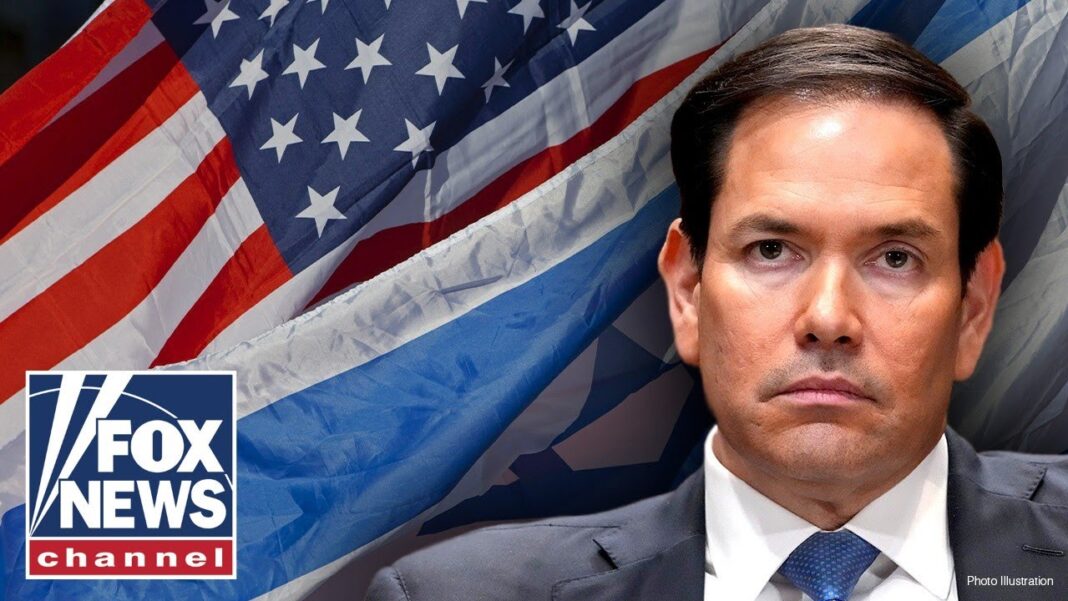
In a sweeping escalation of U.S. policy aimed at shielding Israel from international legal challenges, Secretary of State Marco Rubio announced Thursday that three Palestinian non-governmental organizations (NGOs) — Al Haq, the Al Mezan Center for Human Rights (Al Mezan), and the Palestinian Centre for Human Rights (PCHR) — have been formally designated under Executive Order 14203, which targets entities complicit in supporting actions of the International Criminal Court (ICC).
The sanctions, unveiled in a written statement, shine a proverbial spotlight on Washington’s deepening resolve to confront what Rubio called the ICC’s “politicized agenda” and its attempts to prosecute Israeli nationals without Israel’s consent. The move marks one of the most pointed U.S. rebukes yet against efforts by the ICC to assert jurisdiction over Israeli officials and soldiers for alleged war crimes in Gaza and Judea and Samaria.
“Today, I am designating three foreign NGOs — Al Haq, Al Mezan, and PCHR — pursuant to Executive Order 14203, ‘Imposing Sanctions on the International Criminal Court,’” Rubio declared. “These entities have directly engaged in efforts by the ICC to investigate, arrest, detain, or prosecute Israeli nationals, without Israel’s consent.”
The Secretary of State accused the organizations of providing the ICC with legal and evidentiary support aimed at undermining Israel’s sovereignty and criminalizing its national security operations.
“This administration has been clear,” Rubio continued. “The United States and Israel are not party to the Rome Statute and are therefore not subject to the ICC’s authority. We oppose the ICC’s politicized agenda, overreach, and disregard for the sovereignty of the United States and that of our allies.”
The sanctions derive their legal force from E.O. 14203, which empowers the U.S. government to impose financial and travel restrictions on individuals or entities that assist or support the ICC in investigating or prosecuting American or allied personnel. Initially crafted to deter attempts to prosecute U.S. service members in Iraq and Afghanistan, the order has now been weaponized to protect Israel against ICC scrutiny.
Under Section 1(a)(ii)(A) of the order, the U.S. Treasury will freeze any U.S.-based assets of Al Haq, Al Mezan, and PCHR, and American individuals or corporations are prohibited from doing business with them. The sanctions could also trigger secondary effects, with banks, insurers, and multinational firms steering clear of any dealings with the targeted groups for fear of running afoul of U.S. law.
The three NGOs singled out by Washington have long positioned themselves as watchdogs of alleged Israeli human rights violations:
Al Haq, based in Ramallah, has produced extensive dossiers accusing Israel of war crimes and apartheid policies, and has worked closely with the ICC’s prosecutor in recent years.
Al Mezan, headquartered in Gaza, has focused on documenting alleged civilian casualties and the impact of Israeli military operations, often coordinating with international NGOs to amplify its claims.
PCHR, also Gaza-based, has consistently sought international legal remedies against Israel, advocating for the prosecution of Israeli military and political leaders abroad.
Israeli officials have for years accused these organizations of serving as legal and propaganda arms of Hamas and other terror groups, charges the groups deny. Now, Washington’s decision to sanction them signals a dramatic alignment with Israel’s position.
The sanctions announcement reflects a bipartisan cornerstone of U.S. foreign policy: that the ICC has no jurisdiction over non-signatories to the Rome Statute, the treaty that created the Court in 1998. Neither Washington nor Jerusalem ratified the treaty, insisting that their judicial systems are capable of handling alleged misconduct independently.
Rubio’s language echoed longstanding U.S. objections. “The ongoing actions of the ICC set a dangerous precedent for all nations,” he said. “We will actively oppose actions that threaten our national interests and infringe on the sovereignty of the United States and our allies, including Israel.”
The Secretary of State added that “significant and tangible consequences” would continue to follow for any groups complicit in what he described as the ICC’s “overreach.”
The immediate effect of the designations will be financial. Al Haq, Al Mezan, and PCHR rely heavily on foreign grants and donations from European governments, private foundations, and international aid agencies. With U.S. sanctions in place, major financial institutions may now balk at facilitating transfers, effectively cutting the groups off from global funding streams.
Beyond the financial hit, the symbolic weight of U.S. sanctions may stigmatize the organizations, complicating their relationships with European partners, many of whom are already under pressure from Israel to stop funding groups tied to ICC activism.
The sanctions come as the ICC is reportedly weighing arrest warrants against senior Israeli officials over the war in Gaza, a move Israel has denounced as judicial overreach. Israeli Prime Minister Benjamin Netanyahu has vowed to resist any attempt by The Hague to “handcuff Israel for defending itself,” while senior U.S. officials have promised to use “every tool at our disposal” to block ICC actions.
By striking directly at NGOs feeding the Court with evidence, Washington is signaling it is willing to escalate the fight beyond rhetoric, placing real economic pain on actors it sees as complicit.
The move also aligns with President Trump’s administration’s broader policy of tying foreign assistance and diplomatic engagement to staunch support for Israel. It mirrors past Trump-era measures, including cutting aid to UNRWA, the UN’s Palestinian refugee agency, over verifiable accusations of corruption and Hamas ties.
For the ICC, the sanctions highlight the peril of pursuing cases against powerful states and their allies. Already criticized for uneven enforcement and politicization, the Court now faces the prospect of operating under the shadow of economic and diplomatic retaliation from the United States.
Legal experts note that the Court’s credibility could suffer if it is perceived as bowing to geopolitical pressure, while defiance could trigger even harsher U.S. sanctions and further isolation.
While the designations may appear technical, their implications are profound. By sanctioning three of the most prominent Palestinian NGOs engaged with the ICC, Washington has put the international community on notice: support Israel’s adversaries at The Hague, and you may face U.S. consequences.
The sanctions are also likely to reverberate in domestic U.S. politics. Supporters of the move will hail it as a firm defense of Israel and a principled stand against a clearly politicized court. Detractors will argue it represents an attack on human rights advocacy and further erosion of U.S. credibility in supporting international justice.
For Secretary Rubio, however, the rationale is clear: “We will not allow the ICC to erode the sovereignty of the United States or our closest allies. Israel’s right to defend itself must not be criminalized, and any entity that assists in such efforts will be held accountable.”

This is obviously a tongue-in-cheek statement:
“Legal experts note that the Court’s credibility could suffer”. WHAT CREDIBILITY? The ICC has always had ZERO CREDIBILITY!