



|
Getting your Trinity Audio player ready...
|
By: Jerome Brookshire
A newly uncovered cache of declassified documents has unveiled a covert network of Western intelligence agencies that supplied critical support to Israel’s Mossad in executing a decades-long campaign of targeted assassinations following the 1972 Munich massacre. As reported by The Guardian (UK), this previously unknown collaboration—conducted with no parliamentary oversight or public knowledge—enabled Israel to eliminate Palestinian operatives across Europe, raising significant ethical, legal, and political questions.
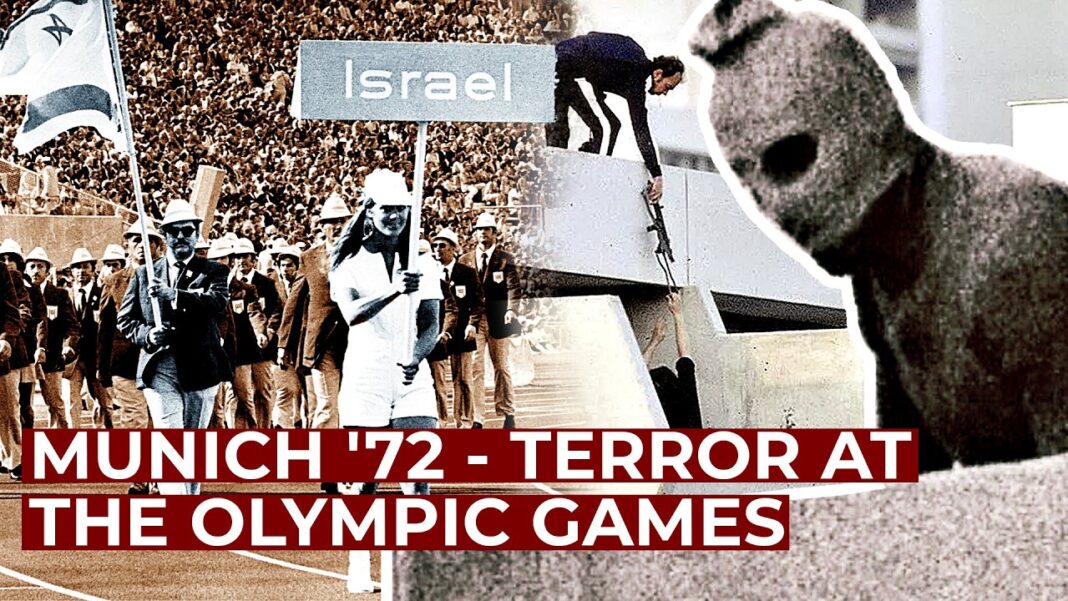
According to The Guardian, the clandestine effort emerged through a secret communication channel known as “Kilowatt,” established in 1971. The system allowed 18 intelligence agencies—including those of the U.S., UK, France, West Germany, Switzerland, and Italy—to share raw intelligence with each other and with Mossad. The timing of this intelligence-sharing was pivotal: it occurred just months before the massacre of 11 Israeli athletes by Palestinian terrorists from the Black September Organization (BSO) at the Munich Olympic Games.
Following Munich, Mossad launched what became known as Operation Wrath of God, a targeted campaign to hunt down and eliminate individuals linked to the attack and to other assaults against Israeli interests. Though the mission inspired Steven Spielberg’s 2005 film Munich, the real-world operations were far more complex and, as the report in The Guardian noted, benefited from significant international cooperation.
Dr. Aviva Guttmann, a historian at Aberystwyth University, discovered encrypted Kilowatt cables in Swiss archives, providing the first definitive evidence of foreign intelligence contributions to Israel’s assassination campaign. As The Guardian report explained, these cables contained a wealth of granular information, including the identities of terrorists, their travel routes, safe houses, vehicles, and even details of previous attacks.
According to Guttmann, “They were even sharing the results of their own investigations into the assassinations with the agency – Mossad – which was most likely to have done them.” Her research, cited extensively in The Guardian report, confirmed that Western intelligence services not only provided the foundation for many Mossad operations but also analyzed the aftermath of killings likely executed by Israel.
Her work is set to be published in a forthcoming book that will likely provoke renewed debate about the ethical boundaries of covert alliances.
One of the earliest casualties of this campaign was Wael Zwaiter, a Palestinian intellectual working for the Libyan embassy in Rome. He was gunned down in the lobby of his apartment building weeks after Munich. Although defenders long claimed Zwaiter was innocent, Kilowatt cables cited by The Guardian show that Western agencies had repeatedly identified him as an arms supplier for the BSO.
Another target, Mahmoud al-Hamshari, the PLO’s representative in France, was assassinated in Paris in December 1972. The Kilowatt records described him not only as a diplomat but also as someone who allegedly recruited and funded terrorist cells—again, information passed along to Mossad.
A more explosive revelation comes from the June 1973 killing of Mohamed Boudia, a seasoned operator with ties to the PFLP and BSO. The Guardian reported that Swiss authorities played a direct role in facilitating Mossad’s successful strike on Boudia, who had orchestrated a string of violent plots, including attempted bombings in Israel and attacks on Jewish émigrés from the Soviet Union.
Speaking to The Guardian, Guttmann explained, “I’m not sure the Israeli [assassination] campaign would have been possible without the tactical information from the European intelligence services. Certainly, it was of huge benefit. But it was also very important for the Mossad to know that they had that tacit support.”
Golda Meir, Israel’s prime minister at the time, reportedly demanded solid proof before authorizing each hit. According to the report in The Guardian, much of that proof originated with Western allies via Kilowatt. This strategic partnership allowed Mossad to act swiftly and decisively, while Western agencies remained comfortably behind the curtain.
One of the most infamous missteps in Operation Wrath of God, as the campaign came to be known, also ties back to this network. In 1973, Mossad agents, relying on the only known image of BSO leader Ali Hassan Salameh—supplied by British MI5—mistakenly assassinated a Moroccan waiter in Lillehammer, Norway. The botched operation resulted in the arrest of several Israeli operatives and led Israeli Prime Minister Golda Meir to officially shut down the program. Nevertheless, The Guardian report noted, Western intelligence agencies quietly continued supplying Israel with actionable intelligence well after the official closure.
All of these assassinations were tied together through intelligence that flowed via the Kilowatt network—an intelligence-sharing system operating entirely in the shadows. As The Guardian report stressed, the existence of Kilowatt was kept hidden from legislative bodies, meaning no parliamentary or congressional oversight was exercised in decisions that led directly to lethal force on foreign soil.
The deeply collaborative nature of these operations remained unknown for decades. Now, as Guttmann revealed to The Guardian, even Israeli agents involved in the campaign were often unaware of the sources behind their targeting data. Yet the confidence in the information remained unshaken. “We just knew the intel was solid,” said one former Mossad operative.
Meanwhile, Palestinian operatives from the BSO and PFLP viewed the period as a tit-for-tat “war of the spooks.” Speaking to The Guardian in a previous interview, former members of Palestinian terrorist networks acknowledged that while Israel’s tactics were brutal and highly effective, they retaliated whenever possible. One Israeli agent was killed in Madrid; another was left seriously injured in Brussels. These bloody reprisals underscored the scale and intensity of the covert war playing out in European capitals.
The implications of these historical revelations are not confined to the past. Guttmann draws a direct line between the Kilowatt-era operations and present-day intelligence dynamics, especially in light of the ongoing conflict in Gaza. Following the October 7, 2023 Hamas-led attack on Israel—which left 1,200 Israelis dead and over 250 hostages taken—Israel launched an aggressive military response. According to the report in The Guardian, over 50,000 Palestinians have since been killed, the majority of whom are believed to be civilians.
“This history matters now more than ever,” Guttmann told The Guardian. “When it comes to intelligence-sharing between services of different states, oversight is very difficult. International relations of the secret state are completely off the radar of politicians, parliaments or the public. Even today there will be a lot of information being shared about which we know absolutely nothing.”
Recent Israeli operations bear striking resemblance to the past. Mossad is widely believed to have orchestrated the assassination of Hamas political leader Ismail Haniyeh in Tehran last year, and Israeli forces have also eliminated top Hamas commanders in Gaza and Beirut. The past year has seen the systematic dismantling of Hezbollah’s leadership structure, with the killing of its veteran commander and other senior officials.
The revelations have prompted difficult questions about the ethical boundaries of intelligence work, particularly when it involves covert support for extrajudicial killings. While defenders argue that Mossad’s actions were retaliatory and defensive, critics see the Kilowatt revelations as evidence of systematic international complicity in state-sponsored assassination.
The full implications of this exposé, reported by The Guardian, continue to reverberate through the intelligence community, historical scholarship, and diplomatic circles alike.
