



|
Getting your Trinity Audio player ready...
|
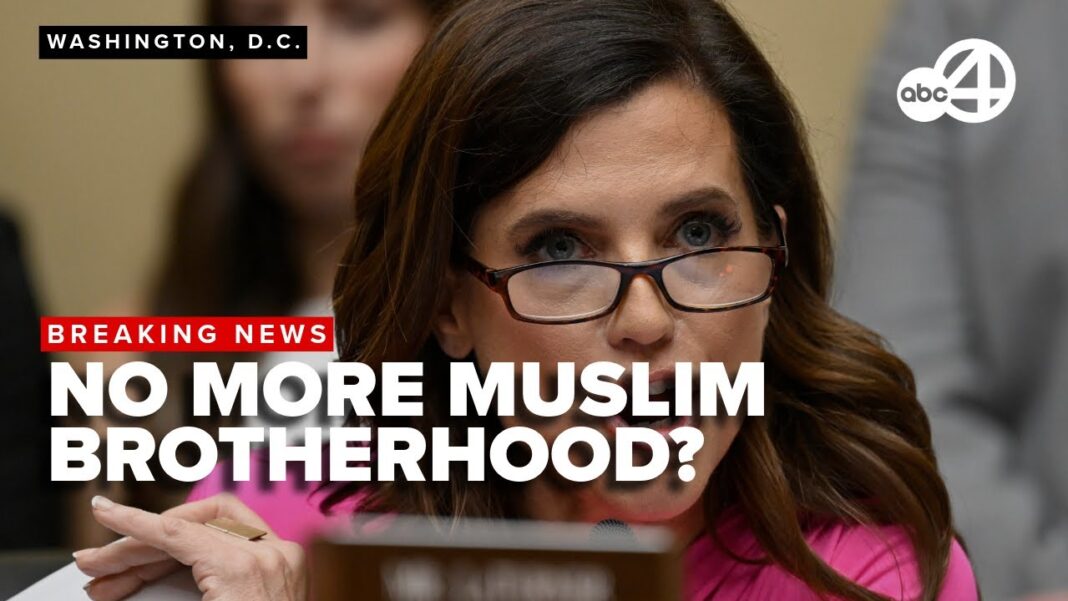
Rep. Nancy Mace Introduces Bill to Designate Muslim Brotherhood as a Foreign Terrorist Organization
By: Fern Sidman
In a move poised to ignite fierce debate across foreign policy and national security circles, Rep. Nancy Mace (R-SC) announced Tuesday the formal introduction of the Muslim Brotherhood is a Terrorist Organization Act—a bill aimed at designating the Muslim Brotherhood as a Foreign Terrorist Organization (FTO) under U.S. law. As reported by abcnews4.com, the legislation seeks to apply sweeping sanctions, travel bans, asset freezes, and enhanced law enforcement measures to curtail the Brotherhood’s influence both domestically and abroad.
Mace’s legislative move comes amid rising calls in Washington for a more assertive stance against Islamist groups, especially in the wake of a violent June attack in Boulder, Colorado. That incident saw a crowd of pro-Israel demonstrators attacked with incendiary devices allegedly by Mohamed Sabry Soliman, an Egyptian national who reportedly shouted “Free Palestine” during the assault. As the report at abcnews4.com noted, the attack has prompted widespread condemnation and reinvigorated scrutiny of radical Islamic networks operating in the United States.
“The Muslim Brotherhood doesn’t just support terrorism, it inspires it,” Mace said in her Tuesday announcement. “President Trump was right when he said the Muslim Brotherhood is a threat to global security, and it’s long past time we call them what they are: terrorists.”
According to a release from Mace’s office, the bill would authorize the Department of State to designate the Muslim Brotherhood as an FTO, triggering an array of powerful tools traditionally reserved for the likes of al-Qaeda and ISIS. Among these are blocking assets linked to Brotherhood-affiliated entities, preventing members from entering the United States, empowering Treasury to halt financial flows that support Brotherhood-linked operations and prioritizing intelligence-sharing and surveillance targeting the Brotherhood’s U.S.-based affiliates.
As the abcnews4.com report highlighted in its coverage, the bill represents a sharp turn in America’s treatment of the nearly century-old Islamist organization, which many Western governments have historically engaged with as a political actor rather than a violent extremist group.
“This bill marks a serious shift in U.S. foreign policy,” Mace’s office emphasized, “away from appeasement and back toward the strong, clear-eyed national security vision championed by President Trump: Put America First. Confront Islamic extremism. Defend our people.”
This is not the first time the idea of designating the Muslim Brotherhood as an FTO has surfaced in Washington. During the Trump administration’s first term in 2019, the White House explored legal pathways to pursue the designation. Although internal debate and bureaucratic hurdles ultimately stalled the effort, the issue remained a priority for Trump-aligned national security officials.
Senator Ted Cruz (R-TX), another vocal supporter of the designation, announced this month he would reintroduce a “modernized version” of the Muslim Brotherhood Terrorist Designation Act in the Senate. As abcnews4.com has reported, Cruz and Mace are closely aligned in their objectives: disrupt the Brotherhood’s influence in U.S. policy circles and cut off its international network.
“The Muslim Brotherhood has used the Biden administration to consolidate and deepen their influence,” Cruz charged. “We need to call them what they are and dismantle their reach—domestically and abroad.”
The move by Mace and Cruz mirrors growing momentum abroad to curtail the Brotherhood’s political operations. In April, as covered by the Associated Press and echoed in the report at abcnews4.com, Jordan announced a sweeping ban on the Muslim Brotherhood, officially closing legal loopholes that had allowed the group to operate via the Islamic Action Front party.
Egypt, where the Brotherhood was founded in 1928, has long regarded the organization as a terrorist group. President Abdel Fattah el-Sisi, who overthrew the Muslim Brotherhood-affiliated President Mohammed Morsi in 2013, has led a brutal crackdown on the group and its supporters. Cairo accuses the Brotherhood of fomenting unrest and plotting attacks, charges the group has consistently denied.
Despite these positions, Brotherhood leaders continue to assert that the movement has renounced violence and instead seeks Islamic governance through democratic means. But critics—Mace among them—see such claims as a smokescreen.
While Mace’s bill has energized parts of the conservative national security community, some foreign policy analysts caution against oversimplification. Critics warn that lumping the Brotherhood—an umbrella movement with both violent and political wings—into the same legal category as internationally designated terror groups could complicate U.S. relations in the Middle East, particularly with governments like Turkey or Qatar, which have historically supported Brotherhood-affiliated entities.
Nonetheless, Mace and her allies argue that the risk of inaction far outweighs any potential diplomatic fallout. “When we fail to identify threats clearly, we embolden them,” Mace declared. “The United States must lead, not appease.”
Mace’s legislation will likely face a divided Congress, with Republicans largely in support and Democrats skeptical. Should it reach the House floor, it will test the bipartisan appetite for broadening the scope of terrorism designations—particularly when political expression, not just violence, is in question.
However, as the abcnews4.com report noted, the timing of the bill—coming in the aftermath of a violent antisemitic attack—may sway moderate voices to support the measure or at least bring it into the national conversation in a serious way.
Rep. Nancy Mace’s Muslim Brotherhood is a Terrorist Organization Act signals a bold escalation in the U.S. fight against extremist ideologies that lawmakers argue pose threats both overseas and on American soil. By invoking the Trump-era “America First” doctrine, the bill seeks to revive a hardline approach to Islamic political movements—one that prioritizes security, uncompromising definitions of terrorism, and assertive law enforcement.
Whether the legislation passes or not, its introduction marks a decisive moment in America’s ongoing reassessment of national security priorities.
