



|
Getting your Trinity Audio player ready...
|
Questions Mount Over Federal Vetting After Afghan Parolee-Turned-Asylee Shoots Two Guardsmen Near White House
By: Justin Winograd
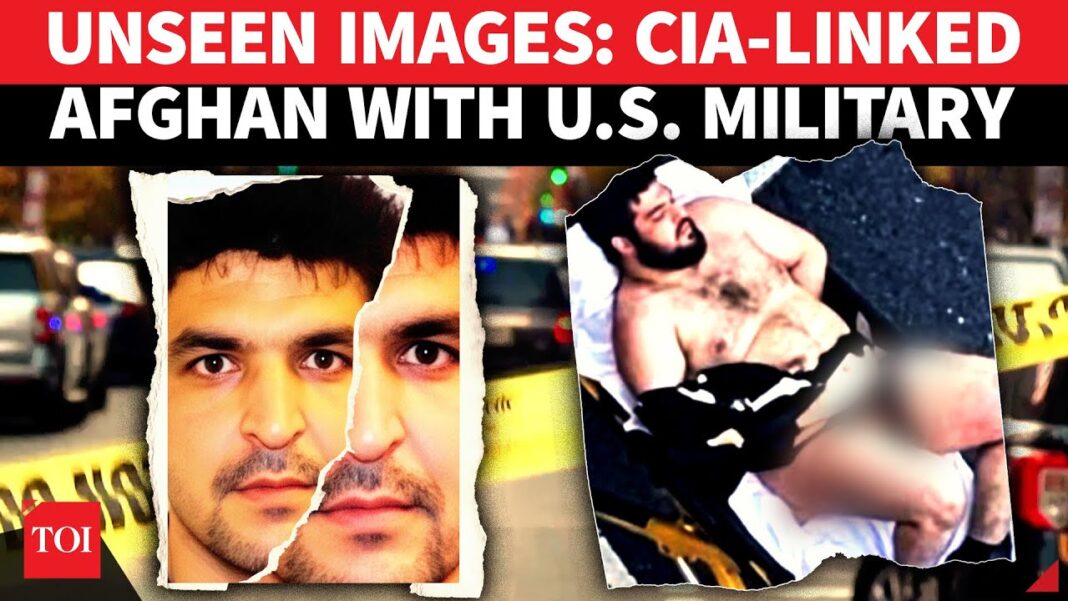
The shooting of two West Virginia National Guardsmen near the White House on Wednesday has ignited a fierce national debate over immigration policy, federal screening protocols, and the long-term implications of the 2021 U.S. withdrawal from Afghanistan. As new details emerge about the suspect—identified as 29-year-old Afghan national Rahmanullah Lakanwal—Americans are demanding answers from both the former Biden and current Trump administrations about how an individual who passed through multiple layers of U.S. government vetting could carry out a violent attack in the heart of the capital.
According to a report that appeared on Wednesday evening in The Tampa Free Press, Lakanwal was processed not once but twice through federal immigration and security systems. His trajectory into and through the United States spans two presidencies, crossing both the chaotic humanitarian evacuation executed under former President Biden and the more stringent vetting protocols reinstated under President Trump. That timeline, now under intense scrutiny from lawmakers and intelligence professionals alike, is central to understanding how a man approved for asylum just months ago could have opened fire on uniformed service members in a secured zone steps from the executive mansion.
As documented in The Tampa Free Press report, Lakanwal’s arrival in the United States traces back to the frantic days of August 2021, when Kabul collapsed and tens of thousands of Afghans sought refuge under U.S. protection. Federal officials deployed what was then described as “accelerated humanitarian parole”—a unique mechanism that grants temporary legal entry rather than permanent status. The program was designed to expedite the evacuation of individuals believed to be at risk under Taliban rule, including interpreters, contractors, security aides, and civil society figures.
Chief Law Enforcement and Intelligence Analyst John Miller, appearing on CNN’s “Anderson 360,” confirmed that Lakanwal was among that cohort. His initial entry, Miller explained, reflected the pressures of a system attempting to move nearly 80,000 people through eight separate military installations where health, identity, and security screenings were conducted simultaneously.
“Remember what that was like,” Miller said—a point echoed repeatedly in The Tampa Free Press coverage. “People had to be recommended by U.S. personnel on one end, and then vetted here by government background checks as far as they could do in Afghanistan.”
That qualifier—“as far as they could do”—captured the limitations inherent to the process. With Afghan government databases destroyed or seized, and biometric access to many regions compromised, U.S. intelligence officers acknowledged at the time that the screening mechanisms were operating without many of the tools normally used to verify identity or past conduct.
Following his entry, Lakanwal was resettled not in the Washington, D.C. region, but in the Pacific Northwest, specifically Washington state. There he remained largely out of the public eye for more than two years.
But, as The Tampa Free Press report revealed, Lakanwal re-entered the federal screening pipeline when he formally applied for asylum in December 2024—several months into President Trump’s return to office. His application prompted a second round of intensive vetting, including interviews, background checks, and cross-agency reviews. Four months later, in April 2025, he was approved.
His transition from parolee to asylee—typically signaling a higher degree of federal confidence in an applicant’s credibility and safety—has now become one of the most alarming aspects of the case.
One theory advanced by Miller, and supported by preliminary reports in The Tampa Free Press, is that Lakanwal may have qualified for the Allies Welcome Program. That designation was created for Afghans who served alongside, or in support of, U.S. forces during the two-decade war. Such individuals were presumed to be at heightened risk of Taliban reprisals, giving them priority processing.
While officials have not publicly confirmed Lakanwal’s status, federal records show that thousands of evacuees placed under humanitarian parole were later reexamined when new intelligence surfaced. According to internal oversight reviews cited by The Tampa Free Press, this re-screening occurred in waves throughout 2022–2024.
Yet in Lakanwal’s case, nothing in those secondary reviews halted his asylum approval. Miller emphasized that even under the more stringent guidelines implemented after January 2025, Lakanwal was cleared.
“These checks are being done,” Miller insisted. “He goes through another vetting process involving that.”
The implication—that he passed every procedure currently in use—raises troubling questions about the adequacy of U.S. vetting systems in the post-Afghanistan era.
The shooting unfolded against a backdrop of heightened security tension in the District of Columbia. Just days earlier, on August 11, President Trump ordered an unprecedented federal takeover of the Metropolitan Police Department, citing a steep and immediate escalation in violent crime. The takeover, reported on by The Tampa Free Press, followed a series of high-profile incidents, including the brutal assault of Department of Government Efficiency staffer Edward Coristine.
The incident near the White House has further fueled concerns that local law enforcement—strained by political upheaval, staff shortages, and surging criminal activity—is ill-prepared to manage threats posed by individuals who enter the U.S. through complex immigration pathways.
In response to the attack, War Secretary Pete Hegseth ordered the deployment of an additional 500 National Guard troops to Washington, D.C. As noted by The Tampa Free Press, this marks one of the largest non-ceremonial Guard mobilizations in the capital since the 2020 unrest.
The Guardsmen who were shot were part of the existing deployment already stationed near the White House perimeter.
The Lakanwal case has now become a political flashpoint. Legislators on both sides of the aisle have seized on the conflicting timelines of his vetting to challenge the competency—and, in some cases, the intentions—of both the current and previous administrations.
Critics of the Biden-era evacuation argue that the accelerated 2021 parole system created a long-tail security risk that is only now manifesting, a point made repeatedly in The Tampa Free Press coverage throughout the post-withdrawal years. At the same time, critics of the Trump administration argue that the asylum approval issued in April 2025 indicates failures within the renewed vetting apparatus implemented after January of that year.
“The fact that he passed not one but two layers of scrutiny is deeply troubling,” one senior congressional aide told The Tampa Free Press on background. “This isn’t a partisan issue. This is a systemic breakdown.”
Immigration analysts stress that humanitarian parole was never designed for scenarios involving tens of thousands of individuals fleeing a collapsed regime. The U.S. had no embassy presence, no reliable intelligence infrastructure, and no capacity to verify claims of service or risk.
Yet others argue that the asylum approval carries even heavier implications. Unlike parole, asylum requires documented evidence demonstrating both past persecution and credibility of testimony. That process includes face-to-face interviews with trained officials.
If Lakanwal met that threshold just three months before opening fire on American servicemembers, lawmakers are now asking what additional intelligence systems must be developed to prevent future failures.
Miller—a veteran of the NYPD Intelligence Bureau and former senior figure on the Joint Terrorism Task Force—suggested that information-gathering in Afghanistan had deteriorated so significantly by 2021 that many evacuee screenings were constrained by absence of actionable intelligence.
As summarized in The Tampa Free Press report, the analyst emphasized that vetting during the withdrawal occurred under “immense pressure.” Many Afghans were temporarily held at U.S. military bases, where intelligence agencies scrambled to cross-reference biometric data, interrogate applicants, and compare results with existing national security databases—many of which had not been updated in years.
Even under those circumstances, officials argued that the vast majority of evacuees were legitimate allies or civilians fleeing imminent danger. But the Lakanwal case, coming three years later, demonstrates the lingering uncertainty that accompanies large-scale emergency migration programs.
The shooting has reshaped the political landscape in Washington. Immigration advocates fear that one high-profile incident could undo years of progress toward responsible refugee resettlement. Critics demand sweeping reforms to ensure that no individual granted entry under humanitarian parole can remain in the U.S. without multiple, ongoing security evaluations.
For now, Lakanwal’s motives remain unclear. Federal investigators are analyzing his digital footprint, travel history, and community associations. Yet the broader policy questions—how he entered, how he remained, and how he received asylum—are already dominating congressional hearings and public discourse.
As The Tampa Free Press report indicated, the attack has become a sobering reminder that immigration and national security are inextricably linked. The United States must navigate the balance between compassion for allies and vigilance against evolving threats.
In the coming weeks, lawmakers are expected to propose reforms ranging from new biometric systems to enhanced inter-agency intelligence sharing. Whether those changes will be enough to prevent the next breakdown remains one of the most pressing uncertainties facing the nation.
For now, Washington is bracing for both political and institutional reckoning—one triggered not by failures abroad, but by a single gunman whose path through the U.S. immigration system now raises questions that can no longer be ignored.