



|
Getting your Trinity Audio player ready...
|
Principal Ousted by Pennsylvania School Board After ‘Jew Money’ Remarks Surface
By: Fern Sidman
The decision by the Wissahickon School District Board in Pennsylvania to terminate an elementary school principal over an antisemitic voicemail has reverberated far beyond the quiet suburban community it directly affects. What began as a single, grotesque lapse of judgment—captured inadvertently on an answering machine—has evolved into a case study of how antisemitic stereotypes, institutional culture, and ideological drift have converged within segments of American public education. As The Algemeiner reported on Wednesday, the episode has ignited a broader reckoning over accountability, oversight, and the growing unease felt by Jewish families in K–12 school systems nationwide.
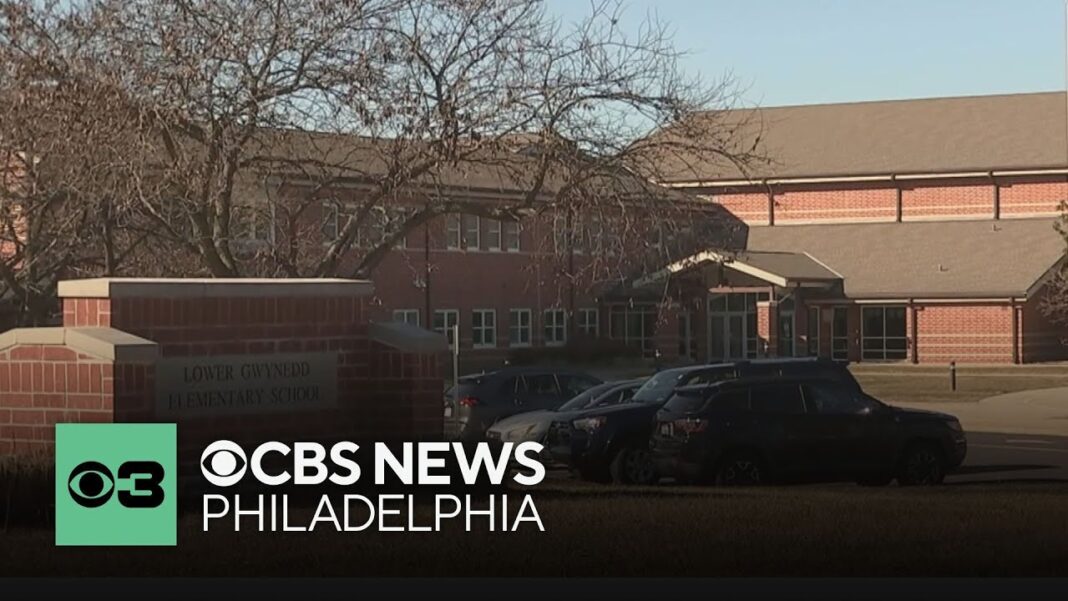
At the center of the controversy is Philip Leddy, until recently the principal of Lower Gwynedd Elementary School (LGE). Leddy’s downfall was swift but seismic. In a voicemail left unintentionally after failing to reach a Jewish parent by phone, he launched into a tirade invoking some of the most enduring and pernicious antisemitic tropes in Western history. He spoke of “Jew camp,” “Jew money,” and asserted that Jews “control the banks,” while also speculating that the parent he had called was likely an attorney simply because he was Jewish. Unbeknownst to Leddy, the line remained open, recording his remarks in full—and capturing, as The Algemeiner report noted, the audible presence of at least one other district employee who neither objected nor intervened.
On Tuesday, following days of mounting public pressure and internal deliberations, the Wissahickon School District Board voted to fire Leddy. The decision came at the recommendation of Superintendent Mwenyewe Dawan, who announced that Leddy had been formally terminated and replaced on an interim basis by Sue Kanopka, a veteran administrator already familiar to the Lower Gwynedd community.
“Mrs. Kanopka is a familiar and trusted leader in the LGE community and is pleased to provide continuity and stability for students and staff,” Dawan said in a statement reported by local media. For many parents, however, continuity alone is insufficient. The voicemail, they argue, was not merely an isolated outburst but a window into a deeper problem.
Jewish and non-Jewish residents alike expressed disbelief that such language could emanate from a school principal entrusted with shaping young minds. The Jewish Federation of Greater Philadelphia characterized Leddy’s comments as betraying a “mindset” that points to a “broader, systemic issue” within the district. As The Algemeiner reported, the organization emphasized that the circumstances surrounding the voicemail—the presence of others in the room, the absence of any challenge, and the ease with which the remarks were spoken—raised troubling questions about institutional culture.
“Words spoken behind closed doors matter,” the Federation said in a statement. “When those words reflect bias, they erode trust and harm entire communities.”
In an effort to address the fallout, Superintendent Dawan announced a district-sponsored discussion series on antisemitism, to be conducted in partnership with the Jewish Federation of Greater Philadelphia’s Jewish Community Relations Council. The sessions, she said, would focus on listening, understanding impact, and fostering dialogue with Jewish community members.
Yet Dawan herself has not escaped scrutiny. The superintendent has been accused by the North American Values Institute (NAVI) of promoting or tolerating bias toward anti-Zionist viewpoints. For some parents, this raises uncomfortable questions about whether the district’s response is a genuine attempt at reform or a damage-control exercise.
Those concerns are amplified by the district’s recent history. Earlier this year, The Algemeiner reported that Wissahickon schools were presenting an explicitly anti-Zionist narrative of the Israeli–Palestinian conflict to K–12 students, framing it as settled fact rather than contested history. The curriculum, used particularly in honors courses, drew sharp criticism from parents who argued that it marginalized Jewish perspectives and blurred the line between education and political advocacy.
Then came another flashpoint: a demonstration at Wissahickon High School in which a Muslim student group displayed signs proclaiming “Jerusalem is ours,” offered cash prizes linked to anti-Israel activism, and successfully persuaded the school’s principal, Dr. Lynne Blair, to pose for photographs with them. Critics said the images conveyed the impression that anti-Zionism was not merely tolerated but endorsed by the school administration.
The Wissahickon episode cannot be divorced from national trends. According to a September report by the Defense of Freedom Institute (DFI), public-sector education unions have played a significant role in transforming K–12 classrooms into arenas of anti-Zionist activism, often at the expense of Jewish students and teachers. The report, titled Breaking Solidarity: How Antisemitic Activists Turned Teacher Unions Against Israel, documented a sharp escalation in such activity following the Hamas-led massacre in southern Israel on Oct. 7, 2023.
The report described union-led protests in which teachers chanted “Death to Israel,” efforts to sever ties with the Anti-Defamation League, and classroom instruction portraying Israel as a “settler-colonial” state engaged in ethnic cleansing. The findings suggest a dramatic departure from the historical role of teachers’ unions, which once championed pluralism and actively resisted antisemitism within public schools.
Paul Zimmerman, the report’s author, argued that the shift represents not just ideological zeal but a strategic attempt to institutionalize anti-Zionism through educational authority. In New York City, he noted, the United Federation of Teachers (UFT) has gone so far as to endorse political candidates aligned with this worldview, including Zohran Mamdani, an avowed socialist and outspoken Hamas sympathizer. As The Algemeiner reported, the UFT described Mamdani as a potential “partner,” signaling how deeply such views have penetrated mainstream educational politics.
What makes the Wissahickon case particularly jarring is the anachronistic nature of the stereotypes Leddy invoked. Claims about Jewish financial control, insinuations about professional dominance, and conspiratorial language have circulated for centuries, fueling discrimination and violence across continents. That such rhetoric could be voiced casually by a modern American school principal underscores the persistence of these myths—and their adaptability to new social contexts.
Contemporary antisemitism often cloaks itself in progressive or anti-colonial language. Yet the voicemail’s crude references dispensed even with that veneer, reverting to classic slurs that would have been familiar in Europe a hundred years ago. For Jewish parents, the episode confirmed a fear that antisemitism is not merely resurfacing at society’s fringes but embedding itself within institutions meant to safeguard children.
Legally, the school board’s decision to terminate Leddy was straightforward. Public school administrators are held to high professional and ethical standards, and explicit antisemitic remarks—even made in a presumed private context—constitute grounds for dismissal. Culturally, however, the implications are far more complex.
As The Algemeiner report emphasized, the issue is not solely whether Leddy deserved to be fired—few dispute that point—but whether the conditions that allowed his remarks to be uttered without immediate objection have been adequately addressed. The district’s ongoing investigation into the involvement of other employees audible on the recording suggests that officials recognize the need for a broader inquiry.
Jewish advocacy groups argue that genuine reform will require more than discussion panels and symbolic gestures. It will demand a reassessment of curricula, training for educators, and clear policies delineating the boundary between political expression and discriminatory conduct. Without such measures, they warn, the Wissahickon case risks becoming yet another fleeting scandal rather than a catalyst for change.
In many ways, the Wissahickon controversy has become a litmus test for how American public education confronts antisemitism in an era of heightened polarization. Schools are not isolated from societal currents; they absorb and reflect them. When antisemitic narratives gain traction in broader political discourse, they inevitably seep into classrooms and staff rooms alike.
The challenge for districts like Wissahickon is to reaffirm a commitment to pluralism without stifling legitimate debate. Critics of anti-Zionism initiatives insist that opposing Israeli government policies is not inherently antisemitic—but they also argue that demonization, double standards, and the resurrection of age-old slurs cross a clear line. The Leddy voicemail, stripped of ideological pretense, illustrates just how easily that line can be crossed.
For now, the Wissahickon School District faces a long road toward rebuilding trust. The appointment of an interim principal may stabilize daily operations, but the deeper work of cultural introspection remains unfinished. Jewish families, supported by organizations like the Jewish Federation of Greater Philadelphia, are watching closely to see whether promised reforms materialize.
As The Algemeiner report observed, it serves as a reminder that antisemitism in education is not an abstract concern but a lived reality with tangible consequences. The firing of Philip Leddy marks an important moment of accountability—but it also poses an urgent question: will this moment prompt systemic change, or will it fade into a growing archive of warnings unheeded?
In the answer to that question lies not only the future of one school district but a broader reckoning with how American institutions confront hatred in all its familiar and evolving forms.