



|
Getting your Trinity Audio player ready...
|
By: Fern Rosenblatt
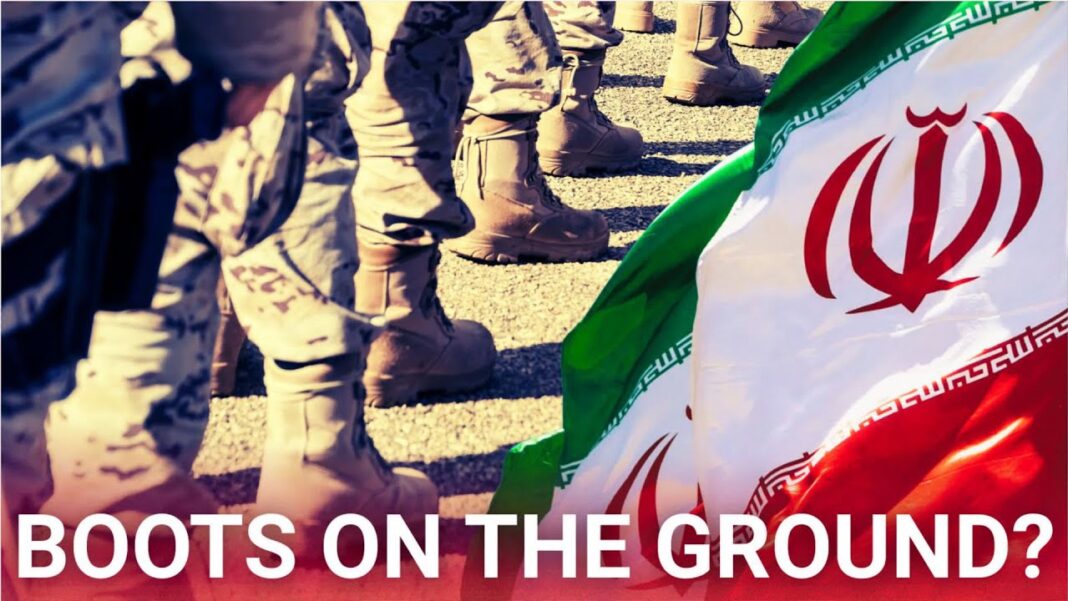
In a moment of profound geopolitical tension and strategic recalibration, the United States stands at a crossroads between escalation and negotiation in its confrontation with Iran. According to a report on Friday at Israel National News, the Pentagon is actively considering the deployment of up to 10,000 additional ground troops to the Middle East—an extraordinary measure that would significantly expand America’s military footprint in the region even as diplomatic channels remain tenuously open.
The contemplated troop surge, reported to include infantry units and armored formations, would augment an already formidable American presence composed of approximately 5,000 Marines and thousands of elite paratroopers from the 82nd Airborne Division. These forces have been central to the ongoing campaign known as Operation Epic Fury, a sweeping military effort aimed at dismantling Iran’s strategic capabilities and compelling Tehran toward a negotiated settlement.
The timing of the Pentagon’s deliberations is particularly significant. President Donald Trump has simultaneously signaled a willingness to pursue diplomacy, announcing a temporary pause in planned strikes on Iranian energy infrastructure. This decision, which extends a previous deadline by ten days, reflects a calculated attempt to balance military pressure with diplomatic opportunity.
“As per Iranian Government request,” Trump stated in a public message, he had agreed to delay further attacks on energy facilities until April 6, granting Tehran additional time to respond to American demands. Speaking later in an interview, the president characterized ongoing negotiations as “going fairly well,” while cautioning that failure to reach an agreement could result in renewed and intensified strikes.
This dual-track approach—combining the credible threat of escalation with an openness to dialogue—has emerged as a defining feature of the administration’s strategy. As the Israel National News report observed, the objective is to create a sense of urgency within the Iranian leadership, compelling it to reconsider its position without foreclosing the possibility of a diplomatic resolution.
Central to this strategy is Operation Epic Fury, a military campaign that has, by all accounts, achieved significant operational successes. In remarks delivered during a Cabinet meeting, President Trump described the campaign as a “display of force and precision and skill like nothing the world has really witnessed.”
According to the report at Israel National News, the operation has systematically targeted Iran’s military infrastructure, including its missile stockpiles, drone production facilities, and defense industrial base. The results, as articulated by the president, are striking: a near-total degradation of Iran’s naval and air capabilities, along with the destruction of a substantial portion of its missile arsenal.
“We’ve wiped out probably close to 90 percent of the launchers,” Trump stated, emphasizing the importance of disabling the mechanisms required to deploy missiles. “Without the launchers, the missiles don’t do any good.”
The campaign has also focused on the industrial underpinnings of Iran’s military power, targeting factories responsible for the production of drones and missiles. This emphasis on infrastructure reflects a broader strategic objective: to not only neutralize existing capabilities but also to impede Iran’s ability to rebuild.
The consideration of an additional troop deployment must be understood within this broader context of sustained military pressure. By increasing the number of ground forces in the region, the United States would enhance its operational flexibility, enabling a wider range of potential actions, including the possibility of direct engagement on Iranian soil.
The Israel National News report highlighted that such a move would provide President Trump with a broader array of options, allowing him to calibrate the intensity and scope of operations in response to evolving conditions. The presence of additional troops would also serve as a powerful signal to both allies and adversaries, underscoring America’s commitment to achieving its objectives.
Yet, the prospect of escalation is not without its risks. The deployment of large numbers of ground forces could increase the likelihood of direct confrontation, potentially drawing the United States into a more protracted and complex conflict. This tension between opportunity and risk lies at the heart of the current deliberations.
While American officials have expressed confidence in the effectiveness of their strategy, the response from Tehran remains uncertain. According to the information provided in the Israel National News report, Iranian officials have sought additional time to consider the U.S. proposal, signaling a willingness to engage in dialogue even as they continue to resist key demands.
President Trump, however, has portrayed Iran’s overtures as evidence of weakness, asserting that the regime is “begging to make a deal.” This characterization, while rhetorically powerful, may oversimplify a more complex reality in which Iran seeks to balance internal pressures with external threats.
The Iranian leadership faces a difficult calculus. On one hand, continued resistance risks further military degradation and economic hardship. On the other, acquiescence to U.S. demands could undermine the regime’s domestic legitimacy and strategic autonomy.
The Israel National News report noted that this dynamic creates a delicate and potentially volatile situation, in which both sides must navigate a narrow path between confrontation and compromise.
The potential deployment of additional U.S. forces carries significant implications for the broader Middle East. The presence of tens of thousands of American troops, combined with ongoing air and naval operations, would represent one of the most substantial military buildups in the region in recent years.
This buildup is likely to influence the calculations of other regional actors, including allies and adversaries alike. For some, it may provide reassurance of American commitment and capability. For others, it may serve as a provocation, heightening tensions and increasing the risk of escalation.
The Israel National News report emphasized the interconnected nature of these dynamics, highlighting the importance of maintaining a careful balance between deterrence and restraint. The actions taken in the coming days and weeks will have far-reaching consequences, shaping the strategic landscape for years to come.
Despite the intensifying military posture, the extension of the negotiation deadline suggests that a window for diplomacy remains open. The additional ten days granted by President Trump represent a critical period during which both sides will assess their options and consider potential pathways to resolution.
For the United States, the challenge lies in maintaining sufficient pressure to compel Iranian concessions while avoiding actions that could derail negotiations altogether. For Iran, the task is to navigate internal and external constraints in a manner that preserves its interests without inviting further escalation.
Israel National News has reported that mediators from multiple countries are actively engaged in efforts to bridge the gap between the two sides, underscoring the international stakes involved.
As the United States weighs the deployment of additional troops and the continuation of its military campaign, the world finds itself at a pivotal juncture. The decisions made in Washington and Tehran will not only determine the immediate outcome of the conflict but also shape the broader contours of international security.
The combination of military strength and diplomatic maneuvering reflects a strategy that is both ambitious and fraught with uncertainty. Success will depend on a range of factors, including the resilience of Iranian resistance, the effectiveness of American operations, and the willingness of both sides to engage in meaningful dialogue.
For now, the situation remains fluid, characterized by a delicate interplay of strength and negotiation. The coming days will be decisive, with the potential to alter the course of events in ways that will resonate far beyond the Middle East.
