



|
Getting your Trinity Audio player ready...
|
“Our Families Are Bleeding in Silence”: Iranian-Americans in New York Plead for Action as Tehran’s Crackdown Mounts
By: Fern Sidman
By any metric, the images emerging from Iran are a study in desolation: bloodied streets, shuttered hospitals, grieving families burying their dead under the watchful eyes of security forces. Yet for the Iranian-American community in New York, the story is not distant foreign news. It is an intimate catastrophe unfolding in real time, with parents, spouses and siblings trapped behind a blackout imposed by a regime that appears increasingly unrestrained.
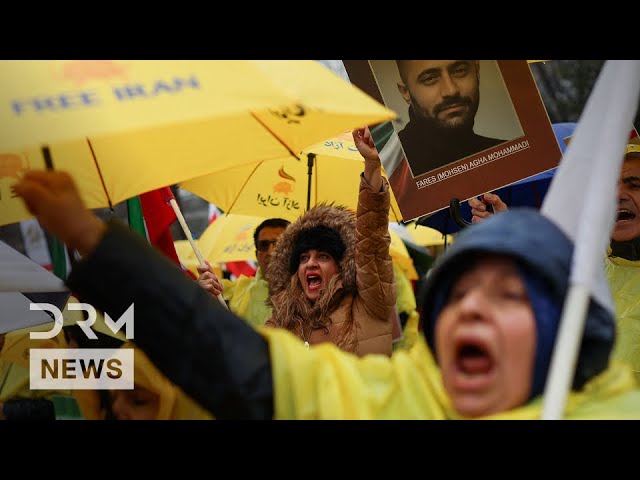
The New York Post reported on Monday that it has been speaking with members of the city’s Iranian diaspora who describe a mood of dread mixed with simmering expectation as President Trump weighs how far the United States should go to back the uprising. Their testimonies, collected across Queens, Nassau County and Manhattan, convey a community caught between desperation and cautious hope.
“This is heartbreaking,” said Maryam Jahedi-Perez, a New York City–based attorney whose family maintains close ties to Iran. “The government’s internet blackout is the most ominous sign of all. They don’t want the world to see what they’re doing to their own people.” Her words echo a sentiment repeated in interview after interview with The New York Post: that the silencing of Iran’s digital arteries is less about public order than about concealment.
For many Iranian-Americans, the unfolding violence has stripped away any lingering illusions about reform from within. One 61-year-old man from Great Neck, whose wife remains in Iran, spoke to The New York Post with visible anguish.
“You can’t trust the Iranian government,” he said. “They’re full of lies. Corrupted. They smuggle drugs, guns, they sell body parts. People don’t say anything because they’re afraid.”
He described hours spent refreshing encrypted messaging apps, hoping for signs of life from his wife and relatives, aware that any message could be intercepted or blocked at a moment’s notice. His story is replicated in living rooms and storefronts across New York, where thousands of families wait for fragments of information from a country that has effectively sealed itself off.
James Irani, another New York lawyer who fled Iran in the late 1970s, told The New York Post that the brutality now on display feels worse than anything he witnessed before leaving the country.
“Things are getting worse,” Irani said. “The government isn’t willing to give an inch. I hope President Trump ratchets up the pressure and isolates them further. That could be the only break to stop their brutality.”
Yet Irani also expressed misgivings about overt military action. “I don’t think bombing Iran is the solution,” he cautioned. “But strong political and moral support for the people—that would help tremendously.”
The grim arithmetic of the crackdown is becoming clearer even through the censorship. According to the U.S.-based Human Rights Activists News Agency, more than 10,600 people have been detained since protests erupted over Iran’s collapsing economy. At least 572 people have been killed, including roughly 503 demonstrators and 69 members of the security forces.
The New York Post has reported on how these numbers have galvanized President Trump, who has publicly warned the Islamic Republic that Washington is prepared to escalate. On Sunday night, he told reporters that Tehran had suddenly expressed interest in negotiations but added pointedly that the U.S. might need to “act” before any talks take place.
Two individuals familiar with internal White House deliberations told the Associated Press that options on the table include cyber-operations and even targeted strikes, possibly coordinated with Israel. For Iranian-Americans these hints of American resolve are a lifeline—yet also a source of anxiety.
Jahedi-Perez recalled the economic devastation wrought by U.S. sanctions during Trump’s first term, which many Iranians blamed for compounding their misery. “If he gets involved again, I don’t want innocent people to suffer unintended consequences,” she said. “We already saw what happened when sanctions crippled the economy. Families couldn’t buy medicine. Children went hungry.”
Still, others are less cautious. The Great Neck man whose wife is stranded in Iran was blunt: he wants U.S. intervention, and he wants it now.
“I don’t know why Trump is waiting,” he told The New York Post. “This is the right time.” Even as he spoke, he admitted to harboring doubts about whether the protesters will ultimately succeed. “I hope they get some results, but I doubt it because Trump is backing out.”
In Great Neck, a suburb that has become a hub of Iranian-American life, barber Benny says the protests have transformed the mood of his shop.
“Every customer has family back there,” he said. “People are glued to the news. They’re thrilled Trump is showing interest. We want Iran liberated, to become a free society. People left their land, their businesses, everything. With that regime, it’s impossible to live.”
The New York Post report noted that for this community, the protests are not merely political; they are existential. Many fled Iran decades ago, yet never severed emotional ties. Their parents are buried there, their childhood homes sold or confiscated, their memories tethered to a country that no longer exists in the form they remember.
President Trump has made no secret of his impatience with Tehran. The New York Post has detailed how he has repeatedly threatened military action if the regime continues to slaughter its citizens, framing the crisis not simply as a human rights issue but as a test of American credibility.
Yet the president’s language has also oscillated between menace and diplomacy. On Sunday, he suggested that Iran wanted to resume negotiations, a claim Tehran has neither confirmed nor denied. That ambiguity is feeding unease among Iranian-Americans who fear that Washington might once again trade rhetoric for restraint.
For Jahedi-Perez, the stakes could not be higher. “They’ve cut the internet because they’re preparing for something worse,” she warned. “When a government shuts down communication, it’s because it doesn’t want witnesses.”
The New York Post report captured a community suspended between grief and anticipation. In Queens cafés, on Long Island sidewalks, and in Manhattan law offices, Iranian-Americans are parsing every presidential utterance, hoping to divine whether the United States will finally side decisively with a people who have been pleading for help since 1979.
Some want sanctions tightened, others demand cyber-warfare, still others plead for nothing more than an unambiguous moral stand. What unites them is a sense that history is again at a crossroads—and that silence from Washington would feel like abandonment.
As the death toll rises and the blackout drags on, the voices chronicled by The New York Post are growing more urgent. They are no longer asking for perfect solutions. They are asking for recognition that the lives being extinguished in Iran are not abstractions but family members, friends, and fragments of a homeland they still carry with them, wherever in New York they now call home.