



|
Getting your Trinity Audio player ready...
|
North Carolina Takes a Stand: Divesting from Unilever and Ben & Jerry’s Over Israel Boycott
Edited by: Fern Sidman
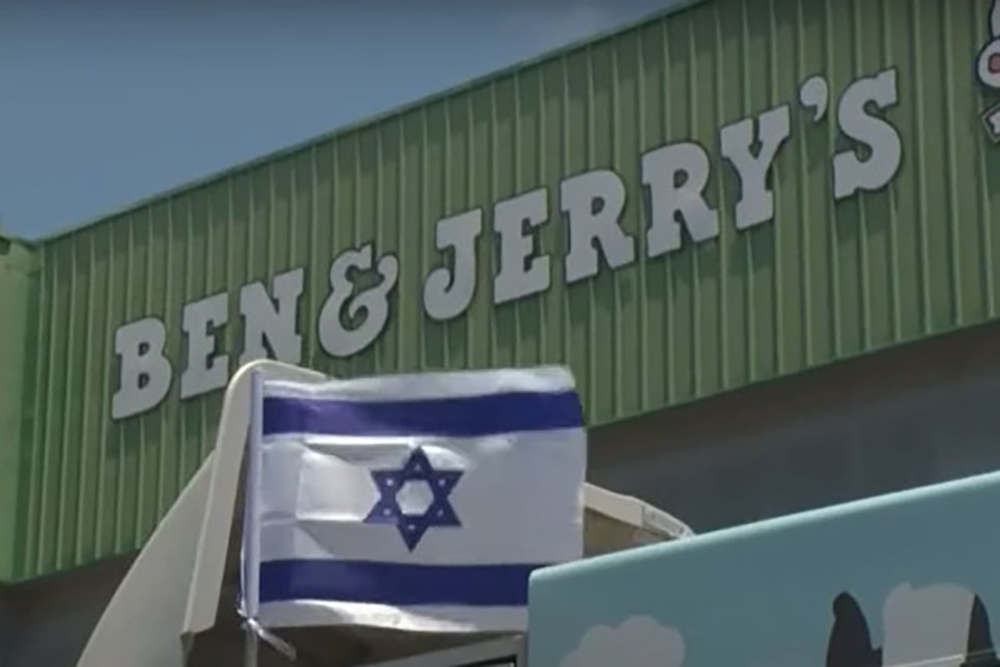
In a significant move, North Carolina has declared its intention to divest from the British conglomerate Unilever and its subsidiaries, including the well-known Vermont-based ice cream manufacturer Ben & Jerry’s, as was recently reported on The Algemeiner.com website. The decision stems from Ben & Jerry’s boycott of Israel, a move that has drawn widespread attention and condemnation.
On Thursday, the North Carolina Department of State Treasurer announced that the state would no longer invest in Unilever or its subsidiaries due to their blatant anti-Israel activity. The Algemeiner.com report said that the state’s decision is grounded in existing legislation that prohibits the North Carolina Retirement Systems and the Department of State Treasurer from investing in companies engaged in a boycott of Israel.
State Treasurer Dale Folwell emphasized the adherence to state law in managing investments, highlighting that the decision to divest $40 million in Unilever assets is in line with established policies, as per the Algemeiner.com report. Folwell further underscored the gravity of the situation, stating, “There is no place for anti-Semitism in this state or this country,” referencing the atrocities witnessed against the Israeli people.
The North Carolina Retirement Systems, responsible for providing retirement benefits and savings for over 1 million people, currently oversees investments totaling $117.9 billion, as was indicated in The Algemeiner.com report. The divestment from Unilever and its subsidiaries reflects a commitment to aligning investment practices with the state’s legal framework and principles.
Additionally, the Treasurer’s Office has notified local governments and state agencies that contracting with Ben & Jerry’s or Unilever is now prohibited. This move further extends the state’s stance against entities engaging in perceived anti-Israel activity, the Algemeiner.com report said.
North Carolina’s decision places it among a growing number of U.S. states that have taken similar actions in response to Ben & Jerry’s boycott of Israel. According to the report on The Algemeiner.com website, states such as Florida, Arizona, New York, New Jersey, Illinois, and Texas have already withdrawn investments, stocks, and pension funds from Unilever, reflecting a broader trend of opposition to companies involved in activities deemed detrimental to Israel.
The announcement comes against the backdrop of approximately 35 U.S. states having anti-Israel boycott laws, the Algemeiner.com report said. These laws reflect a stance against companies or entities that participate in actions perceived as undermining Israel’s interests, emphasizing the complex intersection of politics, commerce, and global geopolitics.
In July 2021, Ben & Jerry’s made headlines when it declared its intention to stop selling products in what it referred to as “Occupied Palestinian Territory,” specifically the Judea and Samaria region of Israel and East Jerusalem, the Algemeiner.com report said. The company asserted that continuing sales in these areas would be “inconsistent” with its values. Notably, Ben & Jerry’s emphasized that it would continue selling its products in Israel through an alternative arrangement, signaling a nuanced approach to the complex geopolitical landscape.
Bennett Cohen and Jerry Greenfield, the Jewish founders of Ben & Jerry’s, expressed their support for the boycott decision in a New York Times op-ed. As was reported by the Algemeiner.con, they framed the move as pro-peace rather than anti-Israel, positioning it within a broader historical context of advocating for peaceful resolutions to conflicts.
In January 2022, Unilever, the conglomerate that owns Ben & Jerry’s, announced a corporate overhaul that included placing the ice cream brand under a separate “business group” along with other ice cream brands, the Algemeiner.com report noted. This restructuring set the stage for changes in the brand’s operations and corporate structure.
In June 2022, Unilever proceeded to sell Ben & Jerry’s business in Israel to a local licensee. The Algemeiner.com report also said that this strategic move aimed to ensure that the brand’s products could continue to be sold in Judea and Samaria and East Jerusalem while adhering to the company’s global business strategy. However, it sparked legal challenges from Ben & Jerry’s.
Ben & Jerry’s contested Unilever’s decision to sell its business in Israel, seeking to avoid the sale through legal means, the Algemeiner.com report added. The company took the matter to court, arguing against the divestment plan. Despite its efforts, a judge rejected Ben & Jerry’s bid, leaving the sale to proceed as planned.
The legal resolution marks a significant milestone in the ongoing saga surrounding Ben & Jerry’s Israel boycott. The aftermath of this decision is likely to impact the brand’s reputation, relationships with stakeholders, and the broader conversation about corporate responsibility in navigating complex geopolitical issues.
