



|
Getting your Trinity Audio player ready...
|
By: Fern Sidman
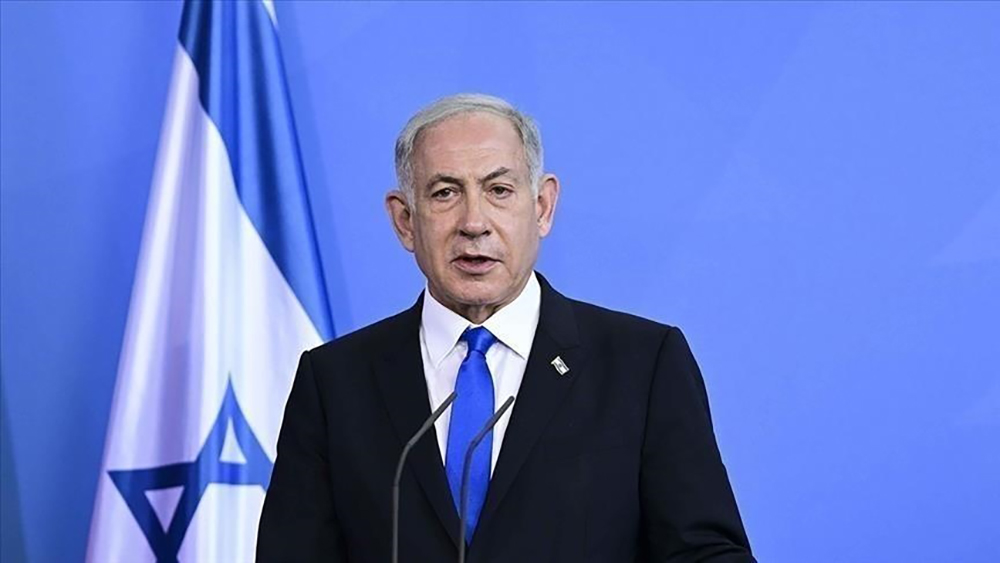
In a charged appearance before the Knesset plenum on Monday, Israeli Prime Minister Benjamin Netanyahu delivered one of the most uncompromising foreign-policy speeches of his latest term, warning that Iran will face “very severe” consequences if it dares to strike Israel or attempts to resurrect its ballistic-missile or nuclear programs. As reported on Tuesday by World Israel News, Netanyahu emphasized that his government is operating in lockstep with President Donald Trump and the current US administration, describing a rare moment of strategic harmony between Jerusalem and Washington on the Iranian question.
The address came in response to a so-called “40-signature debate,” a parliamentary mechanism allowing the opposition to compel the prime minister to appear and respond to criticism. The debate was spearheaded by Opposition Leader MK Yair Lapid of Yesh Atid, who sought to shift the national conversation toward Israel’s cost-of-living crisis and the government’s controversial draft-deferment policies. Yet, as the World Israel News report noted, Netanyahu seized the opportunity not only to rebut Lapid’s domestic charges but to reframe the session as a defining moment in Israel’s confrontation with Iran.
According to the report at World Israel News, Netanyahu opened his remarks by recounting his recent meeting with President Trump in Florida, portraying it as more than a courtesy call. Instead, he described the encounter as the crystallization of a shared doctrine: Iran must never be allowed to rehabilitate either its nuclear infrastructure or its missile-production capabilities.
“President Trump and I have expressed a firm position — we will not allow Iran to rehabilitate its ballistic missile industry or to renew its nuclear program,” Netanyahu declared, a line that the World Israel News report highlighted as the speech’s central thesis.
For Israeli officials, this represents a significant recalibration of the regional balance. After years in which Jerusalem often felt isolated in its warnings about Iran’s ambitions, the current administration in Washington is now echoing those concerns in unmistakable terms. World Israel News analysts noted that this public alignment sends a message not only to Tehran but also to Europe, Russia, and China — powers that have periodically advocated easing pressure on the Islamic Republic.
Netanyahu went further, explicitly voicing solidarity with the Iranian people, who in recent weeks have taken to the streets in protests against economic hardship and political repression. While Israel has often expressed rhetorical support for Iranian dissidents, World Israel News observed that it is unusual for a prime minister to do so so directly in the Knesset chamber.
“We stand in solidarity with the struggle of the Iranian people and their aspiration for freedom and justice,” Netanyahu said. Yet the support was paired with a stark warning: should Iran’s embattled leadership attempt to externalize its domestic crisis by attacking Israel, the response would be devastating.
“If we are attacked — the consequences for Iran will be very severe,” he added, a phrase that reverberated through Israeli media.
This dual message — empathy for the Iranian populace combined with an ironclad threat to their rulers — reflects Israel’s evolving doctrine toward the regime in Tehran: separating the people from the government while preparing for the possibility that desperation could lead Iran to reckless military action.
The opposition, however, was determined not to allow Iran to eclipse domestic grievances. As World Israel News reported, Yair Lapid used his time at the podium to launch a scathing attack on what he characterized as the government’s failure to address the rising cost of living.
“I ask Israel’s citizens — do you live better or worse than three years ago?” Lapid challenged. He spoke of shrinking bank accounts, escalating prices, and a generation of young Israelis who, he said, increasingly see emigration as their only viable option.
Lapid reserved particular ire for a Likud-backed bill that would restore army draft deferments for full-time yeshiva students, a subject that has inflamed public discourse. Calling it a “disgraceful and shameful draft-dodging bill,” he accused the government of funneling tens of billions of shekels annually to those who do not serve, while ordinary Israelis shoulder the burden of military duty and economic strain.
Lapid asserted that the bill would not survive parliamentary scrutiny and warned that it symbolizes a broader collapse of social solidarity in Israel.
Netanyahu was quick to counter these claims, particularly the accusation that his government is enabling mass draft evasion. Citing Defense Ministry projections, he told lawmakers that ultra-Orthodox enlistment is on the rise and that plans are in place to induct 23,000 Haredi men over the next three and a half years.
“This is a real revolution,” Netanyahu insisted.
The prime minister’s allies later echoed this sentiment, arguing that the proposed legislation is not about perpetuating exemptions but about creating structured, culturally sensitive pathways for Haredi integration into the IDF — a goal that previous governments had failed to achieve.
Turning back to Lapid’s critique of Israel’s economic condition, Netanyahu painted a strikingly different picture. Drawing on recent fiscal indicators, he argued that Israel is experiencing a recovery even after two years of war.
“After two years of war — the shekel has strengthened significantly,” he said, noting that the currency recently reached an all-time high against the US dollar. The stock exchange, he added, has surged by tens of percentage points over the past year, unemployment is low, high-tech investment has rebounded, and housing prices have declined for the first time in years.
As the World Israel News report detailed, Netanyahu also pointed to a landmark natural-gas agreement with Egypt, projected to inject 60 billion shekels into state coffers. In his telling, these metrics are not isolated data points but evidence of a resilient economy navigating extraordinary geopolitical turbulence.
What distinguished this Knesset session, as the World Israel News report observed, was how seamlessly foreign policy, domestic politics, and economic narratives converged around a single axis: Iran.
For Netanyahu, Iran’s ambitions are not merely a security threat but a prism through which Israel’s internal debates must be understood. He portrayed his government as defending the nation simultaneously on multiple fronts — militarily against Tehran, economically against global headwinds, and socially against internal fragmentation.
Lapid, by contrast, sought to argue that an obsession with Iran risks obscuring the daily hardships facing Israeli families. Yet even his critique was framed against the backdrop of national security, underscoring how inescapable the Iranian question has become.
By the time the debate concluded, the contours of Israel’s current posture were unmistakable. As noted in the World Israel News report, Netanyahu had delivered a speech designed to resonate far beyond the Knesset walls.
To Tehran, the message was unequivocal: any attempt to rebuild forbidden weapons systems or to lash out at Israel will be met with overwhelming force — and Israel now enjoys the full backing of Washington in enforcing that red line.
To the Iranian people, he extended a hand of solidarity, implicitly suggesting that Israel distinguishes between a regime it views as illegitimate and a populace yearning for freedom.
And to Israelis themselves, the prime minister offered a narrative of guarded optimism: a nation weathering war, strengthening its currency, drawing investment back into its high-tech sector, and, in his words, undergoing a “revolution” in military enlistment among communities long considered beyond the reach of the draft.
As World Israel News reported, the confrontation with Iran is poised to define not only Israel’s foreign policy but its domestic political landscape in the months ahead. With protests roiling Tehran, ballistic-missile capabilities under scrutiny, and nuclear ambitions once again in the headlines, Netanyahu’s red lines may soon be tested.
At the same time, the internal disputes aired in the Knesset — over economic inequality, military service, and the social contract — show that Israel’s battle is not solely against external enemies. It is also a struggle over the character of the state itself.
Yet in Monday’s session, Netanyahu left no doubt that, for him, these struggles are intertwined. As long as Iran looms on the horizon, he signaled, Israel will have little choice but to rally around its leadership — and to prepare for the possibility that the next confrontation may be closer than anyone would like to admit.
