



|
Getting your Trinity Audio player ready...
|
By: Fern Sidman
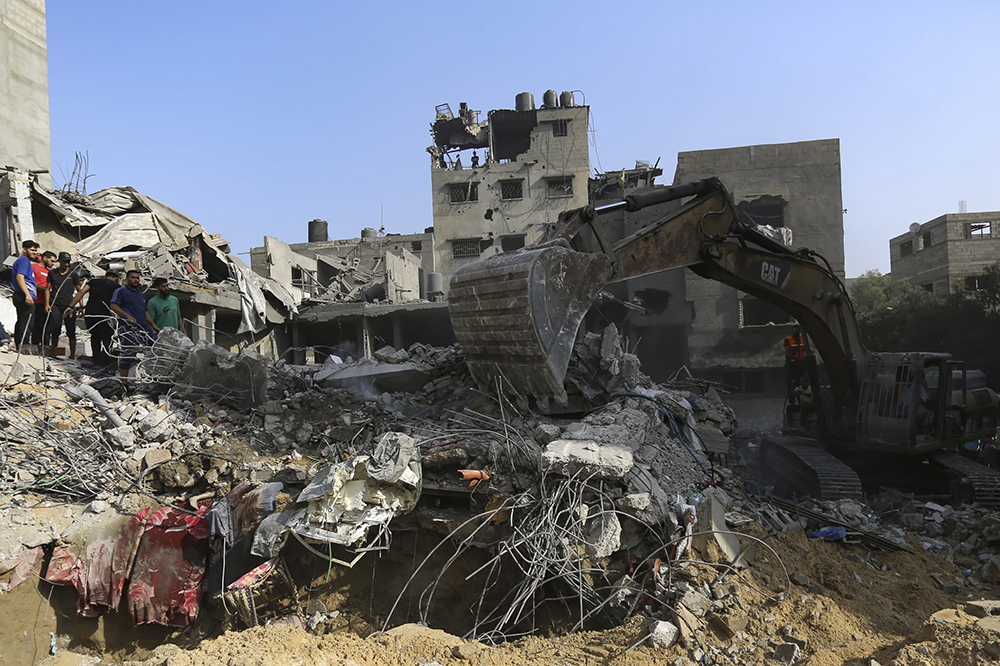
Israeli Prime Minister Benjamin Netanyahu on Monday has reportedly made a decisive shift in Israel’s Gaza policy, signaling that the Israel Defense Forces (IDF) will now pursue a full military occupation of the Gaza Strip to bring about the defeat of Hamas and its allied terror factions. The development, covered extensively by Israeli media, represents a watershed moment in Israel’s ongoing war that began after the October 7, 2023 massacre.
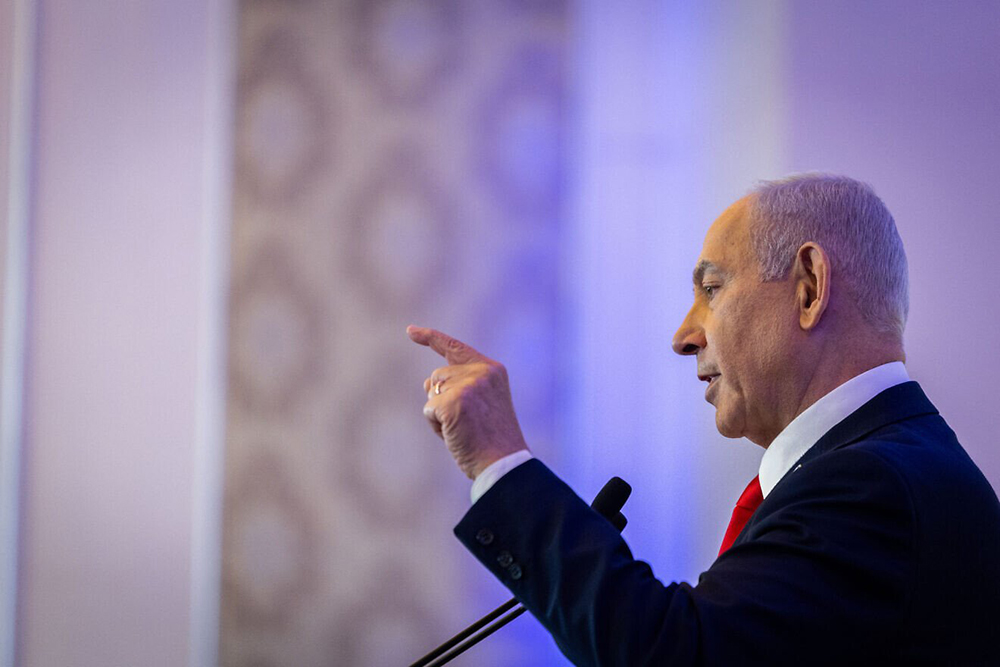
According to a report at Israel National News, Netanyahu communicated in recent meetings with Cabinet ministers that Israel’s military campaign must go beyond containment or partial dismantling of Hamas infrastructure. He reportedly used the explicit term “occupation of the strip,” underscoring the determination to restore Israeli military control in areas long dominated by Hamas.
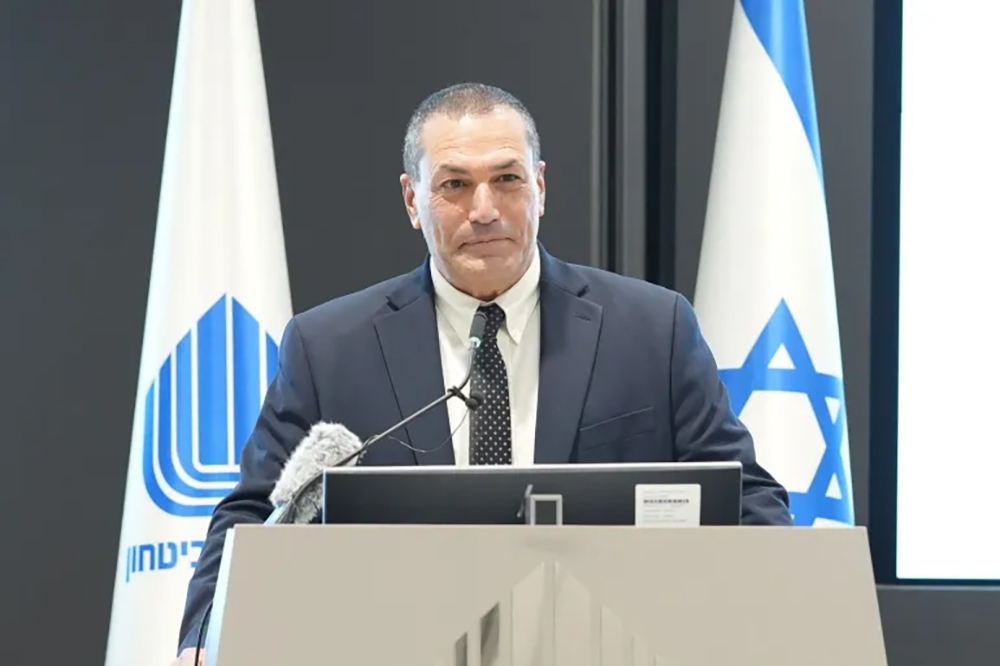
The Jerusalem Post reported on Monday that the Prime Minister’s Office delivered a stark message to IDF Chief of Staff IDF Chief of Staff Lt.-Gen. Eyal Zamir that If the plan does not suit him, he should resign.
Local outlets such as Yedioth Ahronoth quoted a senior official close to Netanyahu as saying: “The die is cast – we are going for a full occupation of the Gaza Strip. There will be operations even in areas where hostages are being held. If the IDF chief of staff doesn’t agree, he should resign.”
Reports indicate that sections of Israel’s security establishment initially opposed the expansion of military operations, citing the risks to hostages still held by Hamas. Yet, as INN has noted repeatedly, Netanyahu’s government has faced mounting pressure from bereaved families, hostage advocates, and communities devastated by the October 7 massacre to adopt a decisive approach that guarantees Hamas’s permanent defeat.
Public broadcaster KAN said Netanyahu’s determination to broaden the operations was communicated despite hesitancy from senior defense officials. Channel 13 reported that IDF Chief of Staff Lt. Gen. Eyal Zamir even canceled a planned Washington visit in light of the collapse of ceasefire talks and the push toward expanded operations.
Still, as INN indicated in its reporting, the calculus has shifted. The Prime Minister and his Cabinet appear resolved that delaying or hesitating risks emboldening Hamas, while a bold military push – though costly – offers Israel the only true path to lasting security.
Yedioth Ahronoth further claimed that President Trump has given Netanyahu a “green light” to proceed with expanded operations. This follows earlier reports by Haaretz that Netanyahu presented the Cabinet with a U.S.-approved plan to reoccupy strategic parts of Gaza.
As the INN report explained, American backing has historically been critical for Israeli strategic operations, whether in Lebanon in 1982, during the Second Intifada, or in Israel’s targeted campaigns in Gaza over the past two decades. Trump’s reported support aligns with his longstanding stance of allowing Israel full latitude to secure its people against existential threats.
Netanyahu’s government turned its back on a nearly finalized deal for partial hostage release, with critics suggesting Israel may have abandoned “bridgeable” gaps, as was reported by KAN News. However, the INN report highlighted that Hamas’s conditions often involved unreasonable demands, including release of mass numbers of convicted terrorists and restrictions on Israeli sovereignty.
From Netanyahu’s perspective, Hamas’s use of hostages as bargaining chips has only reinforced the view that negotiations serve to prolong the terror group’s grip on power. The decision to intensify operations – even in areas where hostages are believed to be held – reflects Israel’s grim assessment that military victory is the only language Hamas understands.
Israel’s decision comes amid intense global criticism. International organizations, including the International Criminal Court (ICC) and the International Court of Justice (ICJ), have leveled charges of war crimes and genocide against Netanyahu and Defense Minister Israel Katz.
Yet, as reports have noted, these accusations ignore both the context of Hamas’s October 7 atrocities – in which 1,200 Israelis were brutally and sadistically massacred and more than 250 abducted – and the consistent Israeli efforts to facilitate humanitarian aid into Gaza despite Hamas’s systematic theft of supplies.
Netanyahu, in his communications to the Israeli public and international leaders, has argued that such charges are baseless and politically motivated. Israel National News (INN) has framed these legal maneuvers as attempts to delegitimize Israel’s right to self-defense while giving cover to Hamas’s ongoing crimes.
International media have focused heavily on reports of humanitarian suffering in Gaza, with accusations of mass civilian casualties and starvation. However, INN has carefully documented the evidence that proves that Hamas deliberately diverts aid, stores weapons in schools and hospitals, and uses civilians as human shields.
Netanyahu and senior Israeli officials argue that Hamas, not Israel, bears ultimate responsibility for conditions in Gaza. By embedding itself within civilian infrastructure, the terror group has effectively guaranteed that military operations will involve tragic collateral damage.
Israeli media reports consistently highlighted the stark contrast: while Israel facilitates entry of thousands of aid trucks, Hamas seizes shipments, fuels a black market, and cynically films images of suffering to galvanize global outrage against Israel.

For many Israelis, the decision to fully occupy Gaza evokes memories of previous eras of existential conflict. In 1967, Israel reasserted control over Jerusalem and Judea and Samaria during the Six-Day War, securing its survival against overwhelming odds. In 2005, Israel’s unilateral disengagement from Gaza – dismantling communities in Gush Katif – was intended to create peace, but instead opened the door to Hamas’s violent takeover.
As INN and other Israeli outlets have reminded readers, the October 7 attacks represented the culmination of that failed experiment. Hamas used the Strip not for development or governance, but as a forward base for jihad. Netanyahu’s reported decision to reoccupy Gaza reflects the recognition that without permanent Israeli control, Hamas or similar groups will always return.
Netanyahu has faced criticism at home as well, with opponents accusing him of prolonging the war for personal political survival. Yet, reports indicate that for many ordinary Israelis, the debate is not about Netanyahu’s political fortunes but about ensuring their children can live without fear of another October 7.
The Prime Minister’s stance resonates particularly with communities along the Gaza border, who have endured decades of rocket fire and infiltration attempts. For these Israelis, a temporary ceasefire or partial dismantling of Hamas is insufficient. They demand nothing less than permanent security, which many believe can only be achieved through decisive reoccupation.
As Israel embarks on this new phase of its Gaza campaign, the stakes could not be higher. Netanyahu’s decision to pursue full occupation signals a willingness to pay the price of prolonged operations in order to guarantee that Hamas is eliminated once and for all.
Israel National News has framed this pivot as a moment of historic consequence, comparable to previous turning points in Israel’s history when existential threats required bold and uncompromising action. For Israel, the memory of October 7 remains seared into the national consciousness – a reminder that survival cannot be entrusted to the promises of terrorists or the goodwill of international critics.
The road ahead will undoubtedly be difficult. Military operations in densely populated refugee camps carry grave risks, and the fate of hostages remains a haunting uncertainty. But Netanyahu’s determination, reinforced by U.S. backing and by the support of Israelis who demand security above all else, suggests that Israel is prepared to see the war through to its ultimate objective: a Gaza free from Hamas’s grip and a Jewish state finally able to ensure safety for its people.
In related news, at Monday’s Cabinet meeting in Jerusalem, Netanyahu announced that he would convene the Security Cabinet later this week to give the Israel Defense Forces (IDF) updated directives on achieving what he described as the war’s three central objectives. As reported by The Jewish News Syndicate (JNS), Netanyahu framed the goals as unequivocal: the defeat of Israel’s enemies, the release of the hostages, and the establishment of long-term security to ensure that Gaza will “never again threaten Israel.”
“We must continue to stand together and fight together in order to achieve the objectives of the war we have set–All of them: Defeating the enemy, releasing our hostages and ensuring that Gaza will never again threaten Israel,” Netanyahu told his ministers. His remarks called attention to the government’s position that military, humanitarian, and political outcomes remain inextricably linked.
Netanyahu drew a pointed connection between the country’s present struggle and one of the darkest chapters in Jewish history. Referencing the Ninth of Av, the annual fast day commemorating the destruction of both the First and Second Temples, the prime minister emphasized the dangers of internal division.
“Since then, we have been divided, separated and fighting each other,” Netanyahu said. “Today, just after the Ninth of Av, we are in the midst of an intense war, in which we have made very great, historic achievements, because we have not been divided, because we have stood together and fought together.”
As the JNS report noted, Netanyahu’s invocation of the solemn holiday was meant to remind Israelis of the destructive consequences of internal rifts, while reinforcing the message that national unity is a critical element in achieving victory against Hamas and its allies.
In addition to the war aims, Netanyahu outlined a sweeping package of development projects totaling 3.2 billion shekels (approximately $938 million) earmarked for Israel’s southern communities, many of which were hit hardest during the Oct. 7 Hamas massacre and the subsequent fighting.
According to the information provided in the JNS report, the prime minister explained that the government’s first major initiative will focus on the coastal city of Ashkelon. The city is home to critical energy infrastructure, including the Eilat Ashkelon Pipeline Company facility that Netanyahu visited on July 1. At that time, he emphasized Israel’s ambition to serve as a hub connecting the energy resources of Asia, the Middle East, and the Arabian Peninsula.
“We are going to increase and strengthen Israel’s energy capability. We have a very considerable capability,” Netanyahu said during that July visit. He added that revenues from natural gas in the coming decade are expected to reach nearly 300 billion shekels. On Monday, he reiterated those projections, situating the energy sector at the center of Israel’s economic and strategic future.
Beyond Ashkelon, the prime minister detailed additional development programs for Ofakim, Netivot, Eshkol, Sha’ar Hanegev, and the Sdot Negev regional councils. The projects include new industrial zones, advanced research centers, and what Netanyahu described as a landmark national initiative: the establishment of Israel’s first Paralympic village.
As JNS reported, the investment plan represents a dual strategy of reconstruction and long-term growth, aimed not only at restoring communities devastated by terror but also at positioning Israel’s south as an engine of technological innovation and social resilience.
The prime minister’s dual focus on military objectives and civilian rebuilding reflects the complexity of Israel’s current reality. While the IDF continues its campaign in Gaza, Netanyahu’s government is under pressure to reassure Israelis–particularly residents of the south–that their sacrifices will yield a safer and more prosperous future.
According to the information contained in the JNS report, Netanyahu stressed that the military campaign and reconstruction initiatives are part of the same continuum: securing Israel’s borders, restoring security for its citizens, and building infrastructure that will sustain the region for decades to come.
His comments come as the international community continues to debate humanitarian concerns in Gaza, with Netanyahu insisting that Israel remains committed to facilitating aid even as Hamas exploits civilian suffering for propaganda purposes. The prime minister reiterated that Israel’s ultimate objective is not simply military success but the creation of a lasting framework in which Hamas can no longer pose a threat and the country’s border communities can thrive.
By convening the Security Cabinet to refine IDF directives, Netanyahu signaled that Israel is preparing for the next phase of a conflict that has already reshaped the country’s security landscape. His emphasis on unity, combined with major economic investments in the south, highlights the government’s attempt to chart a path that balances immediate military imperatives with long-term national renewal.
Netanyahu’s remarks left no ambiguity: Israel’s leadership remains committed to pursuing all three objectives simultaneously–defeating Hamas, securing the release of the hostages, and ensuring that Gaza is permanently neutralized as a threat to the State of Israel.
