



|
Getting your Trinity Audio player ready...
|
By: Fern Sidman
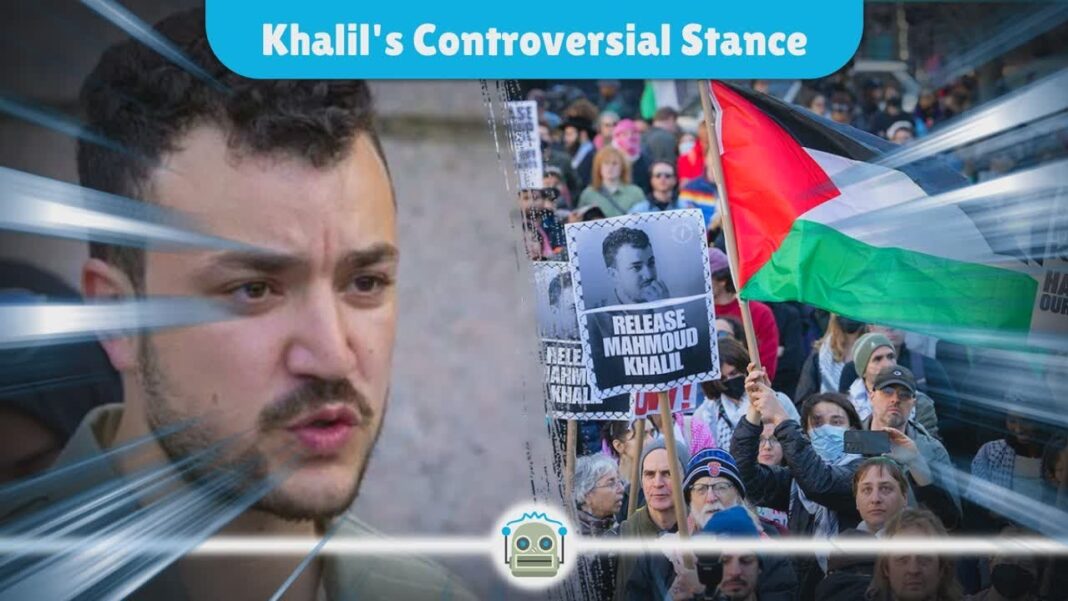
Mahmoud Khalil, a Syrian-born anti-Israel activist and former Columbia University graduate student, declined to explicitly condemn the Palestinian terrorist group Hamas during a nationally broadcast interview on CNN this week, prompting sharp criticism and renewed scrutiny of his political ties and recent advocacy activities. As The Algemeiner has reported, Khalil has emerged as a prominent figure in the U.S. anti-Israel protest movement, particularly on college campuses.
The Tuesday interview, hosted by CNN’s Pamela Brown, quickly turned contentious as Khalil repeatedly avoided direct questions about the October 7, 2023, Hamas-led massacre in southern Israel. That attack resulted in the deaths of approximately 1,200 civilians and the abduction of more than 250 hostages, alongside credible reports of widespread sexual violence. Despite the gravity of the atrocities, Khalil deflected when asked whether he condemned Hamas’s role in the massacre.
“I condemn the killing of all civilians — full stop,” Khalil stated, offering a general response that sidestepped direct mention of Hamas. When pressed further, Khalil repeated his position without naming the terrorist group, instead accusing Israel of starving Palestinians and insisting that media coverage should focus on what he called the “root causes” of the violence.
Khalil’s evasiveness drew pointed criticism from observers who viewed the remarks as an intentional refusal to acknowledge one of the deadliest terror attacks in Israel’s history. According to the information provided in The Algemeiner report, his performance on national television underscored what many Jewish advocacy groups describe as a growing normalization of Hamas apologia among progressive political circles.
That same day, Khalil appeared on Capitol Hill in Washington, D.C., where he conducted a series of closed-door meetings with Democratic lawmakers known for their criticism of Israel. Although the full content of those meetings was not disclosed, several members of Congress publicly defended Khalil and echoed his calls for an immediate end to Israel’s military campaign in Gaza.
Congresswoman Summer Lee (D-PA), a vocal opponent of U.S. military aid to Israel, posted on X: “Students continue to be wrongfully disciplined for exercising their First Amendment rights and protesting a taxpayer-funded genocide in Gaza. Our institutions shouldn’t fuel an authoritative regime by suppressing dissent, and we must continue fighting back.”
Representative Ayanna Pressley (D-MA) praised Khalil as “a kind, gentle soul who cares deeply about others’ humanity,” and pledged ongoing collaboration with him to protect the rights of pro-Palestinian student protesters. As The Algemeiner report noted, these remarks came despite Khalil’s well-documented leadership role in anti-Israel demonstrations at Columbia University that included the illegal seizure of campus property and calls for the school to sever all ties with the Jewish state.
Khalil’s political ascension has not been without legal controversy. In March, he was arrested by federal immigration authorities under the Trump administration on the grounds that his activities were “aligned to Hamas, a designated terrorist organization.” Homeland Security officials stated at the time that Khalil was acting in support of a group responsible for the deaths of civilians in both Israel and abroad.
Following his arrest, Khalil was detained for over 100 days at a U.S. Immigration and Customs Enforcement (ICE) facility in Louisiana. According to the information contained in The Algemeiner report, civil rights organizations criticized the conditions of his detention, which reportedly included denial of legal counsel and prolonged separation from his newborn son. In June, a federal judge ordered his release, stating that the government had failed to establish that Khalil posed a threat and raising concerns about potential violations of his First Amendment rights.
Among those who met with Khalil after his release was Senator Bernie Sanders (I-VT), a longtime critic of Israel’s security policies and military operations. In a social media post following the meeting, Sanders stated: “I met with Mahmoud Khalil, a Palestinian student at Columbia University, who was imprisoned for 104 days by the Trump administration for opposing Netanyahu’s illegal & horrific war in Gaza. Outrageous. We must not allow Trump to destroy the First Amendment & freedom to dissent.”
The Algemeiner has tracked Khalil’s evolution from graduate student activist to a rising figure in the progressive movement, where he has gained influence through a combination of legal controversy, media visibility, and support from key lawmakers. His refusal to disavow Hamas, even when pressed directly on national television, marks a significant moment in the political discourse surrounding the Israeli-Palestinian conflict in the United States.
Critics argue that Khalil’s prominence — and his access to congressional leaders — highlights a troubling trend in which radical ideologies, including the glorification or minimization of terrorist violence, are being granted legitimacy in elite political and academic spaces. The broader implications of Khalil’s rise will likely remain a focal point in debates over free speech, national security, and America’s relationship with Israel.

Why is he still here?
exactly. dude needs to go home