



|
Getting your Trinity Audio player ready...
|
By: Fern Sidman
In a moment laden with historical symbolism and contemporary geopolitical tension, King Charles III is set to undertake his first state visit to Washington since ascending the British throne—an occasion that promises both ceremonial grandeur and strategic significance. As reported on Tuesday by Fox News Digital, the visit will culminate in an address to the United States Congress, marking the first time in more than three decades that a British monarch has spoken before American lawmakers.
The planned address, expected to take place in the final week of April, represents a rare convergence of tradition and diplomacy. While no exact date or time has been formally confirmed, the anticipation surrounding the speech reflects its dual importance: as a reaffirmation of the enduring bond between the United Kingdom and the United States, and as a platform for addressing the evolving challenges confronting that alliance.
The significance of King Charles III’s forthcoming address is underscored by its historical lineage. The last British monarch to speak before Congress was Queen Elizabeth II in 1991, an event that itself marked a milestone in transatlantic relations. Her speech, delivered at a time of shifting global dynamics, emphasized shared values and mutual commitments.
More than thirty years later, the return of a British sovereign to Capitol Hill carries a similar symbolic weight yet unfolds within a markedly different context. As the Fox News Digital report noted, the global landscape has been reshaped by new conflicts, shifting alliances, and the complexities of modern diplomacy. In this environment, the King’s address is expected to resonate not only as a ceremonial gesture but as a statement of intent.
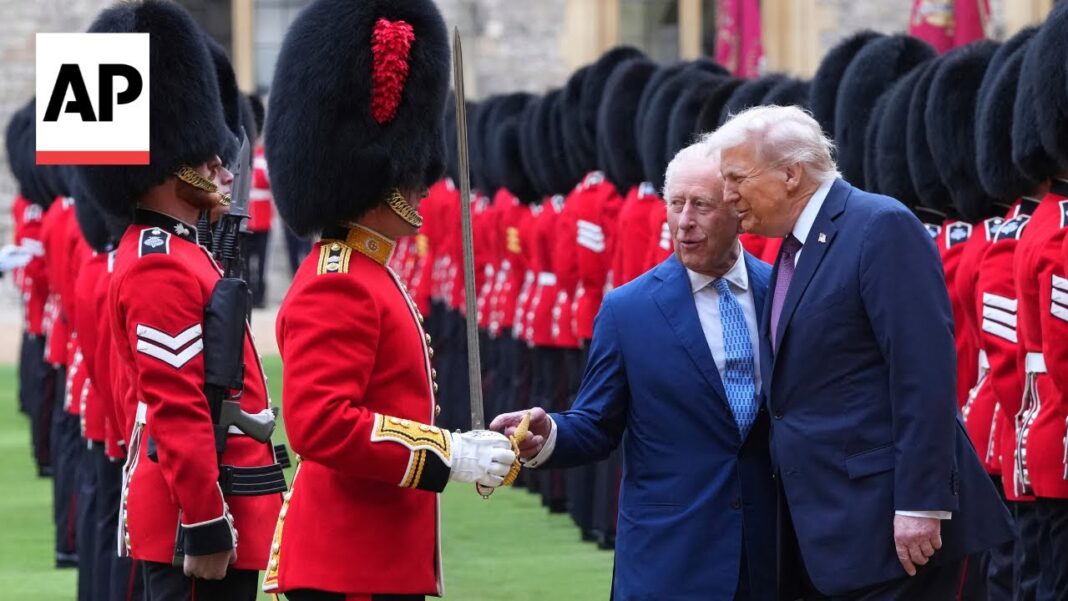
King Charles III’s visit follows a reciprocal moment in the diplomatic calendar. In September, Donald Trump traveled to London, where he was hosted at a state dinner at Windsor Castle. The event, rich in pageantry, served to reinforce the longstanding relationship between the two nations.
Similarly, Mike Johnson recently addressed the British Parliament in commemoration of the 250th anniversary of the United States, highlighting what he described as the “special relationship” that has bound the two countries across generations. The Fox News Digital report emphasized that these exchanges form part of a broader pattern of high-level engagement aimed at sustaining a partnership that has weathered both cooperation and disagreement.
Yet the upcoming visit is distinguished by the convergence of ceremonial diplomacy with pressing strategic concerns. The King’s presence in Washington will coincide with a period of heightened tension between the United States and Iran, a conflict that has drawn in Israel and raised complex questions about the role of allied nations.
At the heart of these tensions lies a divergence in policy between Washington and London. The Trump administration has sought to rally its allies in support of its military campaign against Iran, viewing the conflict as a critical front in its broader strategic objectives. According to the report by Fox News Digital, the United States has exerted considerable pressure on Keir Starmer to provide assistance.
Starmer, however, has adopted a more cautious approach, emphasizing the primacy of British national interests. His reluctance to fully align with Washington’s position has not gone unnoticed. President Trump has publicly criticized the British leader, even invoking historical comparisons by remarking that Starmer is “no Winston Churchill.”
This rhetorical exchange underscores the complexities of the current moment. While the United States and the United Kingdom remain bound by deep institutional ties, their approaches to contemporary challenges are not always congruent. The King’s visit thus takes place against a backdrop of both enduring partnership and emerging friction.
In navigating these dynamics, the role of the monarchy assumes particular importance. As a constitutional sovereign, King Charles III does not engage directly in policy-making. Yet his presence carries symbolic and diplomatic weight, offering an opportunity to reinforce shared values and to underscore the continuity of the Anglo-American relationship.
The Fox News Digital report noted that the King’s longstanding engagement with issues of international cooperation and cultural exchange may inform the tone of his address. While the specifics of the speech remain unknown, it is widely anticipated that he will emphasize themes of unity, resilience, and mutual respect.
The monarchy’s ability to operate above the fray of partisan politics positions it as a unique instrument of diplomacy. In moments of tension, such as the present, this role becomes particularly salient. The King’s visit may serve as a stabilizing influence, reaffirming the foundational elements of the relationship even as policy differences persist.
The decision to address Congress further elevates the significance of the visit. The chamber has historically served as a forum for moments of international importance, hosting leaders whose words carry both symbolic and substantive implications.
For King Charles III, the address represents an opportunity to speak directly to the representatives of the American people, articulating a vision of partnership that transcends immediate challenges. The Fox News Digital report noted that such speeches often resonate beyond their immediate audience, shaping public perception and reinforcing diplomatic narratives.
The rarity of the occasion—only the second instance of a British monarch addressing Congress—adds to its gravity. It is a moment that will be scrutinized not only for its content but for its broader implications.
Behind the ceremonial aspects of the visit lies a complex web of strategic calculations. The United States, engaged in a multifaceted conflict with Iran, is seeking to consolidate support among its allies. The United Kingdom, while historically aligned with Washington, must balance its commitments with its own national interests.
Starmer’s emphasis on prioritizing British interests reflects a broader trend in international relations, where traditional alliances are increasingly subject to renegotiation and recalibration. Fox News Digital has reported that this stance has resonated domestically, even as it has drawn criticism from some quarters.
For the Trump administration, the King’s visit presents an opportunity to spotlight the strength of the alliance, even in the face of policy differences. By hosting a state visit of such prominence, Washington signals its commitment to maintaining close ties with London.
The significance of King Charles III’s visit extends beyond the immediate context of U.S.-U.K. relations. It serves as a reminder of the enduring importance of diplomacy in an era characterized by rapid change and uncertainty.
The Fox News Digital report highlighted that the visit will be closely watched by other nations, particularly those involved in or affected by the ongoing conflict in the Middle East. The messages conveyed during the visit—both explicitly and implicitly—may influence perceptions of alliance cohesion and strategic direction.
Moreover, the event emphasizes the continued relevance of symbolic gestures in international relations. In a world often dominated by transactional considerations, the pageantry and tradition associated with state visits provide a counterpoint, reinforcing the human and historical dimensions of diplomacy.
As King Charles III prepares to step onto American soil, the convergence of history, diplomacy, and contemporary challenges creates a moment of exceptional significance. His address to Congress will echo the words of his mother, Queen Elizabeth II, while reflecting the realities of a new era.
In the final analysis, the King’s journey to Washington is more than a diplomatic engagement; it is a reaffirmation of a relationship that has shaped the course of modern history. Whether it will also serve as a catalyst for renewed alignment remains to be seen. What is certain, however, is that the world will be watching as crown and congress converge in a moment that bridges past and present, tradition and transformation.
