



|
Getting your Trinity Audio player ready...
|
Judge Set to Decide Fate of Trump’s Hush Money Conviction as President-Elect’s Legal Team Pushes for Dismissal
Edited by: Fern Sidman
The legal drama surrounding President-elect Donald Trump’s high-profile “hush money” criminal case may take a historic turn next week as Manhattan Supreme Court Justice prepares to announce whether Trump’s felony conviction will still stand, according to a report in The New York Post. The case, which stems from 34 felony charges of falsifying business records, has been a lightning rod of controversy since its inception, with Trump accused of making illicit payments to adult film actress Stormy Daniels ahead of the 2016 election to prevent damaging disclosures. Now, as Trump returns to the national stage after his resounding electoral victory, his legal team is mounting a fierce campaign to have the conviction dismissed, arguing that his new status as president-elect offers him constitutional protections against state prosecution.
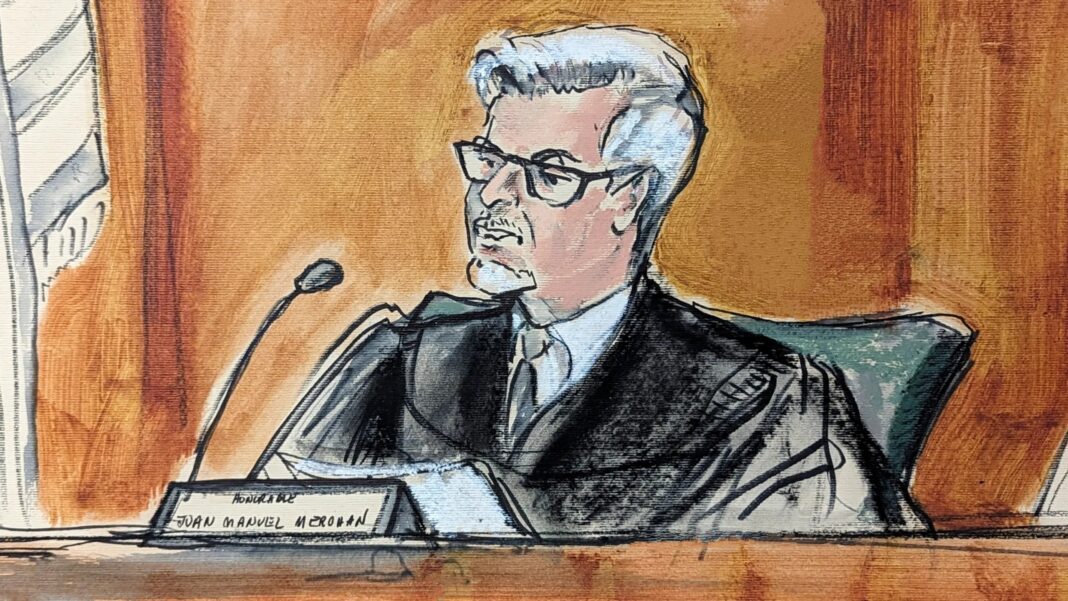
The New York Post reported that Justice Merchan had already delayed sentencing until after the election, opting to give himself more time to weigh the complex legal implications of sentencing a former president. Trump’s attorneys are expected to make the case that a president-elect should be shielded from state prosecution, citing constitutional protections that traditionally apply to sitting presidents. According to CNN’s Chief Legal Affairs Correspondent Paula Reid, Trump’s legal team is using his election win as leverage, asserting that sentencing should not occur given his new role. “They’re going to argue to the judge that sentencing should never happen because now that Trump is president-elect,” Reid explained, adding that Trump’s attorneys will claim he deserves protections from state actions, particularly from state prosecutors.
The potential dismissal of the conviction has captivated both legal scholars and political observers. Trump, now 78, faces up to four years in prison if the conviction stands, though legal experts have widely speculated that the former president is unlikely to serve jail time. Neama Rahmani, a former prosecutor, told The New York Post that Merchan likely lacks the appetite for imprisoning a former president or president-elect. “Merchan doesn’t have the stomach to imprison a former president or president-elect,” Rahmani said, suggesting that Trump’s recent electoral success may effectively neutralize his legal troubles. “Now that Trump has won, his criminal problems go away.”
The case itself has been unprecedented, with Trump becoming the first former U.S. president to face felony charges. The indictment alleged that Trump falsified business records to conceal payments totaling $130,000 to Daniels, with whom he was alleged to have had an affair, though Trump has denied any wrongdoing. As per the information provided in The New York Post report, prosecutors argued that these payments constituted an illegal attempt to influence the 2016 election by preventing Daniels from disclosing information that could damage his campaign. Trump’s defense team, however, has maintained that the charges are politically motivated, framing them as an attempt by state prosecutors to undermine his influence and public image.
Trump’s legal strategy, as outlined by The New York Post, focuses on a constitutional argument that would protect him from state prosecution due to his election as president. His attorneys are expected to invoke the supremacy of federal executive authority, claiming that a state prosecution against a president-elect conflicts with federal constitutional principles. This argument is bolstered by the fact that traditionally, sitting presidents are afforded immunity from prosecution, a precedent that Trump’s team hopes can be extended to the president-elect status. This line of reasoning underscores the broader debate about the scope of presidential immunity and whether it should apply to criminal actions that occurred before a president’s term.
Justice Merchan’s upcoming decision will likely set a landmark precedent in the intersection of executive power and state-level prosecution. Legal analysts have suggested that while Merchan has shown reluctance to imprison Trump, he faces pressure to uphold the integrity of the court’s previous ruling. A dismissal of the conviction would almost certainly provoke a polarizing response across the political spectrum, with Trump supporters likely to see it as a vindication and his opponents decrying it as an erosion of judicial accountability.
As The New York Post report noted, Merchan’s ruling will likely be scrutinized not only for its legal implications but also for its impact on Trump’s renewed political life. Trump’s election win, which many see as a mandate from his supporters, has only added fuel to his legal team’s assertion that he should be immune from state prosecution. A ruling in his favor could redefine the boundaries of presidential protections, especially in cases involving actions prior to assuming office.
Observers remain divided on what Merchan’s final ruling might entail. Some argue that dismissing the conviction could set a dangerous precedent by effectively allowing presidential candidates or presidents-elect to evade accountability for actions taken before they assume office. Others, however, see it as a matter of constitutional principle, believing that the protection of executive authority should be robust enough to shield even a president-elect from state prosecutions that could disrupt federal governance.
Ultimately, Merchan’s decision will have far-reaching consequences, not only for Trump’s legal future but for the broader question of how much immunity elected officials should have from prosecution. With Trump’s attorneys poised to argue that a president-elect deserves the same constitutional protections as a sitting president, the case could reshape the legal landscape of presidential immunity.
As the country awaits Merchan’s ruling, Trump’s case stands as a testament to the complexities of American jurisprudence in an era where politics and law intersect in increasingly unpredictable ways. Whatever the outcome, the ruling will undoubtedly spark debate and could very well influence how future cases involving high-ranking officials are handled in American courts.
