



|
Getting your Trinity Audio player ready...
|
By: Jerome Brookshire
One year after the attempted assassination of President Donald Trump at a campaign rally in Butler, Pennsylvania, a harrowing new report from the Government Accountability Office (GAO) has laid bare a staggering array of security failures by the U.S. Secret Service — failures that nearly cost the life of a former president and left an innocent man dead. As Jewish Breaking News reported on Sunday, the findings have ignited a national reckoning over institutional accountability and the adequacy of federal protection for political leaders in an era of escalating threats.
The GAO report, commissioned by Senate Judiciary Committee Chairman Chuck Grassley (R-Iowa), reveals that the Secret Service had received classified intelligence warning of a credible threat against Trump’s life a full ten days before the Butler rally. Despite the severity of the warning, it was never disseminated to key federal agencies, local law enforcement, or even the Trump campaign. According to the information provided in the Jewish Breaking News report, this failure of communication — described in the report as a “catastrophic breakdown in protocol” — set in motion a chain of events that led to tragedy on July 13, 2024.
Among the most damning findings in the GAO report, as highlighted by Jewish Breaking News, was the appointment of a lead Secret Service agent with no prior experience in securing large-scale outdoor events. This inexperience proved critical. Compounding the issue, the agent assigned to operate the surveillance drone had reportedly received just one hour of training. When the drone suffered a minor malfunction, the agent was unable to relaunch it — a technical failure that, according to the report, directly impaired the agency’s ability to detect the gunman before he struck.
The contrast between the Secret Service’s operational collapse and the assassin’s precision is chilling. As Jewish Breaking News noted in its report, 20-year-old Thomas Matthew Crooks, the would-be assassin, deployed his own drone to conduct aerial reconnaissance of the rally site. Using information gathered from his surveillance, Crooks meticulously planned his rooftop attack, exploiting every vulnerability in the Secret Service’s security perimeter.
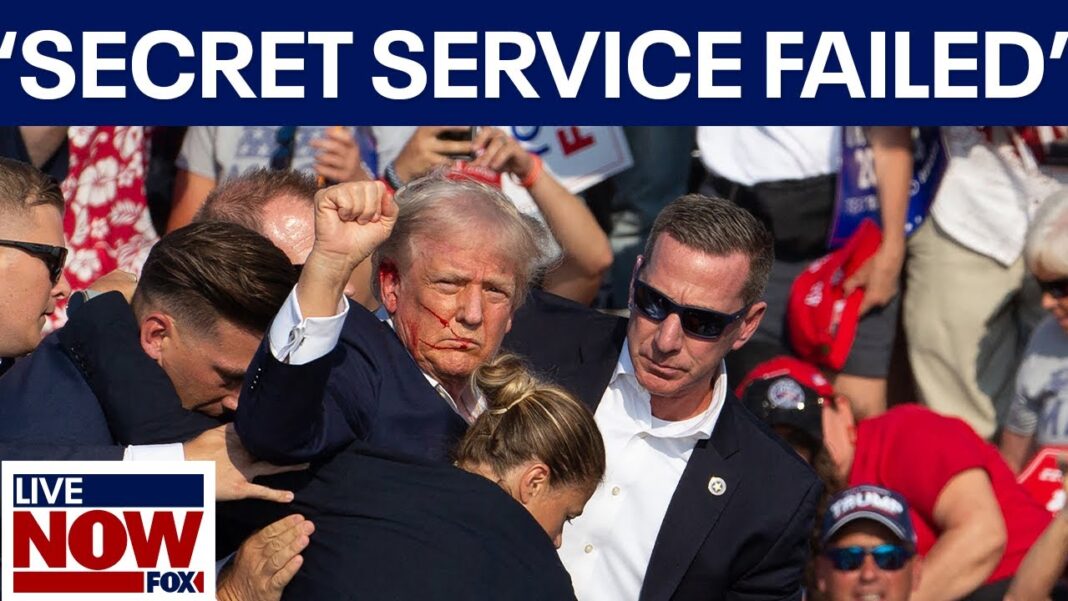
On that fateful day, Crooks opened fire during Trump’s speech. A bullet grazed the President’s right ear, killing local firefighter Cory Comperatore, who was shielding his family in the crowd, and injuring two others. As the Jewish Breaking News report recounted, Crooks was neutralized seconds later by a Secret Service counter-sniper. The image of a bloodied Trump standing defiantly before the crowd, raising his fist and shouting, “Fight, fight, fight!” before being evacuated, became an indelible symbol of both personal resilience and systemic failure.
In a later interview with Fox News, conducted by his daughter-in-law Lara Trump, the president described the Secret Service’s decision to allow unvetted access to a rooftop directly facing the rally stage as an “outrageous security oversight.” “If that sniper didn’t take the shot when he did, it could’ve been much worse,” Trump reflected, commending the sharpshooter, known only by his first name, David, whose split-second response averted an even greater catastrophe.
In a rare concession, the Secret Service publicly labeled the incident “an operational failure.” The agency acknowledged a litany of communication gaps, technical mishaps, and human errors. Six agents faced disciplinary action — unpaid suspensions ranging from 10 to 42 days — and were reassigned to non-operational roles.
The disciplinary measures, however, have done little to quell public anger. As Jewish Breaking News reported, the families of victims, particularly that of Cory Comperatore, have voiced searing criticism. “My husband is dead, and they’re just suspended,” Comperatore’s widow lamented. “There were multiple warnings. They ignored them. And now we’re the ones who live with the consequences.”
Secret Service Director Sean Curran has since announced a slate of reforms, including the creation of a dedicated aerial surveillance division, the expanded use of armored vehicles at public events, and new interagency coordination protocols. Yet, as the Jewish Breaking News report emphasized, many observers — from security experts to members of Congress — fear these measures may be too little, too late.
The GAO report also disclosed another chilling revelation: President Trump was allegedly the target of a separate failed assassination attempt two months after the Butler incident, this time while golfing in Florida. This disclosure, largely underreported until now, suggests a persistent and coordinated threat against the former president, underscoring the depth of systemic vulnerabilities.
The assassination attempt — and the systemic failures it exposed — have become emblematic of a deeper national anxiety. As the Jewish Breaking News report observed, the image of a wounded Trump defying an assassin’s bullet stands as a dual symbol: a testament to personal courage and a glaring indictment of institutional collapse.
The GAO’s findings do not merely catalog a list of errors. They lay bare a culture of complacency within the very agency tasked with protecting the lives of America’s leaders. The report’s conclusion — that basic training deficiencies, mismanagement of resources, and catastrophic communication lapses contributed to the near loss of a former president — has sparked urgent calls for accountability from across the political spectrum.
One year later, the questions remain hauntingly unresolved. Could this tragedy have been prevented? How close did the nation come to losing a former president on live television? And perhaps most pressing of all: Has enough been done to ensure it won’t happen again?
As the report at Jewish Breaking News observed in its anniversary coverage, the legacy of the Butler attack is not merely a tale of a narrowly averted assassination. It is a cautionary tale of what happens when complacency, incompetence, and institutional decay collide in a moment of national peril. And for a nation still grappling with the weight of that moment, the reckoning is far from over.
