



|
Getting your Trinity Audio player ready...
|
By: Fern Sidman
As the calendar edges deeper into January, the United States finds itself bracing for what meteorologists are warning could become the most far-reaching and disruptive winter weather event of the season. From the sunbaked plains of Texas to the icy corridors of the Northeast, a sprawling storm system—preceded by a brutal Arctic air mass—is poised to deliver a volatile combination of snow, ice, and life-threatening cold to more than two dozen states. According to a report on Wednesday in USA Today, millions of Americans are already under winter storm watches, extreme cold advisories, and travel warnings as the nation prepares for days of hazardous conditions.
On January 21 alone, more than 29 million people were placed under winter storm watches across a wide swath of the country, including Texas, New Mexico, Arkansas, Alabama, and Tennessee. Millions more across the Great Lakes and Upper Midwest were grappling with winter weather advisories and extreme cold alerts, a prelude to a week that forecasters say will test infrastructure, emergency services, and public endurance alike. USA Today reported that this unfolding scenario reflects a convergence of atmospheric forces rarely seen at such scale: an entrenched Arctic air mass colliding with a moisture-laden storm system advancing from the west.
According to AccuWeather meteorologists, whose forecasts have been closely followed by USA Today, the coming storm will trail a powerful surge of Arctic air that is already plunging temperatures across the eastern two-thirds of the United States. While the storm’s precise trajectory remains uncertain—a common challenge in long-range winter forecasting—its footprint is expected to be enormous.
“This is shaping up to be the most impactful storm of the winter so far,” AccuWeather Chief Meteorologist Jonathan Porter said, in remarks highlighted in the USA Today report. “The risk of ice, snow and frigid temperatures is a dangerous combination.”
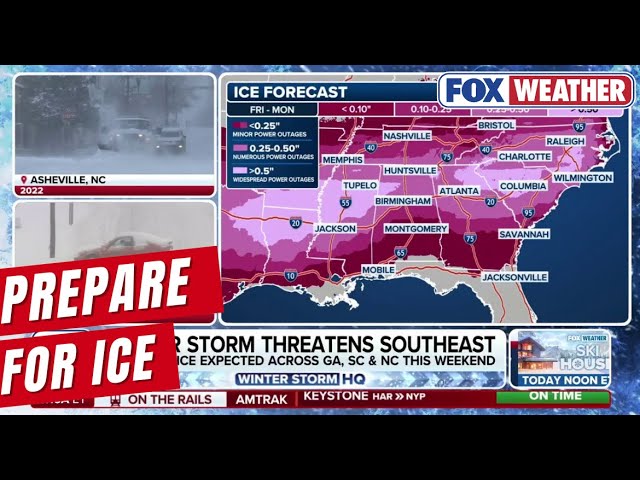
Forecasters anticipate several inches of snow across the Plains region, with heavy accumulations likely in parts of the Midwest and Appalachians. Meanwhile, areas farther south, including Texas and portions of the Carolinas, face a heightened risk of freezing rain—a particularly dangerous form of winter precipitation capable of crippling power grids and rendering roads impassable.
Even before the storm’s arrival, the nation is contending with an extraordinary cold spell. USA Today reported that an Arctic blast is expected to push temperatures into the single digits—and in some cases below zero—across vast regions of the country. From the Northern Plains to the Ohio Valley and into the Northeast, a frigid air mass will expand beginning January 22, accompanied by gusty winds that will dramatically exacerbate the danger.
The Northern Plains could experience wind chill values plunging to minus 50 degrees, the coldest readings in the nation. In Chicago, AccuWeather forecasts suggest that daytime highs may struggle to rise above zero. As the USA Today report explained, wind chill—also known as apparent temperature—accounts for both air temperature and wind speed, offering a more accurate measure of the risk posed to exposed skin.
The conditions are so severe that meteorologists are drawing comparisons to the infamous Arctic outbreak of late January 2019. During that event, at least 18 people died as a result of the cold, according to the report in USA Today. Wind chills dropped as low as minus 50 across Minnesota, Iowa, Wisconsin, and northern Illinois, making it one of the most violent cold weather episodes in recent history.
“These wind chills will pose a life-threatening risk of hypothermia and frostbite to exposed skin,” the Weather Prediction Center warned in statements cited by USA Today.
As the Arctic air settles in, attention is turning to the storm system expected to develop on January 23 and persist through the weekend. Meteorologists say it will initially produce a dangerous mix of snow, sleet, and freezing rain across the Southern Rockies and Plains before spreading eastward through the mid-South and toward the Atlantic seaboard.
The storm’s northern flank—including parts of Texas and the Carolinas—will likely experience heavy snow, while the southern half could be plagued by freezing rain across much of the Deep South. USA Today reported that snowfall totals could vary significantly depending on the storm’s eventual path, but any snow that falls is expected to linger due to persistently low temperatures.
AccuWeather projects between 6 and 12 inches of snow across the heart of the Plains region, with as much as 2 feet possible in parts of the Appalachians. In Tennessee, the National Weather Service office in Nashville warned that areas north of Interstate 40 could see up to a foot of snow, while communities to the south may contend with as much as half an inch of ice—an amount capable of snapping tree limbs and knocking out power for days.
The scale of the impending storm has prompted widespread concern about its potential ripple effects. USA Today reported that AccuWeather is forecasting thousands of flight disruptions as airports grapple with snow-covered runways, icy aircraft, and staffing challenges. Major roadways could be closed, schools shuttered, and commerce slowed to a crawl across affected regions.
For communities unaccustomed to winter weather—particularly in the South—the risks are amplified. Ice storms in these areas often overwhelm infrastructure designed for milder conditions, leaving residents vulnerable to prolonged outages and hazardous travel.
Meanwhile, lake-effect snow is compounding the threat in the Great Lakes region. Ahead of the main storm, a pair of low-pressure systems is expected to sweep through the area, generating intense bands of lake-effect snow that could dump up to two feet in some locations by the end of the workweek. USA Today cited National Weather Service warnings that these conditions could severely impair travel and emergency response efforts.
With frostbite and hypothermia risks rising sharply, authorities are urging Americans to take the cold seriously. USA Today outlined a series of precautions recommended by weather and public safety officials:
Wear multiple layers, including hats, gloves, and insulated boots, if venturing outdoors.
Stay dry, as moisture dramatically accelerates heat loss.
Keep hot beverages on hand to help maintain core body temperature.
Check on neighbors, particularly the elderly and those with limited mobility.
Bring pets indoors and ensure they are protected from the cold.
Familiarize yourself with the warning signs of hypothermia and frostbite, and have a plan in case you become stranded.
As Americans brace for the coming freeze, the USA Today report revisited the nation’s cold-weather records to provide perspective on just how extreme conditions can become. The coldest wind chill ever recorded in the United States was minus 108 degrees on the summit of Mount Washington in New Hampshire on February 3, 2023. Climate scientist Brian Brettschneider noted that reconstructed historical data suggests a similar wind chill may have occurred there as far back as January 22, 1885.
The record low temperature for the contiguous United States remains minus 80 degrees, recorded in Alaska on January 23, 1971, according to NOAA data cited by USA Today. Other states have experienced staggering cold as well, including Montana’s minus 70 at Rogers Pass in 1954 and Wyoming’s minus 66 at Yellowstone’s Riverside Ranger Station in 1933.
Of all 50 states, only Hawaii has never recorded a sub-zero temperature; its record low stands at a comparatively balmy 12 degrees. Puerto Rico’s record low is 40.
As USA Today has emphasized throughout its coverage, the coming days represent a defining moment of this winter season—a test of preparedness, resilience, and communal responsibility. The convergence of extreme cold, heavy snow, and widespread ice threatens not only inconvenience but genuine danger.
While uncertainty remains about the storm’s exact path, the overarching message from forecasters is clear: this is not a routine winter event. It is a complex, high-impact system with the potential to disrupt daily life across much of the nation.
For millions of Americans, vigilance over the coming days will be essential. As temperatures plunge and snow clouds gather, the country is once again reminded that winter, at its most severe, commands both respect and caution.
