



|
Getting your Trinity Audio player ready...
|
By: Fern Sidman
In synagogue social halls, community centers and suburban basements across the United States, a quiet but profound transformation is underway in Jewish life. Men and women who once recoiled at the mere thought of firearms are now learning how to disassemble pistols, practice range etiquette, and speak candidly about their fears of being targeted simply for being Jewish. The catalyst is not a cultural fad or a shift in political ideology, but a pervasive sense of vulnerability that has settled over Jewish communities since the October 7 massacre in Israel and the wave of antisemitic incidents that followed across the Western world.
At the heart of this transformation is a rapidly expanding organization known as Lox & Loaded, a Jewish firearms club whose membership has surged past 1,000 and whose chapters now span more than 30 cities across the United States. Its founders insist it is not a militia, not a political lobby, and not a statement of aggression. It is, rather, a place where Jews can reclaim a sense of agency — a structured, supportive environment in which they can confront the grim reality that hatred is no longer confined to the margins.
A report in The Jerusalem Post that appeared on Saturday has traced the origins and meteoric rise of this movement, revealing how what began as a modest gathering in Cleveland, Ohio, has evolved into a nationwide phenomenon poised to cross international borders.
The club’s name, “Lox & Loaded,” is itself a declaration. It riffs on the familiar phrase “locked and loaded,” but substitutes the quintessential Jewish delicacy — lox — for “locked.” The juxtaposition is both humorous and disarming, a deliberate attempt to soften the jarring image of Jews with firearms while also conveying a stark message: preparedness is no longer optional.
In American Jewish culture, firearms have long been associated with the past — with pogroms in Eastern Europe or partisan fighters in the forests of occupied Europe. For many liberal Jews, guns were something one opposed, not something one learned to use. The very idea of Jews convening around firearms training would have seemed anachronistic only a few years ago.
That is precisely why the rise of Lox & Loaded is so revealing. It signals a rupture in the psychological contract that American Jews long believed existed between themselves and the society around them.
According to the information provided in The Jerusalem Post report, the club’s membership defies easy categorization. Some are politically conservative gun owners who have long believed in armed self-defense. But a striking number are ideological converts — people who spent their lives campaigning for stricter gun laws, who had never touched a firearm, and who once saw gun culture as antithetical to Jewish values.
Now they find themselves standing at shooting ranges, sometimes nervously, sometimes defiantly, grappling with a reality they never imagined confronting.
A spokesperson for Lox & Loaded explained that many new members arrive almost sheepishly, astonished by their own presence. They voice disbelief: “I can’t believe I’m here.” Yet after a few sessions, a shift occurs. Fear is replaced by curiosity, then by competence, and often by gratitude.
“The most common thing I hear when people leave meetings is gratitude,” the spokesperson said, as was reported in The Jerusalem Post. “They tell me, ‘This was necessary.’”
Despite the caricatures that inevitably accompany any discussion of guns, Lox & Loaded is adamant that its mission is not to arm a Jewish militia or to encourage public carry. The organization does not advocate that its members walk the streets with weapons, nor does it romanticize confrontation.
Its ethos is resolutely defensive.
“Nobody wants to be in a situation where they have to use a firearm,” the spokesperson emphasized, according to The Jerusalem Post report. “Our goal is education — not escalation.”
Firearm ownership without training, they argue, is not empowerment but peril. Many Jews, shaken by antisemitic attacks, may be tempted to buy weapons impulsively. Lox & Loaded seeks to interrupt that reflex by providing a deliberate, supervised path to competence.
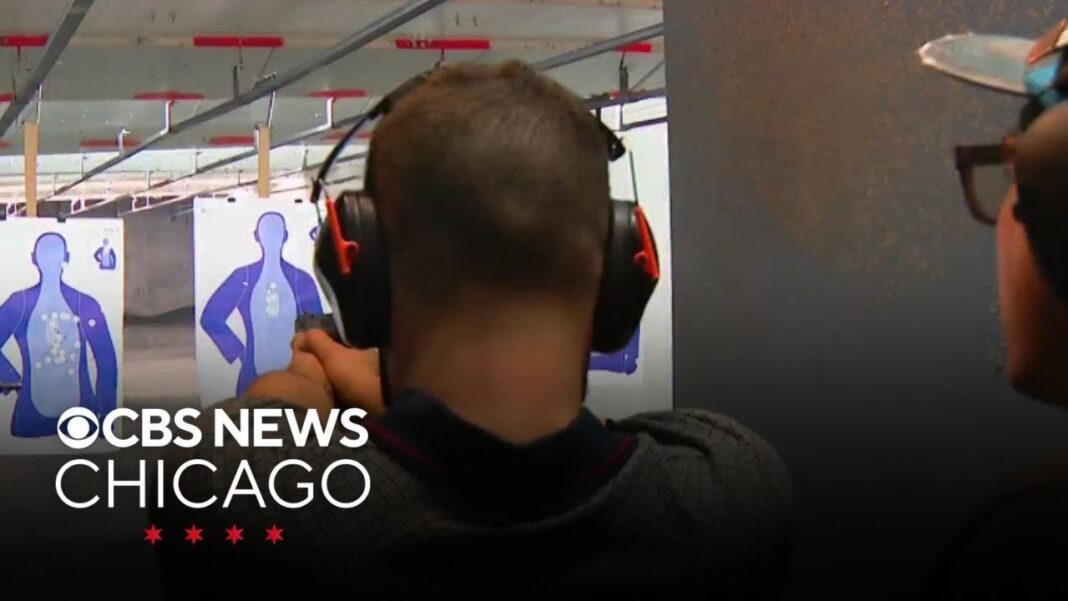
Members are introduced to firearms through private instructors at their own pace. They learn safety protocols before they ever consider purchase. The report in The Jerusalem Post indicted that they are encouraged to handle multiple types of weapons — pistols, revolvers, rifles — without owning any of them, discovering what fits their physical and psychological comfort.
Club meetings are not tactical drills but forums for discussion: how to store weapons safely, how to maintain them, how to avoid negligent discharge, how to assess risk responsibly.
What distinguishes Lox & Loaded from ordinary gun clubs is its emphasis on mental state. The Jerusalem Post report noted that many members come not merely to learn a skill, but to process something far deeper: a rupture in their sense of belonging.
“It’s not just about the firearm,” the spokesperson said. “It’s about the mental state. It’s absolutely about the community.”
In these gatherings, Jews speak openly about the fears they carry — fears inherited from grandparents who fled Europe, fears sparked by images of masked protesters chanting genocidal slogans, fears inflamed by news of synagogues being vandalized or schools being threatened.
For many, it is the first time they have felt permitted to articulate these anxieties without being dismissed as hysterical or reactionary.
The club enforces strict anonymity. No photographs, no public rosters, no social-media boasting. Members do not publish their names or faces.
This is not secrecy for its own sake, but an acknowledgment of vulnerability. To publicly identify oneself as a Jewish gun owner, the leadership believes, would be to invite unwanted attention — from extremists, from trolls, from those who might seek to test their resolve.
The anonymity also fosters honesty. In a culture that often demands stoicism from its minorities, Lox & Loaded offers a space where fear is not shameful.
Perhaps the most provocative element of the club’s philosophy is its embrace of deterrence.
“Lox & Loaded wants to be part of a message that has a deterrent effect against those who want to harm the Jewish community,” the spokesperson said, as was noted in The Jerusalem Post report. “If a large population of the community is armed, it might serve as a deterrent.”
The language is carefully chosen. The goal is not to threaten, but to dissuade. To replace the image of Jews as perennial victims with a subtler signal: that Jewish communities are not defenseless.
“The people in our community don’t need to be victims,” the spokesperson added. “We can look out for one another. Hopefully it will never come to that, but it never hurts to be prepared.”
What began in Cleveland has already become a national network. More than 30 chapters operate across the United States, from the Midwest to the coasts, as was reported by The Jerusalem Post. The leadership now speaks openly about international expansion — about bringing the model to Canada, Europe, and beyond.
The Jerusalem Post report noted that this ambition no longer seems fanciful. Interest pours in daily from Jews asking how to start chapters, how to connect with instructors, how to reconcile their ethical commitments with a new imperative of self-defense.
The emergence of Lox & Loaded is not a passing trend. It is the outward expression of a cultural reckoning taking place within American Jewry.
For decades, the dominant strategy for Jewish safety in America rested on integration, political advocacy, and faith in the rule of law. Guns were relics of a darker past — tools of survival in shtetls and ghettos, not in suburbs and city lofts.
But the illusion of permanence has been shattered. October 7 did not merely devastate Israel; it reverberated through the Jewish psyche worldwide. The antisemitism that followed — often brazen, often tolerated — convinced many that remembrance alone is no longer enough.
Preparation, they have concluded, is now a form of remembrance.
Lox & Loaded does not claim to have solved antisemitism. It does not pretend that a firearm can erase hatred. What it offers is something more modest and more radical: a way for Jews to look at the world as it is, not as they wish it to be, and to respond with dignity rather than despair.
In that sense, the bagels in the club’s name are more than a joke. They are a reminder that even as Jewish life adapts to new threats, it does so without surrendering its identity. The future of Jewish self-defense in America may be shaped not by slogans or manifestos, but by quiet afternoons at the range — where fear is confronted, community is forged, and preparation becomes a new expression of survival.