



|
Getting your Trinity Audio player ready...
|
From Hezbollah Battlefields to a Michigan Synagogue: Terrorist’s Family Ties Cast New Light on Foiled Attack at Temple Israel
By: Tzirel Rosenblatt
The attempted terrorist assault on a Jewish preschool and synagogue in suburban Detroit has taken on even more troubling dimensions following revelations about the attacker’s family connections to Hezbollah, the Iranian-backed terrorist organization long designated as a terrorist group by the United States and its allies.
According to information cited on Sunday in a report by The New York Post and confirmed in statements from Israeli officials, the brother of the assailant who rammed his vehicle into Temple Israel in West Bloomfield Township, Michigan, last week served as a commander within Hezbollah’s military structure. The disclosure has raised urgent questions among investigators and national security analysts about the ideological motivations behind the attack and whether broader networks or influences may have played a role.
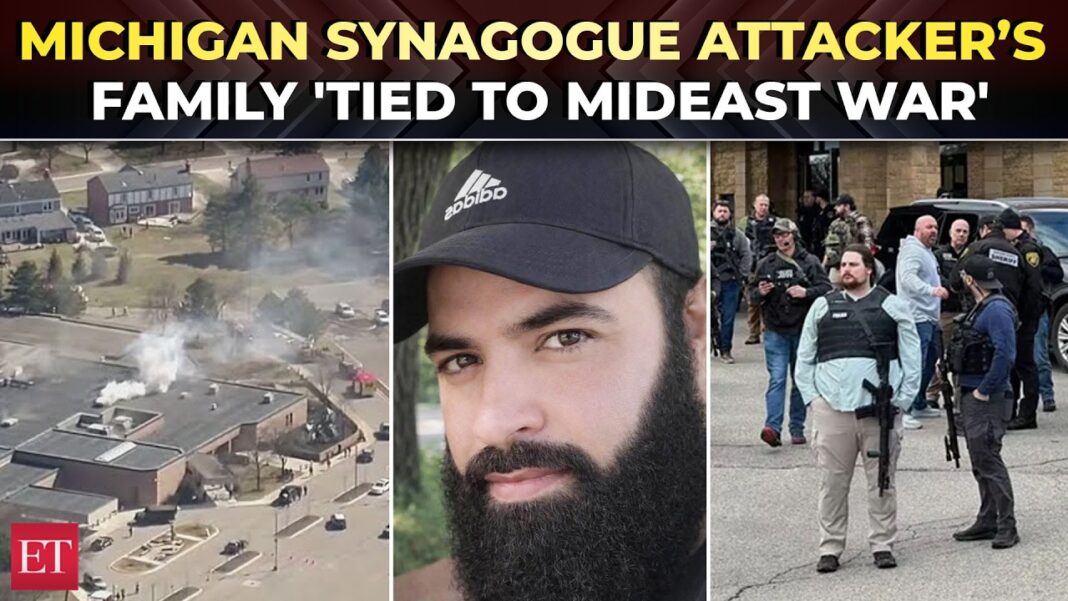
The suspect, identified as Ayman Muhammad Ghazali, a 41-year-old naturalized American citizen originally from Lebanon, was fatally shot after crashing his vehicle into the synagogue complex Thursday afternoon. Authorities say the vehicle was packed with gasoline containers and fireworks, indicating the possibility that the attack could have escalated into a far deadlier incident had the situation not been rapidly contained.
The dramatic confrontation unfolded at Temple Israel, one of the largest Reform synagogues in the United States and a prominent Jewish institution in the Detroit metropolitan area. The complex houses not only worship facilities but also a preschool and early childhood center that serves roughly 140 children.
Thanks largely to the swift response of the synagogue’s security personnel, what might have become a catastrophic attack targeting children and educators ended without loss of life among those inside the building.
Yet the emerging details about Ghazali’s background — particularly the revelation regarding his brother’s position within Hezbollah — have deepened the gravity of the incident.
The Israel Defense Forces (IDF) announced Sunday that Ibrahim Muhammad Ghazali, the attacker’s brother, served as a commander responsible for weapons management in Hezbollah’s Badr Unit, a specialized division of the Lebanese militant organization.
According to the IDF, this branch of Hezbollah has played a significant operational role in the recent regional war involving Iran and Israel. The Badr Unit has reportedly overseen the launch of hundreds of rockets directed at Israeli civilian population centers during the conflict.
The revelation was first highlighted in reports referenced by The New York Post, which cited Israeli military statements identifying Ibrahim Ghazali as a key figure within Hezbollah’s weapons operations network.
Hezbollah, founded in the 1980s with Iranian backing, remains one of the most heavily armed non-state actors in the world and has long been engaged in conflict with Israel. The group is designated as a terrorist organization by the United States, Canada, the European Union, and several other nations.
Security experts say the presence of a close family member in such a position inevitably raises questions about the ideological environment in which Ayman Ghazali was raised and whether extremist sympathies may have influenced his actions.
The attack in Michigan occurred just days after a devastating Israeli airstrike in Lebanon killed several members of the Ghazali family.
According to reporting referenced by The New York Post, two of Ghazali’s brothers — including Ibrahim — along with a niece and a nephew, were killed on March 5 in the town of Mashgharah, located in Lebanon’s Beqaa Valley region.
Local officials told the Associated Press that the family had gathered for the iftar meal marking the end of the daily Ramadan fast when the strike occurred.
Israeli officials have stated that the operation targeted Hezbollah militants amid ongoing hostilities tied to the broader regional conflict involving Iran and its allied proxy forces.
The deaths of Ghazali’s relatives may have been a factor influencing his actions, investigators say, though authorities caution that the precise motive for the Michigan attack remains under investigation.
On Thursday afternoon, Ghazali drove approximately 38 miles from his home in Dearborn Heights, a Detroit suburb with a large Middle Eastern population, toward the Temple Israel complex. Investigators say he deliberately rammed his vehicle into the building’s entrance, crashing into a hallway inside the synagogue facility.
The car was reportedly packed with fireworks and gasoline containers, materials that authorities believe could have been used to ignite a significant fire or explosion had the plan been carried out fully. An armed synagogue security guard quickly confronted the attacker, leading to a brief exchange of gunfire.
According to reports cited by The New York Post, Ghazali ultimately died after shooting himself when his vehicle became trapped and began burning following the crash. The rapid actions of security personnel prevented the attacker from entering areas of the building where children and staff members were gathered.
At the time of the attack, approximately 140 children, along with teachers and staff, were inside the preschool and early childhood center located within the synagogue complex. Miraculously, none of them were injured.
Authorities and community leaders have credited the synagogue’s extensive security preparations and the professionalism of its guards for preventing a tragedy.
“If they had not all done their jobs almost perfectly, we would be talking about an immense tragedy here with children gone,” U.S. Senator Elissa Slotkin, a Democrat representing Michigan, said during a news conference Friday.
The incident has reignited national discussions about the increasing need for security at Jewish institutions in the United States, many of which have strengthened their defenses following a series of antisemitic attacks over the past decade.
In Dearborn Heights, members of the local Muslim community expressed grief over the deaths of Ghazali’s relatives while simultaneously condemning the attack on the synagogue. A local mosque held a memorial service last weekend for the family members killed in Lebanon.
Imam Hassan Qazwini, a prominent religious leader in the area, stated that he had only encountered Ghazali once and strongly denounced the assault on Temple Israel. “Islam forbids holding innocent people accountable for acts done by others,” Qazwini told reporters, according to statements cited by The New York Post. He emphasized that grievances stemming from conflicts overseas cannot justify attacks against civilians or houses of worship. “The unjustified Israeli attack on civilians in Iran and Lebanon gives no blank check to anyone attacking synagogues, civilians and peaceful communities,” he said.
Federal and local authorities continue to investigate the circumstances surrounding the attack. While law enforcement officials have not publicly concluded that Ghazali had operational ties to Hezbollah or other terrorist organizations, investigators are examining whether ideological influences or external contacts played a role.
The incident has also prompted renewed scrutiny of the attacker’s immigration and travel history. Ghazali entered the United States in 2011 on an immigrant visa as the spouse of an American citizen and later obtained U.S. citizenship in 2016, according to the Department of Homeland Security.
Officials say there is currently no evidence that he had been previously charged with terrorism-related offenses in the United States. The attempted attack comes amid heightened global tensions stemming from the ongoing war involving Iran, Israel, and various regional proxy forces.
Experts warn that such conflicts can sometimes inspire individuals abroad to commit acts of violence in response to events overseas. The case also highlights the persistent threat faced by Jewish institutions, which have increasingly adopted robust security measures in response to rising antisemitism.
According to reports cited by The New York Post, Temple Israel had already invested heavily in security infrastructure and personnel, a decision that may have saved dozens of lives. For the Jewish community in Michigan and across the country, the foiled attack is both a chilling reminder of vulnerability and a testament to preparedness.
What might have been one of the deadliest antisemitic attacks in recent American history was stopped in its tracks — not by chance, but by vigilance, training, and the quick action of those tasked with protecting their community.
As investigators continue to examine Ghazali’s motivations and background, one fact remains clear: the events of that afternoon could have unfolded very differently. And in a synagogue filled with children, the consequences could have been devastating.
