



|
Getting your Trinity Audio player ready...
|
By: Fern Sidman – Jewish Voice News
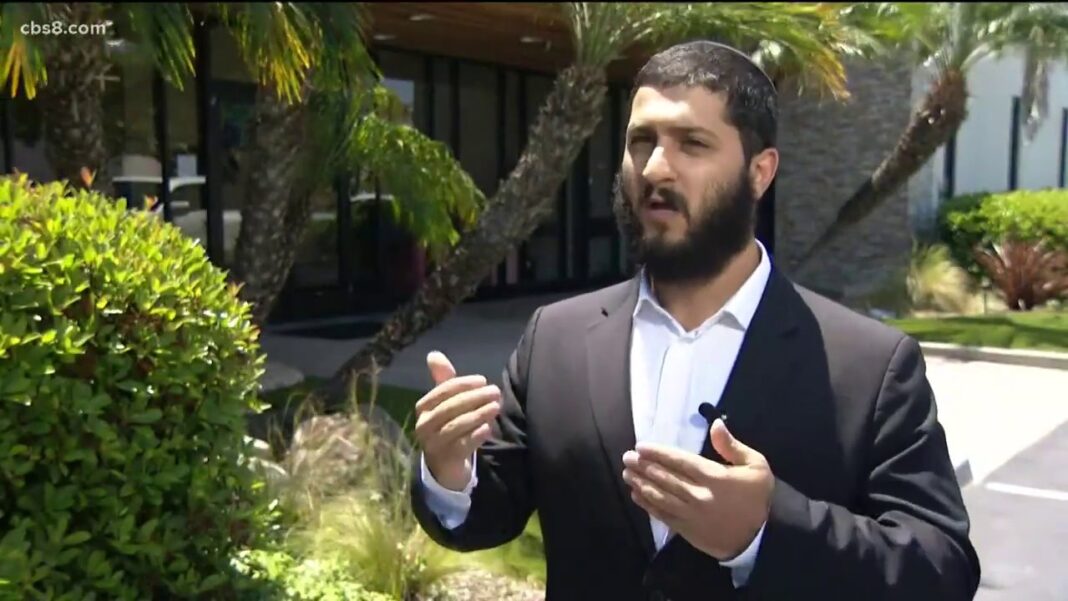
For much of his young life, Raziel Cohen moved between two worlds rarely spoken of in the same breath: the quiet intensity of Talmudic study and the adrenaline-charged precision of firearms training. But in 2024, as Jewish communities across the United States reoriented themselves toward self-protection in an increasingly volatile climate, the twenty-eight-year-old Orthodox rabbi—now widely known as the “Tactical Rabbi”—found himself standing at the center of a national conversation. And this winter, as The New York Post reported on Saturday, Cohen’s unusual fusion of rabbinic scholarship and tactical mastery earned him a nomination for the prestigious Gundie Awards, long regarded as the Oscars of the firearms world.
For Cohen, who heads the National Defensive Firearms Academy, the nomination for Firearms Instructor of the Year was more than a professional milestone: it was, as he told The New York Post, “beyond a dream,” a moment of profound validation after more than a decade spent training ordinary citizens, security professionals, correctional staff, and faith communities in the fundamentals of gun safety and personal defense.
“I was shocked when I was nominated—it’s an insane feeling,” Cohen said from his home in New Jersey, where shelves of rabbinic texts share space with tactical gear, holsters, and an array of certification plaques from the NRA and the U.S. Department of Justice.
Cohen’s emergence as a national figure in defensive training has coincided with significant cultural shifts inside American Jewry. The rabbi’s moniker—half affectionate, half incredulous—reflects a certain cognitive dissonance that he himself acknowledges.
“There’s always the initial shock and disbelief a rabbi can shoot like that,” Cohen told The New York Post, recalling the double takes he often receives when he steps onto a range wearing a black fedora and tzitzit instead of tactical fatigues. “Some people look at me, take a double take, then fist bump me and move on.”
But Cohen is far from a novelty act. The competition he faces at the Gundies underscores it: among his peers are some of the most respected instructors in the industry, including firearms influencer Anna Taylor and rising star Amelie Eichlinger-Noll—figures who command immense followings in a firearms culture that has grown increasingly diverse.
“There are a lot of glass ceilings being broken,” Cohen observed. “We’re all in this for the same reason—we all want to protect our families, our communities, and each other.”
When The New York Post first profiled Cohen in 2021, it focused on his innovative design of a $550 kapota—an elegantly tailored version of the long black coat traditionally worn by married Hasidic men on Shabbat, engineered to conceal a firearm while maintaining halachic modesty. At the time, the concept felt like a provocative experiment, something that hovered at the edges of Jewish life.
But everything changed after two seismic events in American society.
The first was the Supreme Court’s 2022 decision in New York State Rifle & Pistol Association v. Bruen, which dramatically reshaped the national gun policy landscape by expanding the constitutional right to carry firearms.
The second was October 7, the day Hamas terrorists massacred more than 1,200 Israelis, triggering the most profound psychological shock to diaspora Jews in nearly a century. Antisemitic incidents surged, synagogues hardened their security posture, and Jewish communities nationwide experienced a renewed urgency around personal and communal defense.
In that atmosphere, Cohen’s work became not an eccentric corner of American Jewish life but a vital, mainstream necessity.
“Jews and guns have become more normalized in recent years,” he told The New York Post, noting that he has trained nearly 5,000 people since the two watershed events—a staggering number, given the historically complicated relationship between Jewish identity and armed self-defense in the United States.
The demand from Jewish organizations, synagogues, and schools, he said, now outpaces anything he saw in his early years of teaching.
Cohen’s path into tactical instruction might seem unusual for a rabbi, but the thread running through his work is consistency of purpose. Before founding the National Defensive Firearms Academy, he spent years working in correctional facilities, where he observed firsthand how quickly danger can escalate and how decisive proper training can be in defusing or surviving violent encounters.
The academy he later built reflects both worlds: structured, disciplined, and grounded in ethics. His programs emphasize de-escalation, safety, and the moral gravity of carrying a firearm—topics he approaches with the same seriousness he brings to halachic texts.
“Firearms training is not about bravado,” Cohen often says in interviews. “It’s about responsibility.”
As The New York Post has reported, Cohen’s clientele spans a wide spectrum—from Orthodox families and community watch groups to secular young professionals, retired law-enforcement officers, and women’s self-defense classes. He teaches not simply how to shoot, but how to think under pressure, how to avoid confrontation, and how to protect others.
“He’s not what most people expect in a tactical instructor,” one student told the paper in 2022. “But that’s why he’s so effective.”
Next month, Cohen will travel to the Venetian Theatre in Las Vegas for the Gundie Awards, an event known for blending black-tie glamour with an unapologetically armed sensibility. As the firearms equivalent of the Academy Awards, the Gundies draw veterans, elite trainers, influencers, content creators, hunters, and constitutional-rights activists from across the country.
The categories range from the expected—Firearms Instructor of the Year, Best Outdoorsman, Most Influential Writer—to the irreverent. (“Most Dapper Influencer” has become a favorite among attendees.)
Cohen’s preparation for the ceremony is characteristically grounded. “My plan is simple,” he told The New York Post. “Wake up, pray, go right to the event.”
He added, with a smile, that he plans to avoid the temptations of the Strip: no nightlife, no casinos, nothing that conflicts with the spiritual discipline he carries into every aspect of his life.
“I’m going to Las Vegas,” he said, “but I’m keeping my priorities.”
Part of Cohen’s growing influence lies in his ability to inhabit two identities without diluting either. He is unapologetically Orthodox, deeply attached to Jewish ritual life, and committed to a worldview in which faith and responsibility reinforce rather than contradict each other.
Yet he is also a consummate tactician, capable of handling firearms with a level of skill that astonishes even seasoned professionals. Videos posted online of Cohen on the range—executing rapid-fire drills, movement sequences, and precision exercises—regularly draw hundreds of thousands of views.
The juxtaposition is striking: sidelocks and suppressors, black hats and ballistic vests.
But in the America of 2024, what once seemed paradoxical now feels emblematic of a larger cultural shift. Jewish communities across the country—shaken by rising antisemitism, inspired by Israel’s spirit of resilience, and empowered by expanded legal pathways for self-defense—are rediscovering the tradition of Jewish physical agency, a tradition often forgotten in the post-war decades.
In this context, Cohen’s work is not merely symbolic. It is catalytic.
Cohen’s rise reflects a growing sentiment among American Jews: that safety cannot be outsourced, that vigilance is no longer optional, and that self-defense is not a departure from Jewish values but a continuation of them.
For centuries, Jewish communities lived with the burden of dependence—on local rulers, on state police, on charitable protection. But in the United States, and especially after the traumas of recent years, there is a renewed embrace of empowerment.
As Cohen put it to The New York Post, “We all want to protect our families, our communities and each other.”
In the rabbi’s worldview, self-defense is deeply intertwined with religious duty. Prayer and preparation, he believes, are two sides of the same covenantal coin.
Whether Cohen wins the Gundie Award or not, his nomination represents something far larger than a personal accolade. It is a marker of how profoundly the ground has shifted in the American Jewish community—and how figures once considered outliers are now emerging as essential leaders in a new era of Jewish self-assertion.
Still, Cohen maintains a quiet humility about the ceremony itself.
“It comes down to whatever G-d decides,” he told The New York Post, a simple statement that anchors his dual identity in faith and action.
But win or lose, the Tactical Rabbi has already reshaped the narrative. He has redrawn the boundaries of what is possible for Jewish leadership in the 21st century. And in doing so, he has become emblematic of a community that no longer sees its future in terms of vulnerability, but of vigilance, dignity, and determined strength.