



|
Getting your Trinity Audio player ready...
|
By: Fern Sidman
In a move that underscores the Trump administration’s renewed emphasis on national sovereignty and domestic resilience, President Donald J. Trump and Secretary of Homeland Security Kristi Noem on Tuesday announced the reconstitution of the Homeland Security Advisory Council (HSAC), unveiling a high-profile roster of appointees that merges public service veterans, law enforcement figures, conservative policy stalwarts, and private sector powerhouses.
According to a statement released by the Department of Homeland Security, the newly constituted HSAC will convene for its first meeting at DHS headquarters on July 2, 2025, in the nation’s capital. The announcement marks a major shift in the council’s orientation, aligning it more closely with the “America First” national security agenda championed by President Trump throughout his presidency and current re-election campaign.
First established on March 19, 2002, in the wake of the 9/11 attacks, the HSAC has historically served as a bridge between the federal government and the broader spectrum of homeland security expertise across sectors. Its mandate: to provide the Secretary of Homeland Security with independent, real-world, real-time advice on pressing threats to the homeland.
Now, with global instability, cyber threats, border security, and ideological extremism occupying center stage in the 2025 security discourse, the council has been recalibrated to reflect not only continuity with its origins but a bold new ideological posture. Secretary Noem characterized the reappointment effort as “a strategic modernization of homeland counsel — not merely to address today’s dangers, but to anticipate and deter tomorrow’s.”
“This is a council built not on bureaucracy but on boldness,” Noem said in a prepared statement. “Our members are not passive observers. They are patriots, practitioners, and problem-solvers.”
The new HSAC appointments reflect a blend of seasoned government operatives, entrepreneurs, military officers, legal minds, media influencers, and civic leaders. Governor Henry McMaster of South Carolina has been tapped to chair the council, bringing gubernatorial-level experience and strong ties to both border and cyber security efforts. Florida State Senator Joseph Gruters, a long-time Trump ally and national GOP strategist, will serve as Vice Chair.
The council’s private sector muscle is notably reinforced by Marc Andreessen, co-founder of the Silicon Valley venture capital firm Andreessen Horowitz, signaling a clear desire to integrate cutting-edge tech and cybersecurity policy into national threat assessment frameworks.
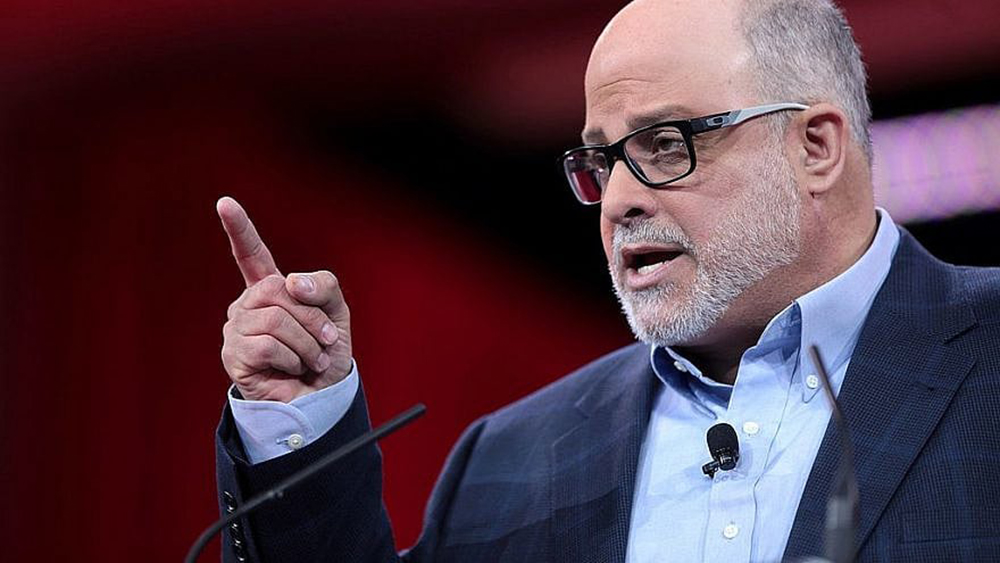
Among the more colorful and outspoken figures appointed are Mark Levin, the fiery constitutional scholar and syndicated broadcaster, and Chris Cox, founder of Bikers for Trump — a grassroots group credited with mobilizing populist support during Trump’s campaigns. Both are expected to lend ideological coherence and grassroots insight to the council’s deliberations.
Former New York City Mayor Rudolph Giuliani, long viewed as a pioneer in counterterrorism from his post-9/11 tenure, also returns to the national security spotlight as an HSAC member, alongside Corey Lewandowski, one of Trump’s earliest and most enduring campaign advisors.
The legal establishment is represented by David Chesnoff, a renowned defense attorney, and Matthew Flynn, a former Deputy Assistant Secretary of Defense and White House official. National defense and foreign policy continuity are embodied in appointments such as Edward McMullen Jr., former U.S. Ambassador to Switzerland and Liechtenstein, and Georgette Mosbacher, former U.S. Ambassador to Poland and a fixture in transatlantic policy discussions.
Military expertise is further underscored by Major Omar Qudrat, a U.S. Army Reserve officer and founder of the Muslim Coalition for America, whose background straddles legal advocacy, counterterrorism, and civic integration.
The reassembled HSAC reflects a deeper strategy within the Trump administration to tighten the feedback loop between government and the national security ecosystem, with clear emphasis on private capital, regional law enforcement, and public messaging.
Analysts note that several appointments — including Bo Dietl, a high-profile private security expert and former NYPD detective, and Sheriff Mark Dannels of Arizona’s Cochise County — indicate an intention to prioritize border integrity and domestic crime prevention as central to homeland defense.
Moreover, Stephen Sloan, a leading private equity executive specializing in secondary markets, and George Lund, CEO of Torch Hill Investment Partners, offer financial sector insight into potential economic vulnerabilities and resiliency planning.
This announcement comes as President Trump positions homeland security as a cornerstone of his campaign platform, pledging to restore law and order, rebuild national infrastructure, and decisively end what he describes as “the open border era.”
While critics may question the ideological alignment of some council members, supporters see the reconstituted HSAC as a welcome correction to what they claim was an overly academic, bureaucratic advisory structure under previous administrations.
As the July 2 meeting approaches, expectations are high. Supporters hope the new council will generate more actionable intelligence, influence policy with greater speed, and serve as a firewall against both foreign and domestic threats.
“This is not a ceremonial body,” Secretary Noem emphasized. “This is a command center of minds, forged in patriotism, focused on results.”
With America facing a kaleidoscope of 21st-century threats — from biosecurity breaches to information warfare to terrorism both foreign and homegrown — the new Homeland Security Advisory Council may soon find itself at the center of some of the most consequential decisions in modern American governance.
