



|
Getting your Trinity Audio player ready...
|
]By: Fern Sidman
In a ruling that is certain to inflame both political and legal tensions, a federal judge on Friday ordered the release of anti-Israel activist Mahmoud Khalil on bail after a prolonged three-month detention by U.S. immigration authorities. The decision, which comes as Khalil’s immigration and civil cases wind their way through the federal judiciary, has drawn intense scrutiny and sharp divides among immigration advocates, national security officials, and pro-Israel groups.
As Fox News reported on Friday, Judge Michael Farbiarz—a recent appointee of President Biden—determined during a hearing in New Jersey that Khalil did not pose a flight risk or danger to public safety. In what Fox News described as a “highly unusual” decision, Farbiarz concluded that the facts of the case presented “extraordinary circumstances” warranting Khalil’s release from a detention facility in Jena, Louisiana.
“Detention in this instance is both atypical and arguably retaliatory,” the judge stated from the bench, according to court transcripts obtained by Fox News.
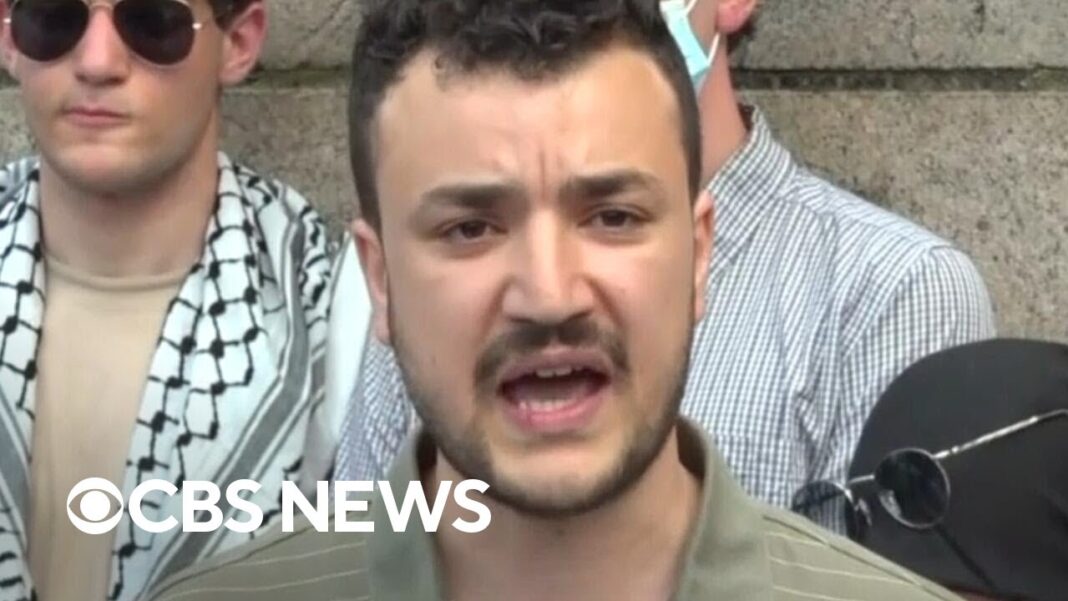
Khalil, a lawful permanent U.S. resident, was arrested in March at his Columbia University apartment, where he had been living with his U.S. citizen wife. The couple welcomed a newborn child while Khalil remained behind bars. His arrest, detainment, and pending deportation proceedings have become a cause célèbre among anti-Israel campus activists and immigration rights groups.
According to the information provided in the Fox News report, the Department of Homeland Security (DHS) initially sought Khalil’s removal on the basis of a memo from Secretary of State Marco Rubio. The memo invoked a rarely used provision of the Immigration and Nationality Act (INA), alleging that Khalil’s vocal opposition to Israel’s military operations in Gaza—and his leadership role in the Columbia University Apartheid Divest campaign—ran counter to U.S. foreign policy objectives.
Secretary Rubio’s letter argued that Khalil’s activism “undermined vital diplomatic priorities” and “created an unacceptable disruption on a U.S. university campus with international implications.” However, Judge Farbiarz swiftly enjoined the Secretary from using that determination as a basis for deportation, asserting that such a use of executive power risked infringing upon protected political expression.
Nevertheless, as the Fox News report confirmed, the DHS then pursued a second line of attack: Khalil allegedly omitted key affiliations from his green card application. Among those omissions, according to DHS attorneys, were his connections to campus organizations that have expressed support for Hamas and other groups the U.S. designates as terrorist organizations.
In court filings this week, DOJ lawyers argued that the federal court lacked the authority to grant Khalil bail because the fraud-related immigration charges were still active in immigration court. “Khalil remains detained because he is currently charged as removable for fraudulently or willfully misrepresenting material facts on his adjustment of status application,” federal attorneys wrote.
While Judge Farbiarz acknowledged the pending nature of those proceedings, he emphasized that the government had not demonstrated a compelling interest in continued pretrial detention. He noted that Khalil has deep family ties in the United States, including a newborn child, and that the case appeared to be “as much about speech and ideology as it is about immigration law.”
The ruling has ignited fierce debate over the line between constitutionally protected dissent and expressions that cross into material support for terrorism. As Fox News has reported, the Trump administration views Khalil’s activism through a national security lens, citing events, petitions, and social media posts that it claims signal “ideological affinity with Hamas.”
“These are not just protests,” one senior DHS official told Fox News. “We’re looking at structured movements that promote the agendas of designated terror groups, wrapped in the veneer of free speech.”
But critics of the administration’s approach—including Khalil’s attorneys—argue that the government is retaliating against political speech critical of U.S. foreign policy. In a letter to the court, his legal team wrote that Khalil’s detention was “exceedingly rare” and amounted to “unconstitutional retaliation against a lawful resident for expressing opposition to a foreign government.”
As the Fox News report noted, Khalil’s case has become a flashpoint for competing narratives: Is he a victim of political persecution for speaking out against Israeli military policy, or a disingenuous activist concealing dangerous affiliations under the cover of campus activism?
For now, Judge Farbiarz’s decision to release him on bail marks a legal turning point, though it is far from a vindication. Khalil still faces an uphill battle in immigration court over the allegations of misrepresentation in his permanent residency application—a charge that, if proven, could result in his eventual removal.
Khalil is expected to be released from custody as early as Friday evening, returning to New York to await further court proceedings. He has not spoken publicly since his arrest.
The Department of Justice declined to comment, but a senior Trump administration official, speaking anonymously to Fox News, expressed frustration at the decision. “This sends a dangerous message to those who hide behind activist credentials while working to undermine American national security interests,” the official said.
As Khalil prepares to resume his life outside of detention—albeit under significant legal peril—his case will continue to serve as a litmus test for the post-October 7 political landscape. The collision of immigration law, anti-Israel activism, and national security policy is rapidly reshaping the boundaries of legal discourse.
As Fox News emphasized in its coverage, Mahmoud Khalil’s story is not just about one man, but about a nation grappling with where the protections of speech end and the imperatives of security begin.
