



|
Getting your Trinity Audio player ready...
|
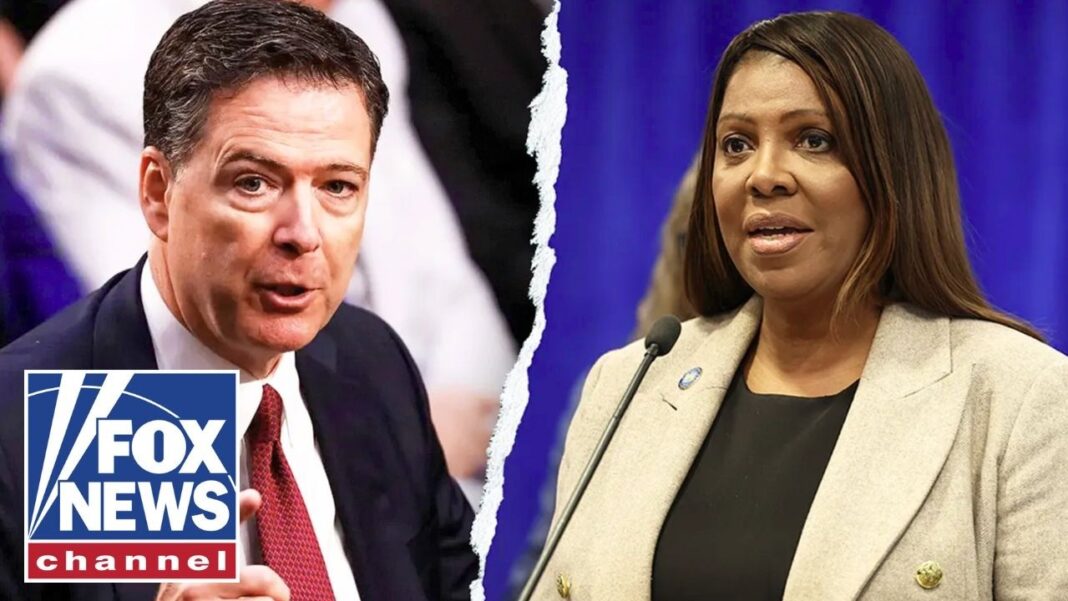
(Epoch Times) A federal judge on Nov. 24 dismissed indictments of former FBI Director James Comey and New York Attorney General Letitia James, holding that the prosecutor who brought the indictments was invalidly appointed.
Currie dismissed the indictments without prejudice, but the statute of limitations has already passed for Comey’s case. In a footnote, Currie indicated that the Justice Department could not bring a similar indictment against him. She said that although valid indictments typically toll, or suspend, the statute of limitations, “there is no legitimate peg on which to hang such a judicial limitations-tolling result” with a void indictment.
After Currie’s decisions were released, White House press secretary Karoline Leavitt said during a press gaggle that the Justice Department would be appealing.
While speaking on Fox News, Leavitt said she thought that Halligan was “extremely qualified” and accused Comey of lying to Congress. She also suggested that Comey should “pump the brakes on his victory lap.”
The Justice Department had argued that even if Halligan’s appointment were invalid, the indictments should stand because they were approved by Attorney General Pam Bondi. Currie rejected that premise and described Bondi’s attempts to ratify Halligan’s actions as “ineffective.”
Currie’s decision focused on 28 U.S. Code Section 546, which allows interim attorneys to serve for 120 days, further providing that district courts “may appoint” a U.S. attorney to fill vacancies at the end of that timeframe if the Senate has not already appointed a replacement.
During a hearing on Nov. 13, the Justice Department argued that the law did not confine the attorney general to an initial 120 days for appointing prosecutors. Rather, it said, the law allowed for successive appointments of attorneys who would each have 120-day limits on their time in office.
Currie disagreed and said on Nov. 24 that the Eastern District of Virginia had the power to appoint a replacement for Erik Siebert, Halligan’s predecessor.
“In sum, the text, structure, and history of section 546 point to one conclusion: the Attorney General’s authority to appoint an interim U.S. Attorney lasts for a total of 120 days from the date she first invokes section 546 after the departure of a Senate-confirmed U.S. Attorney,” she wrote.
“If the position remains vacant at the end of the 120-day period, the exclusive authority to make further interim appointments under the statute shifts to the district court, where it remains until the President’s nominee is confirmed by the Senate.”
Currie’s order touched on a growing issue for the Justice Department as it encounters political resistance to some of its appointments. Besides Halligan, acting U.S. Attorney for the District of New Jersey Alina Habba has also faced a legal challenge to her appointment. The U.S. Court of Appeals for the Third Circuit is expected to rule on the issue following an appeal from Habba.
Both Comey’s and James’s attorneys had urged Currie to dismiss the indictments with prejudice, precluding a future indictment. In her order for James’s case, Currie suggested that the proper remedy was allowing a new hearing before a properly appointed official.
If the administration’s appeal succeeds, it will have multiple hurdles to overcome before the cases reach trial. Both James and Comey have filed multiple motions to dismiss, including on the basis that the Justice Department vindictively targeted President Donald Trump’s political enemies.
The Justice Department did not respond to The Epoch Times’ request for comment by publication time.
On social media, U.S. Assistant Attorney General for the Civil Rights Division Harmeet Dhillon emphasized the nature of the ruling.
That ratification came too late, Currie said, “as the statute of limitations for the charged offenses expired 31 days earlier on September 30.” Currie said that by Oct. 31, the indictment was still pending and that the law applied only when an indictment had been dismissed.