



|
Getting your Trinity Audio player ready...
|
FBI, DHS Warn of Lone Wolf Threats Ahead of July 4 Celebrations in NYC and San Francisco
By: Fern Sidman
As Americans prepare to mark Independence Day with parades, fireworks, and family gatherings, federal authorities are warning of a sobering threat that continues to cast a shadow over the festivities. In a series of intelligence bulletins obtained ahead of the holiday, the FBI and the Department of Homeland Security (DHS) have identified lone wolf attacks as the most pressing danger facing July 4 celebrations, particularly in New York City and San Francisco, two urban centers historically viewed as high-risk targets.
According to a report that appeared on Thursday in The New York Daily News, which has been closely tracking federal preparedness efforts ahead of the holiday, the threat assessment underscores mounting concern over “copycat attacks” and ideologically motivated violence by homegrown extremists. The bulletins reference the 2025 New Year’s Day vehicle-ramming attack in New Orleans, which killed 14 and shocked the nation, as a potential source of inspiration for future assailants.
“We are concerned about the potential threat of copycat attacks inspired by the 2025 New Year’s Day vehicle-ramming attack in New Orleans and continued messaging from foreign terrorist organizations (FTOs) calling for attacks against Western targets,” the alerts read.
This year’s warning reflects a disturbing trend noted by security agencies over the past decade: a growing prevalence of self-radicalized individuals, often acting independently of formal terror groups, who plan and execute violent acts with little to no warning. According to the information provided in The New York Daily News report, officials see these lone offenders as particularly dangerous due to their “ability to often avoid detection until operational and to inflict significant casualties.”
What distinguishes this year’s threat landscape is the sheer breadth of motivations driving potential attackers. Federal analysts note that extremists may be influenced by a wide array of grievances, from perceived government overreach to foreign policy decisions, racial tensions, and, increasingly, the conflict between Israel and Hamas, which has generated global unrest and violent rhetoric online.
“Of these actors, U.S.-based violent extremists supporting FTOs and [domestic violent extremists] not linked to FTOs represent two of the most persistent threats,” the bulletins explain. While many of these actors remain unaffiliated with recognized terror organizations, they often absorb propaganda and incitement via encrypted social media platforms and fringe message boards.
The New York Daily News has reported on the link between online radicalization and real-world violence, citing recent cases where attackers were found to have consumed extremist content for months or even years before striking. In some instances, these individuals have left behind manifestos or videos claiming allegiance to groups such as ISIS, Hezbollah, or white nationalist cells, though they had no operational ties to any network.
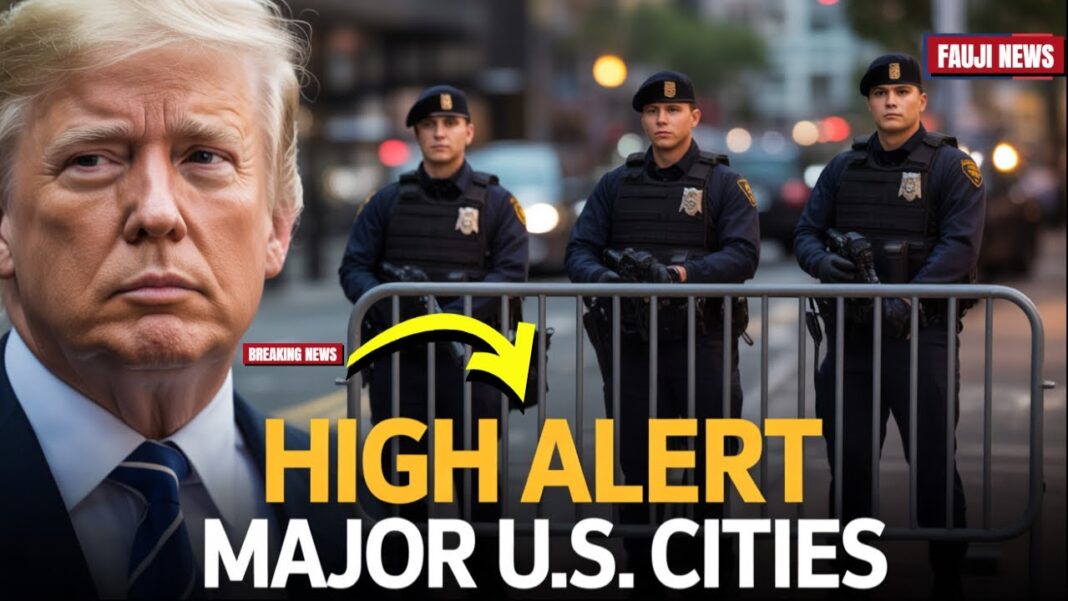
While the threat is national in scope, New York City and San Francisco have been flagged for elevated risk due to their symbolic importance, population density, and the scale of planned public gatherings. The New York Daily News reported that law enforcement agencies in both cities have already begun implementing enhanced security protocols, including increased surveillance, deployment of bomb-sniffing dogs, and expanded police presence at parades, concerts, and fireworks displays.
Of particular concern to federal agencies is the possibility that “malicious actors and violent extremists” could infiltrate First Amendment-protected demonstrations, using them as cover to carry out attacks with weapons, chemical irritants, bodily fluids, or hazardous materials. The bulletins warn that these tactics are not hypothetical; they have been attempted in prior incidents both domestically and abroad.
Further compounding security challenges is the emerging threat posed by drones. According to the information contained in The New York Daily News report, DHS has advised local law enforcement to remain vigilant against the use of unmanned aerial systems (UAS) that could carry small explosive devices or reconnaissance equipment into crowded venues.
The intelligence briefings gain urgency when viewed in the context of recent attacks that mirror the kind of threats now anticipated. Last month, an Egyptian national living in Boulder, Colorado, used Molotov cocktails to assault a march supporting Israeli hostages, resulting in at least one fatality and several injuries. Law enforcement later determined that the attacker had acted alone, driven by ideologically motivated rage against pro-Israel demonstrators.
This pattern is eerily reminiscent of the 2022 Fourth of July parade shooting in Highland Park, Illinois, where a lone gunman perched on a rooftop killed seven people and wounded dozens more. The New York Daily News report indicated that these incidents serve as stark reminders that lone offenders can exploit the very openness of celebratory events—crowds, limited perimeters, and dispersed law enforcement coverage—to maximize chaos and harm.
The New Orleans tragedy, referenced repeatedly in the FBI and DHS bulletins, continues to haunt federal planners. On January 1, 2025, a radicalized driver plowed a vehicle into a densely packed street festival, killing 14 and injuring dozens. The perpetrator, a U.S. citizen with no known affiliations, had previously posted anti-Western diatribes online and expressed admiration for suicide attackers.
As Independence Day approaches, the collaboration between federal, state, and local agencies has intensified. The FBI has reportedly set up Joint Terrorism Task Forces (JTTFs) in major cities to share intelligence, respond to leads, and rapidly assess threats. DHS has deployed additional resources to port authorities, mass transit systems, and other critical infrastructure points.
According to the report in The New York Daily News, New York City Police Commissioner Jessica Tisch held a private briefing with senior NYPD officers and FBI liaisons to finalize contingency plans for the city’s July 4 festivities. Similar measures are being taken in San Francisco, where Mayor Daniel Lurie confirmed that “every available safety measure is being taken to ensure our residents and visitors enjoy a safe holiday.”
While officials stress that there is no specific, credible threat to any one location, the emphasis on prevention and preparedness is unmistakable. “We have to plan for all scenarios, not just the likely ones,” one federal security official told The New York Daily News. “That means looking at new tactics, new technologies, and new motives.”
For many Americans, the juxtaposition of celebration and security has become a somber reality. The Fourth of July—once solely a day of patriotic joy—has increasingly become a moment of national vulnerability. And yet, officials emphasize that the solution is not to cancel or shrink public events, but to harden defenses while reaffirming the freedoms those events represent.
