



|
Getting your Trinity Audio player ready...
|
By Jared Evan
The death of Jeffrey Epstein has never stopped raising eyebrows—and newly released Justice Department documents have only added fuel to a case already crowded with anomalies, conflicting accounts, and unresolved red flags.
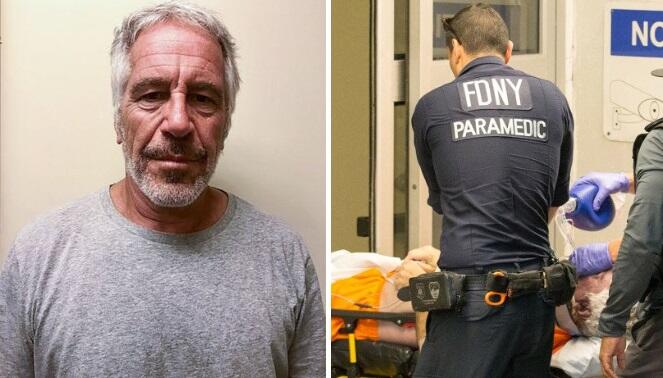
Epstein, the disgraced financier awaiting trial on sex-trafficking charges, was found dead in his cell at the Metropolitan Correctional Center (MCC) in Manhattan on August 10, 2019. Officials ultimately ruled the death a suicide. But from the start, critics have pointed to a staggering series of breakdowns that unfolded in the hours before he was discovered.
Three broad theories have circulated ever since: that Epstein took his own life; that he was killed while in federal custody; or that he was secretly removed from the jail and replaced—an idea fueled online by claims about discrepancies in facial features. While the latter remains firmly in the realm of speculation, official records now confirm that key moments from Epstein’s final night remain murky.
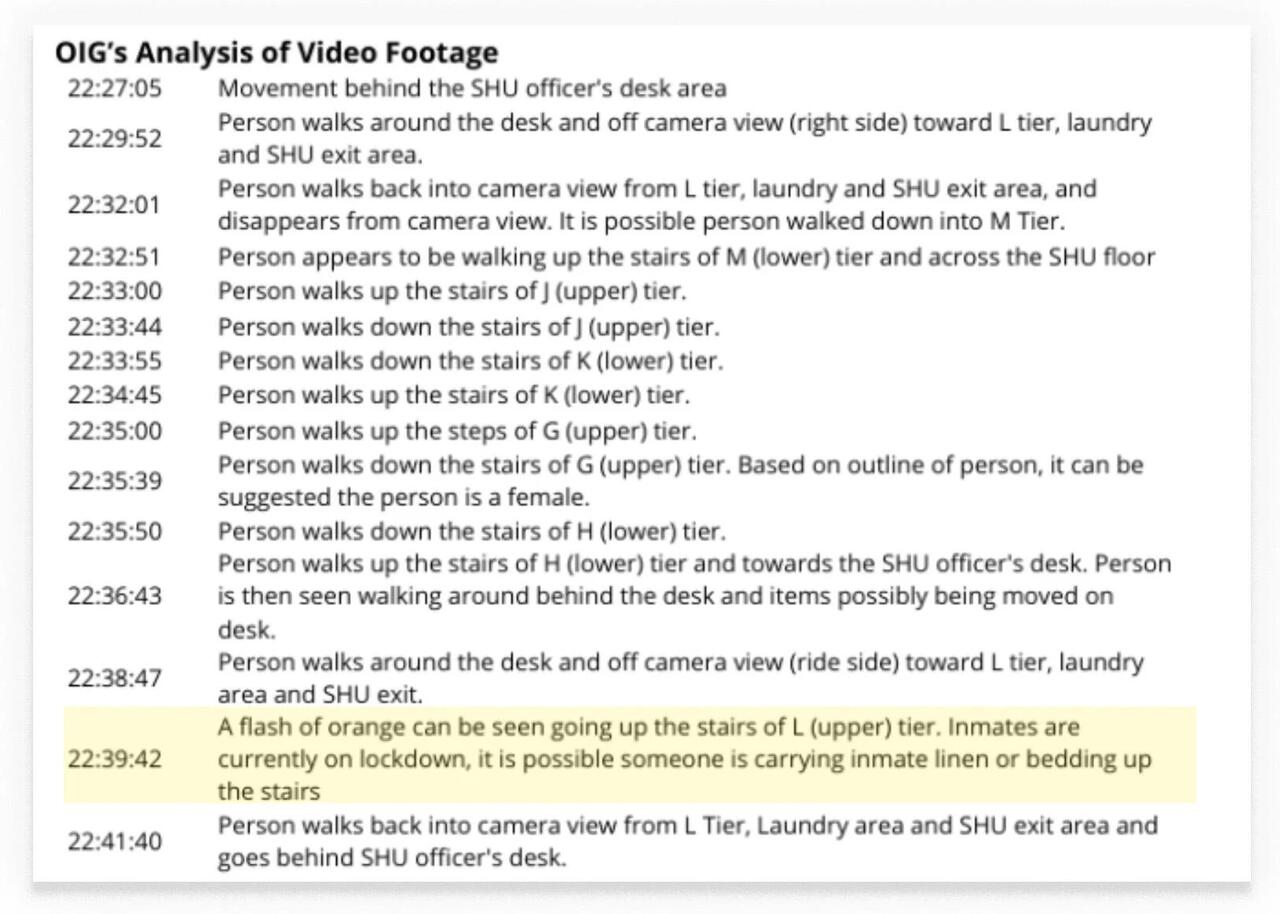
Despite repeated public assurances that surveillance footage showed no unusual activity, newly released DOJ materials reveal something previously downplayed: an unexplained orange-colored shape captured on video moving up a staircase toward the locked tier where Epstein’s cell was located at approximately 10:39 p.m. on August 9.
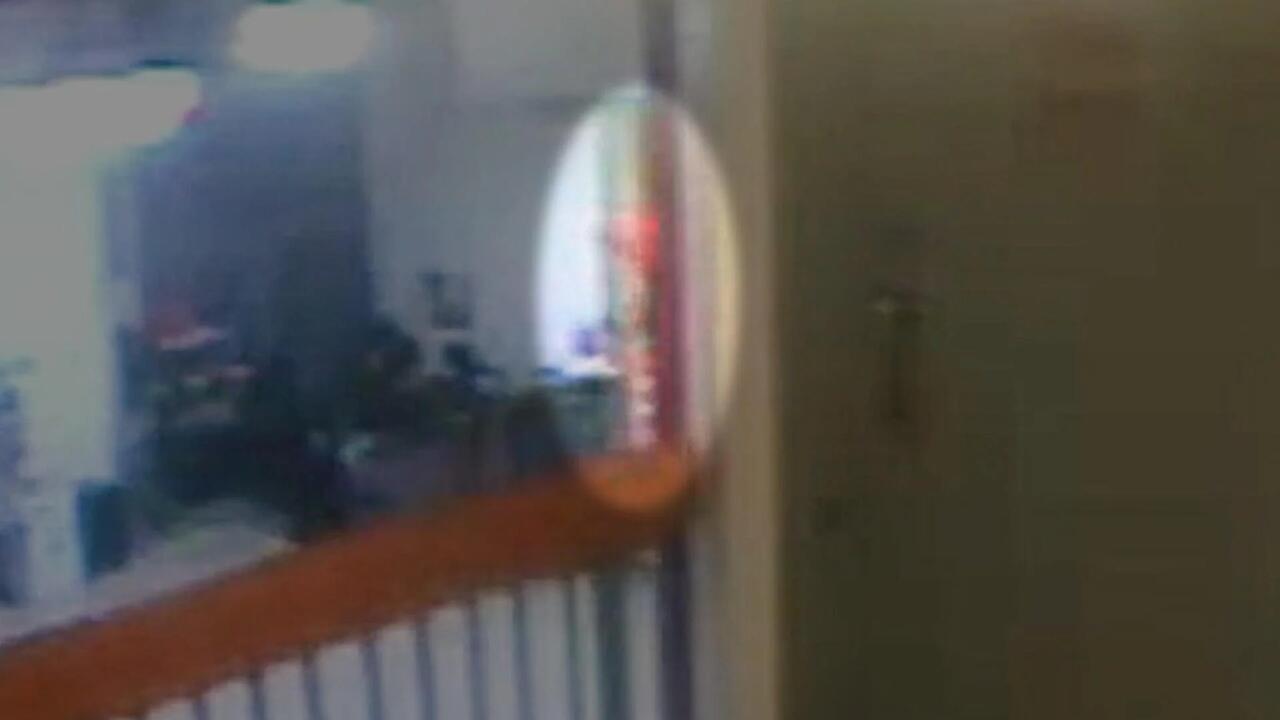
According to an observation log from the MCC surveillance review, the footage appeared to show “a flash of orange” ascending the L Tier stairs—“possibly an inmate escorted up to that Tier.” The revelation was first reported months ago, but the newly released documents represent the government’s official accounting of what was seen, CBS News reported.
An FBI memorandum cited by CBS News indicates that investigators reviewing the same footage reached differing conclusions. While the DOJ Office of Inspector General ultimately described the orange shape as an unidentified corrections officer carrying orange “linen or bedding,” officers on duty reportedly told investigators that no linens were replaced during that shift, since that task had already been completed earlier.
“At approximately 10:39 p.m., an unidentified CO appeared to walk up the L Tier stairway, and then reappeared within view of the camera at 10:41 p.m.,” the inspector general’s log states, according to CBS News.
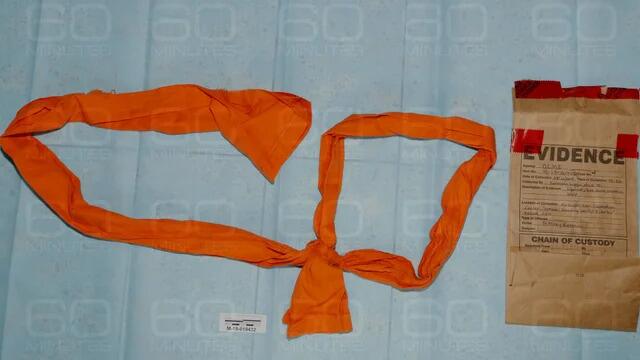
Officially, Epstein was pronounced dead around 6:30 a.m. the following morning. Yet one of the most basic pieces of evidence—the noose he allegedly used—has never been conclusively identified. Investigators asked responding officers what happened to it.
“I don’t recall taking the noose off. I really don’t,” one officer told investigators. Another officer said she did not see a noose around Epstein’s neck when his body was lowered. The inspector general later concluded that a ligature collected at the scene was not the one used in Epstein’s death.
Beyond the missing noose, the failures stack up.
Despite a July 30 directive from the Bureau of Prisons Psychology Department—emailed to more than 70 staff—requiring Epstein to have an “appropriate cellmate” due to suicide risk, his cellmate was transferred out on August 9 and never replaced. Multiple officials, including the warden and lieutenants, were aware of the vacancy but took no action, in violation of BOP policy and Special Housing Unit (SHU) post orders.
That former cellmate, Nicholas Tartaglione, later begged a New York judge to move him to another facility, claiming guards threatened him after Epstein’s death. Tartaglione, a former NYPD officer convicted of murdering four people, also made explosive claims in a pardon application, alleging Epstein told him prosecutors offered leniency if he implicated then-President Donald Trump. The New York Post reported it obtained the filing, which attributes the alleged offer to prosecutor Maurene Comey. The claims have not been verified.
The night before his death, Epstein was also allowed a 20-minute phone call from the SHU shower area using a non-inmate phone system—another violation of policy. Authorized by a unit manager, the call was not monitored, recorded, or logged. Epstein reportedly claimed the call was to his mother, who died in 2004, but investigators later determined it was to a personal associate, discussing media coverage and his case.
Meanwhile, officers assigned to monitor Epstein admitted to falsifying records. According to the inspector general, more than 75 entries on count slips and round sheets were fabricated. No inmate counts occurred after 4 p.m. on August 9, and required 30-minute rounds stopped around 10:40 p.m. “Ghost counting,” using outdated lists, led to errors that included inmates no longer housed in the unit.
From roughly 10:40 p.m. until Epstein was found the next morning, no one entered his tier. Video reviewed by investigators confirmed officers remained at their station, ignoring a posted sign requiring half-hour checks specifically for Epstein.
Epstein’s cell itself contained excess linens, blankets, and clothing—well beyond what was permitted—some of which had been torn into makeshift nooses or lines. No cell search was documented that day, despite a requirement to conduct searches on shower days. Again, the ligature allegedly used was never definitively found.
Security failures compounded the problem. One of the SHU’s DVR systems stopped recording on July 29 due to disk space issues. Although the malfunction was reported on August 8, it was not fixed until after Epstein’s death, reportedly because of staffing shortages.
Fatigue among staff was another factor. Officers were working extreme overtime, including shifts lasting more than 20 hours. Video footage showed officers idle or appearing to sleep during the early morning hours, according to investigators.
All of this followed an earlier incident on July 23, when Epstein was found on the floor with an orange cloth around his neck tied to his bunk bed. Whether it was a suicide attempt or an assault by his cellmate was never conclusively determined. Epstein initially suggested he had been attacked, then later said he could not remember. He was placed on suicide watch, then removed after just 31 hours.
As Zero Hedge reported, the cumulative effect of these failures—missing video, falsified logs, unmonitored calls, excess materials, and contradictory explanations—has ensured that Epstein’s death remains one of the most disputed events in recent memory.
More than five years later, the official ruling stands. But with each new document release, the list of unanswered questions only seems to grow.

TJV had lost its mind, bizarrely serializing Evan’s personal perverse obsession with Epstein documents, which has nothing to do with the important Jewish issues of the day. TJV featuring Evans’ non-stop tabloid “reporting” is betraying your readers, and IGNORING the major JEWISH issues of the day.
This is the biggest story in the world, and we do not only cover Jewish issues, 80% of the site is Jewish news, the other 20% is everytnhing else, more Epsein stories comig, don’t like it, too bad. We will keep reporting on the biggest story in the world, Guy, now go elsewhere, we are tired of having to delete your garbage, we do not care what you have to say, the more you beg for Epstein coverage to stop, the more guilty and complicit you are. Go away already, more Epstein stories will keep comimg, cope and seethe, ypu are complict in pedophilia if you want it to stop.