



|
Getting your Trinity Audio player ready...
|
By: Fern Sidman
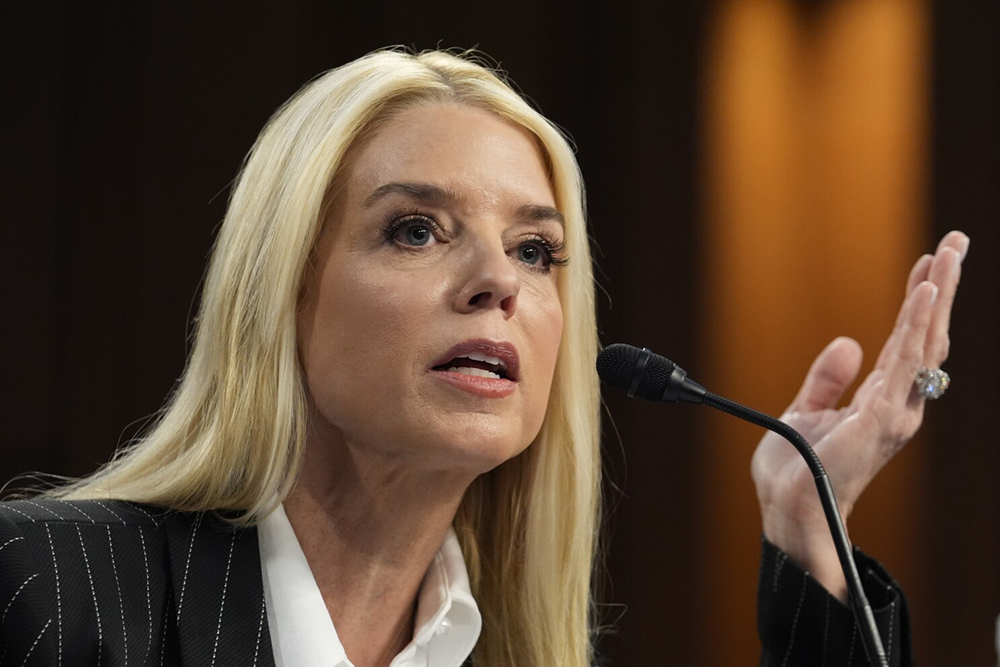
In a significant move aimed at reinforcing the federal government’s capacity to combat antisemitism, U.S. Attorney General Pamela Bondi has authorized the creation of an Anti-Semitism Advisory Committee, declaring it “necessary and in the public interest,” according to an Aug. 13 notice published by the U.S. Department of Justice (DOJ) in the Federal Register.
As was reported by The Jewish News Syndicate (JNS) on Friday, the new federal advisory body will operate for a period of two years, functioning as a strategic forum to guide the Attorney General and senior Justice Department officials on policies and actions to address antisemitic threats nationwide. The committee’s mission is to “promote coordinated, timely and effective responses” to incidents and trends of Jew-hatred, a goal that aligns with the department’s stated policy “to combat antisemitism vigorously, using all available and appropriate legal tools.”
According to the notice detailed by JNS, the committee’s responsibilities will span several high-priority areas. Among its primary objectives will be:
Protecting Jewish Students and Faculty on Campus: The committee will advise on strategies to confront antisemitic harassment and intimidation in educational environments, particularly in universities and colleges where Jewish students have increasingly reported hostile climates.
Securing Synagogues and Jewish Community Institutions: This includes developing best practices for physical security, cyber defense, and emergency preparedness for synagogues, day schools, community centers, and cultural organizations.
Enhancing Law Enforcement Coordination: The body will facilitate cooperation between federal, state, and local agencies to ensure rapid, effective, and consistent enforcement of laws against antisemitic threats, harassment, and violence.
Public Awareness Initiatives: The committee will work to elevate public understanding of antisemitism, its modern manifestations, and its impact on American communities, with a focus on dispelling misconceptions and countering extremist propaganda.
Supporting Interagency Collaboration: This involves aligning federal anti-hate initiatives with those of other departments, ensuring that antisemitism is addressed across diverse policy sectors such as education, homeland security, and civil rights.
The JNS report noted that these priorities reflect a broadened recognition that combating antisemitism requires a multifaceted approach — one that spans legal enforcement, community engagement, security infrastructure, and educational outreach.
The Justice Department estimates the committee’s annual operating cost at $70,000, a relatively modest figure given its intended national reach. Members will serve on a voluntary basis, receiving no salaries but being permitted to claim certain expenses incurred during their service.
Attorney General Bondi will serve as ex officio chair, ensuring that the committee’s recommendations are directly integrated into high-level DOJ decision-making. The body will be composed of experts from a variety of relevant fields — likely including law enforcement, academia, Jewish communal leadership, civil rights advocacy, and counterterrorism.
While the DOJ has not yet disclosed the full list of members, JNS reported that the Department has been approached for comment on whether this committee will operate as a replacement for, or in tandem with, the existing DOJ Task Force on Antisemitism, currently led by civil rights attorney Leo Terrell. The relationship between these two entities may determine how policy recommendations are implemented and whether the advisory body will focus more on strategic guidance, while the task force continues with operational enforcement actions.
The creation of this advisory committee comes amid a documented surge in antisemitic incidents across the United States in recent years, a trend exacerbated by political polarization, social media disinformation, and international conflicts spilling into domestic discourse.
According to national civil rights monitors, antisemitic harassment, vandalism, and assaults have reached historic highs. JNS has reported on how this escalation has affected multiple sectors of American life, from violent attacks on synagogues to targeted harassment of Jewish students on college campuses.
Notably, the October 7, 2023, Hamas-led massacre in southern Israel, in which more than 1,200 people were murdered and hundreds taken hostage, triggered a wave of antisemitic rhetoric and intimidation in the U.S., including in academic settings. These developments have heightened calls from Jewish organizations for the federal government to adopt a more coordinated and visible strategy in countering Jew-hatred.
The DOJ’s initiative, as described in the JNS report, seeks to integrate legal enforcement with preventive measures. While prosecutions of hate crimes remain a core function, the committee is expected to place significant emphasis on proactive interventions that deter antisemitic acts before they escalate to violence.
By providing regular reports and recommendations to the Attorney General, the committee will be positioned to influence DOJ priorities in ways that reflect the evolving threat landscape. This could involve advising on new legislation, recommending training programs for prosecutors and law enforcement, or shaping partnerships with private-sector entities that operate in areas like social media moderation and security technology.
In practice, the committee’s work might lead to:
Expansion of federal grant programs to enhance security at Jewish institutions.
Development of standardized protocols for universities to address antisemitic incidents under Title VI of the Civil Rights Act.
Coordination with the Department of Homeland Security to integrate antisemitism-focused threat assessments into broader counterterrorism strategies.
Jewish communal leaders have already expressed cautious optimism about the committee’s formation. As JNS noted in related reporting, advocacy groups see this as a step toward a more institutionalized federal role in combating antisemitism — one that moves beyond reactive measures to systemic prevention and education.
From a law enforcement perspective, the advisory body could serve as a bridge between federal agencies and local police departments, many of which lack specialized training in identifying and responding to antisemitic crimes. By disseminating best practices and facilitating joint exercises, the committee could help standardize responses across jurisdictions, ensuring that incidents are treated with the urgency and sensitivity they warrant.
One challenge that the committee is likely to face, according to experts cited by JNS, is balancing robust enforcement against antisemitic threats with the protection of constitutionally guaranteed freedoms, including free speech.
The DOJ has consistently maintained that while criticism of Israeli government policies is protected speech, acts that cross into targeted harassment, intimidation, or violence against Jews based on religion or ethnicity fall squarely within the scope of civil rights and hate crime statutes. The committee will need to navigate these distinctions carefully to preserve both civil liberties and community safety.
Federal engagement with combating antisemitism is not without precedent. Over the years, various administrations have launched initiatives targeting hate crimes, religious discrimination, and extremist violence. However, as the JNS report pointed out, this is one of the few instances in which a dedicated, high-level advisory body has been formed specifically to address antisemitism as a distinct and persistent threat.
The move parallels growing international recognition of antisemitism as a global security issue. In recent years, countries such as the United Kingdom, Germany, and Canada have appointed special envoys or created task forces to develop national strategies against antisemitism, often in close consultation with Jewish communities and security experts.
With its two-year mandate, the Anti-Semitism Advisory Committee has a limited but potentially transformative window to shape federal policy. Its success will likely be measured by tangible outcomes, such as the implementation of its recommendations, improvements in community security, and reductions in incident rates reported to law enforcement.
As the JNS report underscored, the creation of this committee signals that the DOJ views antisemitism not merely as a subset of broader hate crime trends, but as a distinct, urgent, and nationally significant challenge — one that demands dedicated resources, expert input, and sustained political commitment.
Attorney General Bondi’s decision to chair the body personally suggests that the DOJ intends to keep its work closely tied to departmental priorities, ensuring that recommendations are not only heard but acted upon.
In the coming months, the composition of the committee, the scope of its initial recommendations, and the clarity of its coordination with existing DOJ structures — including Leo Terrell’s task force — will be critical in determining whether this initiative fulfills its promise of delivering “coordinated, timely and effective responses” to antisemitism across the United States.
It needs to be tackled very publicly!
People need to know what is happening to Jews because it will happen to them next if it is not stopped dead in its tracks NOW.
People need to realize that but for Trump, there could be another holocaust right here. All of the Jew hatred has been brewing and supported for years, this is not a new development. I don’t see anyone but Trump standing in the way.