



|
Getting your Trinity Audio player ready...
|
(TJV NEWS) Recently, there has been growing concern among Americans about the impact of drugs on marine life, particularly after the release of the comedic horror film “Cocaine Bear” which depicted a black bear on a cocaine-fueled, carnivorous rampage in 1985. This has sparked curiosity about the possibility of cocaine-fueled sharks off the coast of Florida.
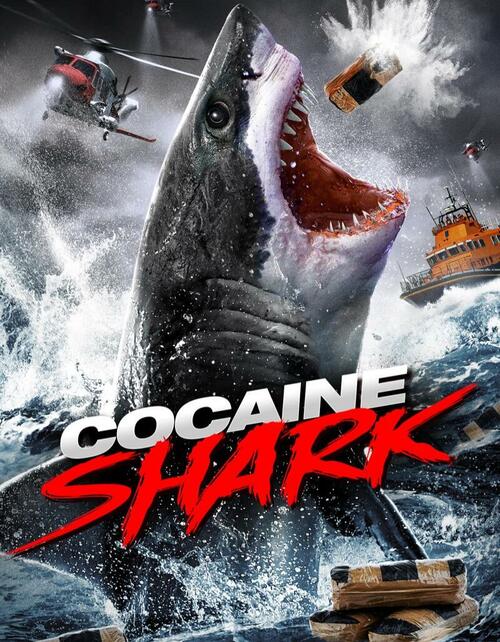
There is a newer low budget comedy horror film “Cocaine Sharks” which was recently released, touching on this possible reality.
Tom “The Blowfish” Hird, along with Tracy Fanara, an environmental scientist from the University of Florida, embarked on a series of tests to explore whether sharks near Florida might have ingested cocaine bales discarded by drug smugglers on their way to the United States, Life Science reported
The duo aimed to understand the implications of chemical, pharmaceutical, and illicit drug contamination in our waterways and oceans and its potential impact on delicate ocean ecosystems.
The background for their investigation stems from a United Nations report showing a surge in global cocaine demand and supply, with major drug routes passing through the Caribbean Sea. Over the years, there have been numerous reports of drug smugglers abandoning cocaine bales or sinking vessels after colliding with reefs, raising concerns that marine life might be exposed to these substances.
In their experiments, Hird and Fanara crafted faux cocaine bales and observed sharks actively engaging with them. The sharks seemed drawn to the pseudo-bales and even took bites from them, demonstrating an unusual interest. Additionally, the team created a bait ball containing concentrated fish powder, which elicited a response in the sharks similar to what a hit of cocaine might trigger in humans. The sharks went into a frenzy, suggesting some sort of reaction to the substance.
However, it’s essential to note that the results don’t definitively prove that sharks in Florida are consuming cocaine. Multiple factors could account for the observed behavior, and further experimentation would be needed to draw more conclusive conclusions.
Hird emphasized that their findings raise concerns about the potential effects of drugs, not just cocaine, on marine life. He pointed out that pharmaceuticals such as caffeine, lidocaine, amphetamine, antidepressants, and birth control are also making their way into waterways, slowly affecting marine animals as these substances flow from cities into the ocean.
In summary, the research conducted by Tom “The Blowfish” Hird and Tracy Fanara sheds light on the possible impact of drugs on marine life, but more extensive studies are necessary to fully understand the implications. The situation calls for increased awareness of the environmental consequences of drug contamination and the need for proactive measures to protect ocean ecosystems.
