



|
Getting your Trinity Audio player ready...
|
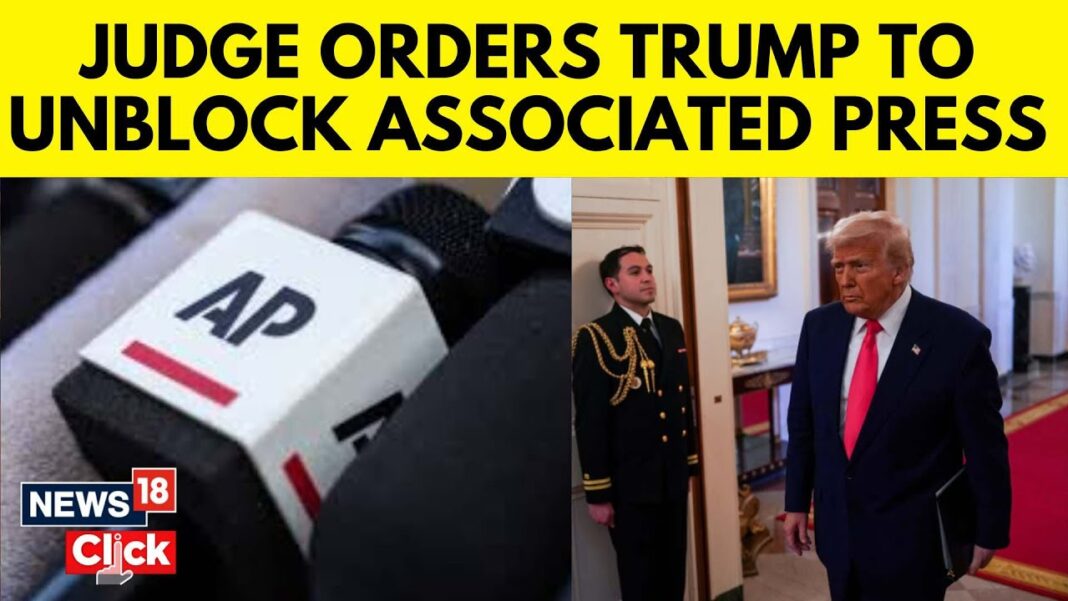
(TJV NEWS) A federal judge has ruled that the Trump administration overstepped constitutional boundaries when it excluded The Associated Press from certain presidential events after the outlet declined to adopt the term “Gulf of America” in place of “Gulf of Mexico.”
As reported by The Epoch Times, U.S. District Judge Trevor McFadden issued the decision on April 8, stating that the exclusion of the AP from limited-access press events violated the First Amendment. The court found that the government cannot deny a media outlet access based on editorial choices—even in contentious political climates.
The dispute began when the AP was removed from the elite 13-member White House press pool, which travels with the president and has rare access to high-profile venues like the Oval Office and Air Force One. According to the lawsuit, filed by the AP against the Trump administration and certain press officials, the change followed the outlet’s refusal to adopt a Trump-backed rebranding of the Gulf of Mexico.
On February 25, the White House declared that it would no longer rely on the White House Press Correspondents’ Association to determine press pool access—choosing instead to manage eligibility internally, The Epoch Times noted.
In court, the AP defended its stance, citing its global presence and adherence to internationally recognized geographic names. The outlet argued that the decision to cut its access was punitive and unjustified, especially since other media outlets were not held to the same editorial requirements.
Judge McFadden agreed in part, observing that the AP had been excluded from “large events far more often than its peers,” despite occasionally being allowed to send a photographer or overseas correspondent. He also acknowledged that the exclusion had hurt the AP’s operations, pointing out financial losses and a drop in reporting quality due to restricted access—leading some clients to seek coverage elsewhere.
Still, the judge stopped short of ordering the administration to grant the AP guaranteed access to places like the Oval Office or the East Room. Instead, he issued a narrower ruling: when access is extended to certain journalists, the government cannot deny that same access to others purely based on differing viewpoints.
As The Epoch Times highlighted, McFadden clarified that the AP isn’t entitled to its prior “first-in-line” position, but emphasized that viewpoint discrimination has no place in determining press credentials.
“Under the First Amendment,” the judge wrote, “if the government opens its doors to some journalists…it cannot then shut those doors to other journalists because of their viewpoints.”
