



|
Getting your Trinity Audio player ready...
|
By: Fern Sidman – Jewish Voice News
In a city accustomed to the daily gravitas of governing a superpower, Washington, D.C. remains largely impervious to surprise. Yet the events that unfolded two blocks from the White House on Wednesday afternoon ruptured the capital’s sense of equilibrium and thrust the nation into one of the most unsettling security crises in recent memory.
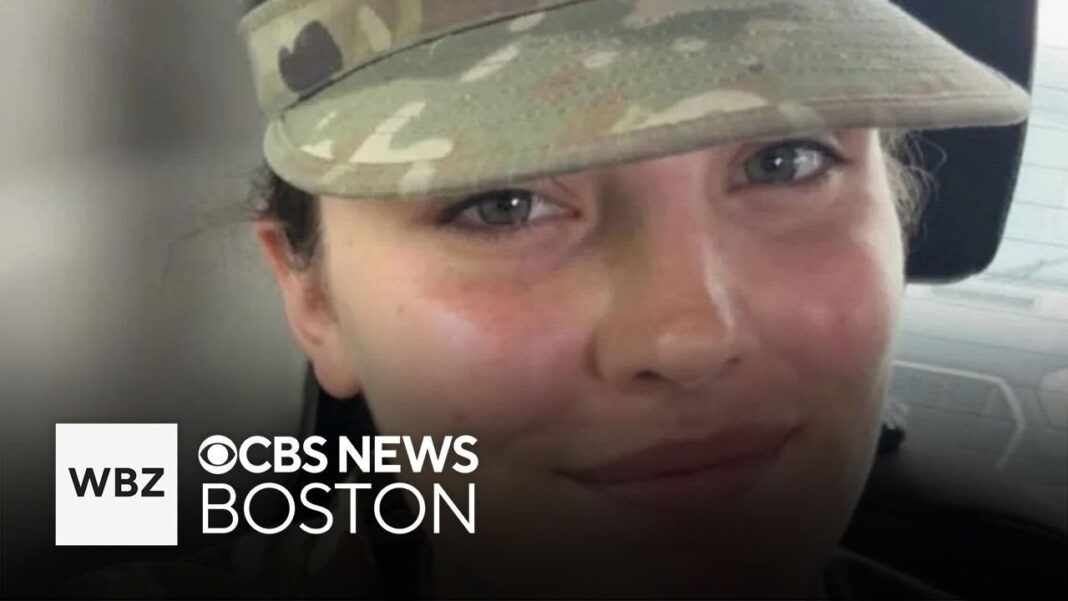
As USA Today reported on Thursday, the attack that claimed the life of twenty-year-old West Virginia National Guard specialist Sarah Beckstrom and critically wounded her fellow Guardsman Andrew Wolfe has become something far more complex than a tragic episode of urban violence. It has evolved into a multi-layered national reckoning involving refugee vetting, intelligence failures, the legacy of America’s retreat from Afghanistan, and the reintroduction of muscular federal oversight in the capital.
President Donald Trump, addressing service members during his Thanksgiving call from Palm Beach, announced Beckstrom’s death with an emotional directness that cut through the normally ceremonial nature of holiday remarks. As the USA Today report noted, the president described her as “highly respected, young, magnificent… outstanding in every way,” adding with solemn cadence that she was “looking down at us right now” as her parents mourned beside her.
Beckstrom, a Guardsman since June 2023, had reportedly approached her assignment in Washington with youthful resolve and an earnest belief in public service. Her death in what authorities now describe as a “targeted” ambush has reverberated throughout the National Guard community, where colleagues struggle to make sense of the attack.
Twenty-four-year-old Andrew Wolfe, fighting for his life in what doctors characterize as a precarious condition, remains hospitalized as the nation watches with apprehension. According to the information provided in the USA Today report, the two Guardsmen were performing a “high-visibility patrol” stationed near a Metro entrance just east of the White House complex—part of the unprecedented security apparatus deployed under Trump’s sweeping crackdown on crime and illegal immigration in Democrat-led cities.
Thousands of troops have been positioned throughout the capital over the last several months, forming a security perimeter more evocative of Baghdad’s Green Zone than of the administrative heart of a democratic republic. What had appeared to the administration as a model of restored order was shattered abruptly, prompting Trump to remark that Washington had become “the safest place imaginable” until the moment gunfire erupted.
The suspect, identified as 29-year-old Rahmanullah Lakanwal of Bellingham, Washington, remains hospitalized in serious condition after being shot by another National Guard member who responded immediately to the attack. His motive remains unclear, though FBI officials—now engaged in what they describe as a terrorism investigation—are exploring a sprawling web of personal history, intelligence ties, and military affiliations that render this case uniquely jarring. The USA Today report, citing federal officials, noted that the suspect allegedly shouted the Islamic war cry “Allahu Akbar” during the ambush, suggesting ideological motivation, though investigators have not publicly confirmed a definitive motive.
What they have confirmed, however, has deepened unease: Lakanwal was not an anonymous migrant or an obscure civilian drifting unnoticed through federal cracks. Instead, according to multiple outlet reports referenced by USA Today, he served for years in the Afghan conflict as part of an elite unit tied to U.S. intelligence operations. The New York Times, the Wall Street Journal, and follow-up reporting by USA Today have established that he was affiliated with the “Zero Units,” paramilitary strike teams viewed for years as one of the most lethal and secretive formations in the Afghan war—units backed and trained by the CIA and used extensively in counterterror operations.
These formations, known for their night raids, intelligence-driven operations, and controversial record during the counterinsurgency campaign, were both indispensable and heavily criticized. Human Rights Watch documented allegations ranging from extrajudicial killings to operations that left civilian casualties, including an infamous episode in 2018 when members of a Zero Unit reportedly killed several noncombatants in a botched raid. According to the information contained in the USA Today report, Lakanwal had reportedly expressed psychological distress related to the casualties he witnessed or participated in, a detail relayed by a childhood friend and now part of the FBI’s mental-health dimension of the inquiry.
His path to the United States is equally fraught with policy implications. Lakanwal entered the country in September 2021 through Operation Allies Welcome, the Biden-era emergency program designed to rapid-process Afghans who assisted U.S. forces in the wake of the Taliban’s takeover. In the frantic rush of the U.S. withdrawal—an episode that the USA Today report described as “bedlam in the skies” as thousands of Afghans crammed onto evacuation planes—strict vetting protocols proved difficult to uphold. Nonetheless, the former Biden administration asserted that Afghan partners of the United States, particularly those with intelligence or military ties, deserved expedited entry.
Yet as USA Today confirms through multiple official channels, the final stage of Lakanwal’s asylum approval occurred under the Trump administration in April 2025, months after he submitted his formal asylum application in December 2024. That timeline—part Biden, part Trump—has given rise to heated partisan debate. Trump initially criticized Biden for admitting the suspect, pointing to chaotic scenes from Kabul and suggesting that the suspect’s arrival reflected a failure of the prior administration’s refugee procedures. But when pressed by reporters about the asylum approval date, Trump deflected, noting the difficulty of revoking asylum once granted and vowing to review the suspect’s entire family situation.
Within hours of the attack, federal investigators launched a sprawling coast-to-coast inquiry. Agents seized electronic devices from the suspect’s Washington-state residence, including phones, laptops, and tablets, while interviewing relatives and associates. Additional investigative activity has been reported in San Diego, underscoring the national scale of the inquiry and the possibility of broader contacts or networks. FBI Director Kash Patel stated flatly that federal agents would “not stop until we interview anyone and everyone associated with the subject,” making clear that the bureau is approaching the investigation with exhaustive thoroughness.
The revelations about Lakanwal’s prior affiliations prompted immediate policy responses from the administration. Trump ordered the U.S. Citizenship and Immigration Services to conduct what the agency’s director, Joseph Edlow, described to USA Today as a “full-scale, rigorous” review of green card holders from nineteen “countries of concern,” including Afghanistan, Iran, Libya, Somalia, and Yemen.
The administration also paused all immigration requests from Afghan nationals, adding to the already severe restrictions implemented since Trump reinstated and expanded travel bans earlier in the year. In addition to the operational review, federal agencies are scrutinizing how Special Immigrant Visa (SIV) programs and asylum protections were granted to Afghans with known combat histories, particularly those linked to intelligence operations.
As the investigation unfolded, the local response in Bellingham offered another layer of complexity. Mayor Kim Lund issued a statement emphasizing that the suspect’s actions did not reflect the values or character of Bellingham’s immigrant community. She expressed condolences for the victims and pledged full cooperation with federal authorities, while urging residents not to generalize one individual’s violence to an entire population. Her comments reflect a tension running through communities across the United States—how to reconcile compassion for Afghan allies with anxiety about vetting failures and isolated yet devastating acts of violence.
Even more politically combustible than the debate over vetting are the lingering questions about whether the attack constitutes terrorism. Though authorities have not formally classified it as such, the involvement of the FBI’s Washington Field Office Counterterrorism Division and the suspect’s alleged invocation of a jihadist cry during the attack have placed this inquiry squarely within the context of domestic security fears. Trump himself cast the attack as a terrorist assault on American soil, framing the incident within a broader critique of immigration policies and the dangers he attributes to insufficiently screened migrants.
The attack also stirred memories of the larger policy failures embedded in the 2021 Afghanistan withdrawal—a subject that the USA Today report stressed remains a wound in the American political psyche. It was during that moment of geopolitical collapse that the United States moved tens of thousands of Afghans, often with incomplete documentation or hurried background checks, into temporary shelters, military bases, and transit facilities. For months, federal agencies scrambled to verify identities, affiliations, and security risks. In many cases, intelligence officials lacked access to reliable data from Afghanistan, where government records had been destroyed or seized by the Taliban.
What makes Lakanwal’s case distinct, according to federal officials cited by USA Today, is not merely that he slipped through a rushed screening process, but that he had worked directly with U.S. agencies, including CIA-linked units. Those partnerships traditionally confer higher—not lower—levels of trust, given the degree of coordination and vetting required for such alliances during wartime missions. Yet the very secrecy surrounding the “Zero Units,” including the lack of clear and centralized accountability structures, may have complicated the intelligence picture rather than clarifying it.
The ramifications now extend far beyond the initial crime scene. Trump ordered an additional 500 National Guard troops into Washington, further augmenting a security presence that had already transformed the city into a heavily patrolled enclave. His administration is weighing the deportation of the suspect’s family, raising questions about the legal limits of collective punishment, due process protections, and the treatment of asylum beneficiaries. Meanwhile, Congress is preparing hearings, with members from both parties expressing outrage—not only at the attack itself, but at the systemic failures it exposed.
As the USA Today report noted, the grief surrounding Beckstrom’s death has become interwoven with frustration and political acrimony. Her family, ensconced in mourning, has not yet spoken publicly, but statements from West Virginia officials describe her as emblematic of the new generation of Guardsmen who view the military as both service and calling. Wolfe’s family, pleading for privacy, remains in what one relative described to USA Today as “a suspended state between hope and devastation.”
The larger national sentiment mirrors that suspended state. Americans are grappling simultaneously with sorrow, anger, and bewilderment. The attack challenges assumptions about refugee programs, intelligence cooperation, and security near the nation’s most protected zone. It brings to the surface anew the unresolved debates about the moral obligations America owes to its wartime allies—and the risks that can arise when those obligations collide with national-security imperatives.
For now, the capital remains tense, the investigation widens, and the political reverberations continue to intensify. The story, as the USA Today report indicated, is far from reaching its final chapter. The unanswered questions are proliferating: How did a CIA-linked Afghan commando pass through two administrations’ vetting systems and end up stationed near the symbolic center of American power? Why did a former ally allegedly turn his weapon on American soldiers? What signals, if any, were missed? And to what degree will this incident reshape America’s immigration and security policies for years to come?
What is already clear is that the shooting has become a fulcrum moment—one that is forcing the country to confront the consequences of past decisions, the vulnerabilities of present systems, and the urgent necessity of re-examining how America protects its own. The tragedy on a quiet Washington street may come to be remembered not only for its violence, but for the national awakening it has provoked.