



|
Getting your Trinity Audio player ready...
|
By: Tzirel Rosenblatt
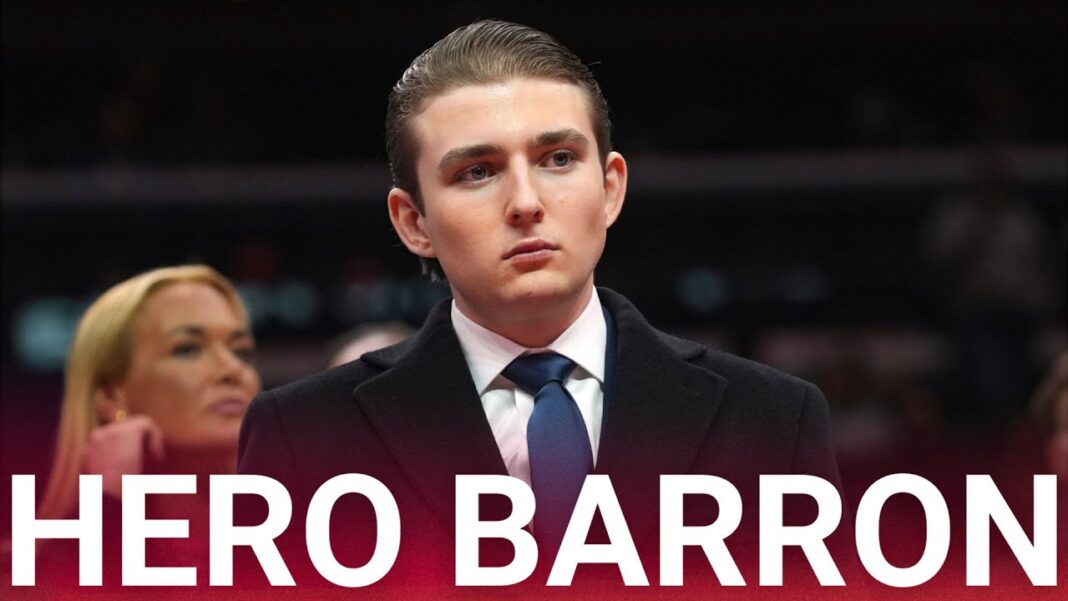
In a case that has rippled from a London courtroom to the global media, a harrowing episode of domestic violence has cast an unexpected spotlight on Barron Trump, the youngest son of President Donald Trump. According to testimony delivered in a UK court and reported by The New York Post on Wednesday, Barron Trump is being credited with saving a young woman’s life after he dialed emergency services from the United States when he witnessed her being violently attacked—live—during a FaceTime call.
The dramatic incident, which unfolded in January of last year, was revealed during the trial of 22-year-old Matvei Rumianstev at Snaresbrook Crown Court in London. Prosecutors alleged that Rumianstev brutally assaulted his former girlfriend in a jealous rage, incensed by her friendship with Trump. What transformed the episode from another grim statistic of domestic abuse into an extraordinary transatlantic rescue was the decisive action taken by Barron Trump in a matter of seconds.
As The New York Post report detailed, the young woman—whose identity has been protected by the court—reached out to Trump in the midst of a violent confrontation. What began as an ordinary FaceTime call quickly devolved into chaos. Trump, thousands of miles away, suddenly found himself witnessing—or rather, hearing—the unmistakable sounds of an assault in progress.
According to court testimony cited in The New York Post report, Barron Trump did not hesitate. Realizing that his friend was in immediate danger, he dialed 999, the United Kingdom’s emergency number, and spoke with dispatchers in urgent, unambiguous terms.
“I just got a call from a girl I know. She’s getting beaten up,” Trump told operators, according to Metro UK and The New York Post report. After providing the victim’s address, he pressed them to act without delay.
“It’s really an emergency, please,” he said. “I got a call from her with a guy beating her up.”
The call was brief but critical. Trump did not attempt to confront the attacker verbally or reconnect with the victim to gather more details—decisions that experts say could have escalated the violence. Instead, he focused on what he later described as “the best thing I could do” under the circumstances: ensuring that police were on their way as fast as possible.
The significance of Trump’s actions became clear during Rumianstev’s trial. The victim testified that she believed the call she made to Trump was “a sign from God,” and she told jurors unequivocally that he “saved my life.” Her words, quoted in The New York Post report, resonated deeply in the courtroom.
Police bodycam footage introduced as evidence further corroborated the account. Responding officers told the woman that someone in the United States had contacted them about the assault, though they did not initially disclose who had made the call. Visibly shaken, the woman explained to the officers that she was friends with Barron Trump, Donald Trump’s son.
At the officers’ request, she called him back to confirm the details. The footage captures a moment of stark reality amid chaos.
“Hello, Barron — did you call the police or anything?” she asked.
His response, audible on the recording and later cited by The New York Post, was calm and direct: “I had someone call the police.”
He then explained to officers what he had experienced during the fleeting FaceTime call. “She called me. I picked up the phone expecting a nice hello or something,” Trump said. Instead, he encountered panic and terror.
Trump told the court that although the video itself showed little more than a ceiling, the audio was unmistakable. He could hear his friend screaming, crying, and being struck. The call lasted only 10 to 15 seconds before it abruptly cut off—a chilling detail that underscored the urgency of the situation.
“I wasn’t going to call back and threaten things to him,” Trump said, according to The New York Post report. “Because that would just make the situation worse.”
That judgment call—made instinctively and under immense emotional pressure—has since been praised by commentators and observers alike. Domestic violence advocates note that intervening directly with an abuser can often escalate an already dangerous situation. Trump’s choice to involve law enforcement immediately, rather than attempting to play the hero in a more confrontational way, may well have been the difference between life and death.
Prosecutors alleged that Rumianstev’s attack was fueled by jealousy, specifically his anger over the victim’s friendship with Barron Trump. The case, as laid out in court and summarized in The New York Post report, painted a disturbing picture of possessiveness and volatility.
While Rumianstev’s defense challenged aspects of the prosecution’s narrative, the jury heard enough to conclude that the assault was severe and unprovoked. The fact that the victim had the presence of mind to reach out for help—and that Trump responded with equal clarity—became a central theme in the trial.
Barron Trump, who has largely remained out of the public eye compared to other members of the Trump family, was not present in the courtroom. Yet his voice, actions, and words were vividly present through testimony and recorded evidence.
As The New York Post report noted, the episode offers a rare glimpse into the character of the president’s youngest son, who is typically shielded from media scrutiny. In this instance, however, his calm under pressure and decisive action have been widely acknowledged—even by those otherwise critical of his family.
Social media reaction, while divided along familiar political lines, included a notable number of commentators praising Trump’s instincts and restraint. “He did exactly what you’re supposed to do,” one legal analyst told The New York Post. “He recognized an emergency, provided clear information, and stayed out of the way.”
Beyond its personal drama, the case has also reignited conversations about the prevalence of domestic violence and the importance of bystander intervention—even when that “bystander” is halfway around the world.
Statistics in both the UK and the US show that domestic abuse remains a pervasive and often underreported crime. Advocates emphasize that victims frequently reach out to trusted friends or family members during moments of crisis, underscoring the responsibility—and potential power—of those on the receiving end of such calls.
In that sense, as The New York Post report observed, the story is not merely about a famous last name. It is about the life-saving impact of taking threats seriously and acting decisively.
What makes this case particularly striking is its transnational nature. A young man in the United States hears a scream through his phone and, within minutes, mobilizes emergency responders in another country. The coordination between Trump, UK emergency services, and local police illustrates how modern technology—and quick thinking—can collapse distance in moments of crisis.
Legal experts in the UK noted that the emergency call itself was instrumental in building the prosecution’s case, establishing a clear timeline and corroborating the victim’s account. The fact that the call originated from abroad added an unusual but compelling dimension to the evidence.
Perhaps the most telling aspect of the story is Trump’s own understated assessment of his actions. He did not portray himself as a hero, nor did he dramatize his role. “That was the best thing I could do,” he said—words that The New York Post report highlighted as emblematic of a clear-eyed response to danger.
In an era saturated with performative gestures and social media grandstanding, the simplicity of that statement has resonated. Trump did not film, broadcast, or publicize the incident. He acted, and only later did the world learn what he had done—through the slow, methodical process of a criminal trial.
As Rumianstev’s case proceeds through the British justice system, the victim has expressed gratitude not only for surviving the ordeal but for the chain of decisions that led to her rescue. Chief among them was a call placed in desperation—and another answered with resolve.
According to The New York Post report, the woman told the court that she would never forget what Trump did for her. In a world where domestic violence often unfolds behind closed doors, unseen and unheard, this case stands as a stark reminder of the difference a single phone call can make.
Across an ocean, in the space of a few seconds, Barron Trump listened, believed, and acted. And because he did, a young woman lived to tell her story.
