



|
Getting your Trinity Audio player ready...
|
2025 Jerusalem Post Conference in New York Honors ZAKA’s Service, Unites Global Jewish Leadership
By: Fern Sidman
The 2025 Jerusalem Post Conference officially launched with a powerful and moving gala event in New York City on Sunday, May 18, bringing together prominent Jewish leaders, Israeli and American security officials, philanthropists, and business elites in an evening marked by reflection, resilience, and renewed commitment to Israel and its frontline heroes. The Jerusalem Post, in collaboration with the internationally respected emergency response organization ZAKA, hosted the evening, which The Jerusalem Post described as one of the most meaningful gatherings in the publication’s history.

The event commenced with opening remarks by Zvika Klein, Editor-in-Chief of The Jerusalem Post, who welcomed the packed audience with gratitude and a call for unity in the face of global challenges. Klein emphasized the significance of Jewish solidarity and the shared responsibility of diaspora and Israeli communities to support one another during turbulent times.
The keynote address was delivered by Haim Taib, founder and president of the Menomadin and Mitrelli Groups. Taib, known for his philanthropic ventures and deep commitment to Israeli innovation and resilience, spoke passionately about the power of unity and the role of social responsibility in advancing Israel’s global standing. His remarks, The Jerusalem Post noted, were received with a standing ovation and set the tone for the evening’s themes of strength and collective purpose.
Jerusalem Mayor Moshe Lion addressed the audience next, offering heartfelt greetings from the capital of Israel. He paid tribute to New York’s vibrant Jewish community and lauded its unwavering support for Jerusalem. Bank of Israel Governor Prof. Amir Yaron followed with an insightful analysis of Israel’s economic resilience, touching on the country’s ability to weather financial storms while remaining a hub for innovation and technological advancement.
The evening’s tone shifted to personal stories and psychological fortitude with a TED-style presentation by Chen Shimmel, whose remarks explored emotional strength amid chaos. This prepared attendees for one of the night’s most moving segments: a one-on-one interview between renowned television personality Dr. Phil and members of ZAKA. Before the interview began, guests watched a deeply moving tribute video showcasing the sacrifices and heroic efforts of ZAKA’s volunteer responders — men and women who often confront tragedy in its rawest forms.
Dr. Phil then led a riveting panel discussion titled “Beneath the Uniform: The Cost of Service, The Promise of Resilience,” joined by ZAKA volunteers Nurit Cohn, Simcha, and Yossi Landau. The panel delved into the psychological burdens borne by emergency responders and the long-term impact of repeated trauma. The Jerusalem Post highlighted the audience’s silent, respectful attention during this segment, noting that many attendees were visibly emotional.
ZAKA CEO Dubi Weissenstern addressed the crowd, offering a candid account of the mental health challenges facing his organization’s volunteers. “ZAKA volunteers go to sleep with memories and fall asleep into nightmares,” he stated, reinforcing the urgent need for mental health support. Weissenstern expressed hope that the gala would help advance the establishment of a Resilience Center to serve the hundreds of ZAKA members coping with PTSD. “We owe them that — and we need all the help we can get,” he added, as reported by The Jerusalem Post.
The evening closed on a powerful and uplifting note with a performance by Grammy-winning violinist Miri Ben-Ari. Blending classical, hip-hop, and Israeli musical themes, Ben-Ari’s set served as a musical tribute to both grief and hope. Her performance symbolized the spirit of the evening — bridging pain with healing, and loss with determination.
Reflecting on the night, The Jerusalem Post CEO Inbar Ashkenazi noted the gala’s growing legacy. “In recent years, The Jerusalem Post Gala has become a moving tradition that connects the U.S. and Israel,” she said. “This year, in partnership with ZAKA, we are proud to share the mission of an organization that operates with unmatched dedication in life’s most difficult moments.”

As reported by The Jerusalem Post, the gala not only elevated awareness around the mental health needs of first responders but also reinforced the enduring connection between American Jewry and Israel.
The conference officially began on Monday morning with attendees hearing from freed hostages Aviva and Keith Siegel who delivered an emotional and resolute plea for the immediate release of the 58 Israeli hostages still held captive by Hamas. Their appearance marked a powerful shift from the previous year’s conference, when Aviva stood alone on stage, advocating for her husband’s release. This year, she stood side by side with Keith, whose presence, she called “a miracle.”
With tears in her eyes and strength in her voice, Aviva said, “I want to start by saying Keith is here. He is here sitting next to me, and it’s a miracle.”

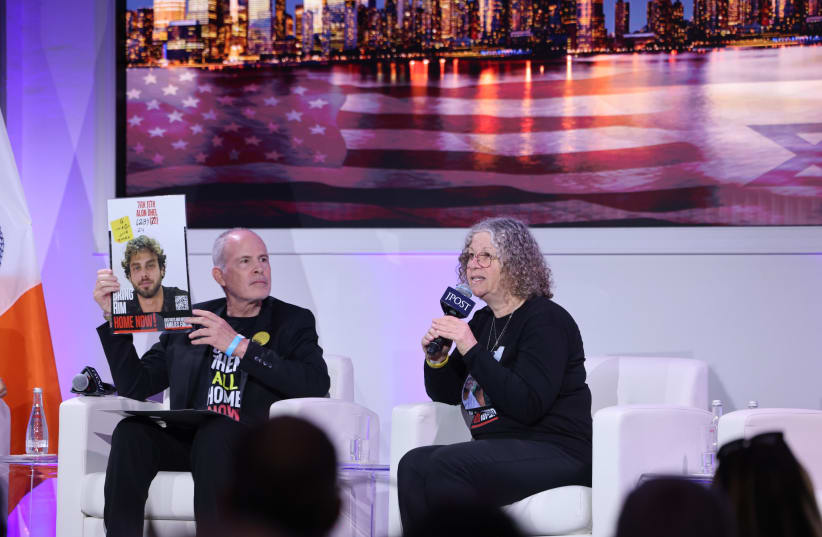
Despite her joy, Aviva made it clear that her advocacy would not stop with her husband’s return. Holding up a poster of twins Gali and Ziv Berman from Kibbutz Kfar Aza, she reminded the crowd that many families still live in anguish. “I’m the happiest to have Keith home, but I am here talking for Tali – Gali and Zivi’s mom. They deserve to be happy too.”
The Jerusalem Post report highlighted Aviva’s compassionate mention of other families still waiting for their loved ones. She recalled being shown a video of hostage Alon Ohel playing piano by his mother, a moment that moved her to tears. “I started crying, because I know what it is like being in Gaza with nothing – hardly a mattress on the floor to lie down,” she said, as Keith held up Alon’s image for the audience.
The couple did not shy away from directing their message to political leaders. “We want this war to end and we want President [Donald] Trump to bring them all back—all the 58,” Aviva declared to roaring applause. “There are families whose loved ones who aren’t alive are still in Gaza. They need to come back.”
Keith Siegel took the stage to share his harrowing experience of captivity. The Jerusalem Post reported the crowd fell into solemn silence as Keith recounted being confined in suffocating tunnels. “It’s very, very hard to describe the experience in words – the horrors, the violence, the abuse,” he said. “We could hardly breathe and felt like death was close.”
He spoke of physical deprivation and psychological trauma, noting the lack of food, water, and access to medical care. More disturbingly, Keith witnessed and endured abuse that he described as “torture.” “I witnessed the abuse and literal torture of other hostages, including women. I witnessed sexual abuse. Just getting through the day was very, very challenging,” he told the audience.
Keith also shared memories of the bond he formed with fellow captives Matan Angrest and Omri Miran, both of whom remain in captivity. Displaying their photographs, he said, “We helped each other get through the days.” He emphasized Matan’s dire condition, saying, “[He] has not received the medical attention that he needs.”
As for Omri, Keith underscored the emotional toll of his separation from his family. “He hasn’t seen his two- and four-year-old daughters in almost 600 days. That is torture,” he said, his voice breaking with emotion.
The Jerusalem Post noted the moral clarity and urgency in Keith’s message. He appealed directly to both President Trump and Prime Minister Netanyahu: “Get negotiations moving. Sign an agreement to bring all the 58 hostages home. End the war, and let’s get this behind us.”
Aviva closed their address with a heartfelt appeal to the public. “We just want to ask everybody to continue to help us. We need you—we need to be together, to be strong. And they need to come home.”
Throughout the conference, The Jerusalem Post stressed how the Siegels’ presence served not only as a symbol of resilience but also as a rallying cry for global action. Their firsthand testimony, interwoven with the faces and stories of those still trapped in Gaza, moved the audience and drew renewed attention to the ongoing humanitarian crisis.
The Jerusalem Post reaffirmed its commitment to giving voice to those still waiting to be heard—and to those who speak for them with courage and unwavering love.
Middle East Envoy Steve Witkoff delivered a bold and stirring message focusing on the Trump administration’s commitment to regional peace through strength, deterrence, and moral clarity. In a speech that was as emotive as it was policy-driven, Witkoff declared that America under President Trump remains fully committed to seeing Hamas dismantled, Iran’s nuclear ambitions crushed, and the Abraham Accords expanded as a pathway to long-term regional transformation.
According to The Jerusalem Post, Witkoff began by reflecting on the state of the Middle East during the final days of President Trump’s first term in office. “In January 2021,” he noted, “President Trump left the Middle East transformed. Iran was reeling, its proxies starved of resources, and the Abraham Accords were a radiant promise of peace and prosperity.” It was, as The Jerusalem Post described, a defining era of assertive American diplomacy that shifted paradigms and drew new lines of alliance across the Arab-Israeli divide.
But the horrors of October 7, 2023—a date etched into the consciousness of the Jewish world—shattered that calm. “Since October 7,” Witkoff continued, “the world has witnessed Houthis, Hamas, and Hezbollah wage a cowardly, immoral war, hiding behind civilians and clutching hostages.” The Jerusalem Post report highlighted the gravity of his words, particularly his sharp characterization of the enemy: “This is not just a conflict; it is evil. And let me be clear—evil will not triumph.”
Witkoff cast the Trump administration not merely as a political machine but as a moral imperative—a “force of action and hope,” as he put it, that has reignited the world’s faith in America’s ability to shape outcomes and uphold justice. According to The Jerusalem Post, his speech drew repeated applause, particularly when he spoke of a shared moral responsibility among global Jewry, Israel’s allies, and American supporters.
“This mission is not ours alone,” Witkoff said with conviction. “It is everyone’s mission. You are the warriors of truth, the guardians of unity. Your fight against antisemitism, your stand against fake news, and your unbreakable bond as a people are the heartbeat of Israel’s strength.”
His remarks struck a resonant chord, especially as he turned to the increasing ideological and social divisions in both the United States and Israel. “I have seen what happens when division creeps in,” he warned, “but I have also seen the power of a united front. America stands with you today, tomorrow, and forever.”
The Jerusalem Post noted the electrifying energy in the room as Witkoff framed the conference itself not simply as a policy forum but as “a rallying cry.” He challenged the audience to embrace their roles as agents of truth, protectors of Jewish destiny, and voices for regional sanity amid rising global antisemitism and misinformation.
“Let us leave here inspired, emboldened, and united,” he urged. “Ready to build a future where truth prevails, peace reigns, and the spirit of our people soars.”
Witkoff closed with a forward-looking message: “Together, we will write the next chapter of hope.”
Gilad Erdan—former Israeli Ambassador to the United Nations and current Global President of Magen David Adom (MDA)—delivered an impassioned address, sharply condemning the United Nations for decades of moral failure, while elevating Israel’s emergency medical responders as the embodiment of resilience and righteousness.
Erdan, who served at the UN from 2020 to 2024, did not mince words. “The United Nations is beyond reform. It’s beyond repair,” he declared to resounding applause. According to The Jerusalem Post, Erdan’s condemnation was rooted in personal experience and firsthand knowledge of how international diplomacy has increasingly been weaponized against the Jewish state.
“The institution created to prevent atrocities after the Holocaust now protects genocidal regimes,” he said, as a blistering rebuke of the UN’s selective moral compass. Erdan cited the lopsided statistics, noting that Israel has been the subject of a staggering 70% of all UN condemnations. He pointed out the hypocrisy of autocratic nations like Cuba and Somalia holding seats on the Human Rights Council “while their citizens suffer under oppression.”
His most scathing remarks were reserved for the International Court of Justice, where, as he noted with visible frustration, “a Lebanese child presides over genocide charges against Israel while we are at war with Lebanon.” The irony, he insisted, could not be more grotesque.
Yet, as The Jerusalem Post noted, Erdan’s address was not simply a denunciation of international hypocrisy. It was also a heartfelt tribute to heroism—specifically, to the men and women of Magen David Adom, Israel’s national emergency medical service, which he now leads.
“After four years at the evil UN, I chose to channel my devotion into an organization of pure good,” Erdan stated. His transition from international diplomacy to emergency medical leadership, The Jerusalem Post wrote, reflected a broader shift—from the frustrating inaction of international forums to the hands-on, life-saving urgency of MDA.
Erdan emphasized that MDA’s mission goes far beyond first aid. “Magen David Adom doesn’t just save lives – we directly combat the strategy of our enemies. When Hamas and Hezbollah attack our home front, their goal is to break our spirit and drive us from our homeland in fear. Targeting our life-saving teams is part of this monstrous strategy to terrorize our people. But with every life we save, we send a message: We will not be broken!”
The Jerusalem Post reported that the assemblage was visibly moved as Erdan pivoted to the personal story of one of MDA’s most courageous responders: Adham Safadi, a senior EMT and ambulance driver from Majdal Shams.
With a heavy heart, Safadi recounted the worst day of his life—the moment a Hezbollah rocket struck a soccer field where his daughter was playing. “I saw my daughter lying on the grass… lifeless,” he said, his voice breaking. “I stood beside her, then fell to the ground and asked her forgiveness for not being able to help her.”
Despite the unbearable grief, Safadi rose to the occasion. He continued to treat other wounded children at the scene. “There are still children screaming… needing help,” he said.
As The Jerusalem Post report observed, it was a moment that crystallized the theme of the evening: moral clarity in the face of tragedy. Erdan and Jerusalem Post Editor-in-Chief Zvika Klein presented Safadi with the conference’s Award for Courage and Service, citing his “unwavering commitment” in the face of unimaginable loss.
Erdan closed his remarks by asserting that while the UN and other global institutions may have lost their way, the Israeli people—and those who stand with them—remain anchored in principles of life, dignity, and moral clarity.
“Let the world watch and let them know,” he said. “We do not run from rockets. We do not surrender to terror. And we will never apologize for defending our families and saving our children.”
Advocate Edan Kleiman, Chairman of the Zahal (IDF) Disabled Veterans Organization (Irgun Nechei Zahal), delivered a poignant and sobering address about the future of Israel’s wounded soldiers. In remarks at The Jerusalem Post Conference combined brutal realism with steadfast hope, Kleiman outlined the Defense Ministry’s projection that by the year 2030, the number of IDF wounded will surpass 100,000—a staggering figure underscoring the long-term consequences of Israel’s security challenges.
As reported by The Jerusalem Post, Kleiman revealed that more than 17,000 Israeli soldiers have already been wounded during the ongoing Swords of Iron War, Israel’s longest and most intense military campaign since its founding. For the hundreds of thousands watching the conference around the globe, the numbers were more than statistics—they were a clarion call for action and a reaffirmation of national responsibility.
Kleiman, himself a survivor of war injuries, spoke from experience. Critically wounded in 1992 during a confrontation with terrorists in Khan Younis while serving in the Givati Brigade, Kleiman’s survival, he said, was only possible because “others walked beside me.” His words called attention to the value of solidarity and the deep personal cost of service.
Central to Kleiman’s mission as head of Irgun Nechei Zahal is the rehabilitation of wounded soldiers—not merely as a medical task, but as a sacred national duty. “We have only one mission,” he declared, “which is to rehabilitate our heroes and help them return to their families and friends as positive and contributing citizens.”
That mission is carried out through the organization’s Beit Halochem network—four state-of-the-art rehabilitation and community centers located throughout Israel. As The Jerusalem Post noted, these centers are sanctuaries of recovery, providing more than 450 physical, psychological, and social programs to approximately 16,000 veterans every day. A fifth center is under construction in Ashdod, set to open within the next 18 months, expanding access to care and community.
Kleiman emphasized that these centers are not simply about healing physical injuries. “The Disabled Veterans Organization,” he said, “does much more than healing injuries. We restore dignity, confidence, and purpose.” In his telling, these are the very foundations of reintegration—not only into daily life, but into a society that honors the sacrifices of its defenders.
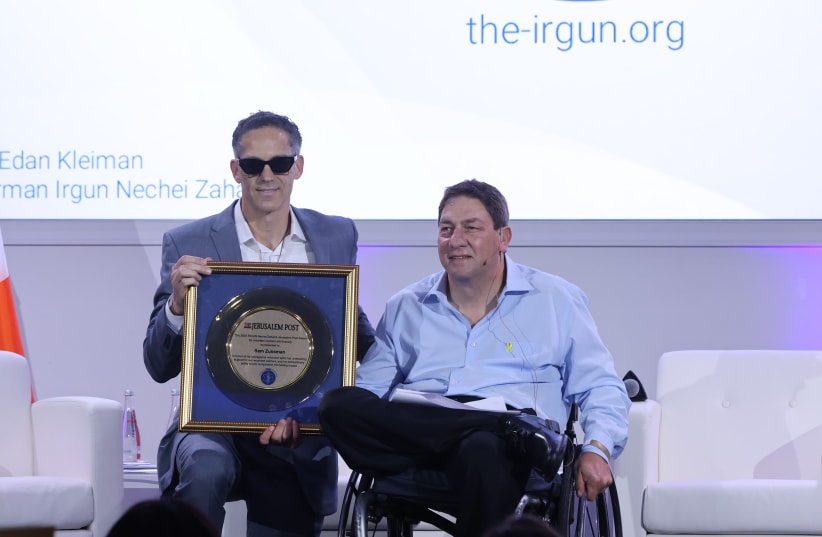
In a moment that resonated deeply with the conference audience, Kleiman announced the reestablishment of the Friends of Irgun Nechei Zahal USA, a critical philanthropic arm intended to rally American support for Israel’s wounded warriors. He also announced the appointment of Mr. Sam Zussman as its new chairman.
Zussman, a noted philanthropist and passionate advocate for Israel, was presented with The Jerusalem Post Award for Volunteer Heroism. Kleiman praised him for “his courageous volunteer spirit, his unwavering support for our wounded warriors, and his extraordinary ability to turn compassion into lasting impact.” The award, as reported by The Jerusalem Post, was a highlight of the conference—an emblem of how diaspora Jews and international supporters can play a vital role in the lives of Israel’s veterans.
Kleiman then turned the spotlight to three wounded veterans of the Swords of Iron War—Staff Sergeant Yossi Karsenty, Captain Liam Spielman, and Sergeant Noam Shapira—each of whom bore visible scars from combat. He invited all 19 wounded warriors in attendance, members of the Nechei Zahal delegation, to stand before the audience.
“These men and women faced the unimaginable—and chose to rise again,” Kleiman declared, his voice charged with emotion. “Each of them is a living reminder that resilience is not an idea—it is a decision. A fight. A choice to live again.”
As The Jerusalem Post noted, Kleiman’s remarks were met with a prolonged standing ovation—one not just of admiration, but of recognition. The country’s wounded soldiers, far too often relegated to the margins of post-war narratives, were given center stage, their stories of pain and triumph central to the broader story of Israel’s survival.
The sobering projection of over 100,000 disabled veterans by 2030 adds urgency to Kleiman’s message. The demand for physical therapy, psychological support, prosthetics, housing adaptations, job training, and social integration services will only increase in the years to come. As The Jerusalem Post emphasized, the need for philanthropic partnerships—especially with American Jews and allies—is greater than ever.
In closing, Kleiman emphasized that while the battles may rage on in Gaza and beyond, another battle continues in silence—in homes, in hospitals, and in the hearts of Israel’s wounded. “We must walk beside them,” he urged. “Just as someone once walked beside me.”
Through his leadership and the work of Irgun Nechei Zahal, Kleiman has ensured that Israel’s defenders are not forgotten after the gunfire fades. His message transcended politics or policy—it was a moral imperative.
For the wounded and their families, hope is not abstract. It lives in the form of community, courage, and the belief that no warrior is ever truly alone.
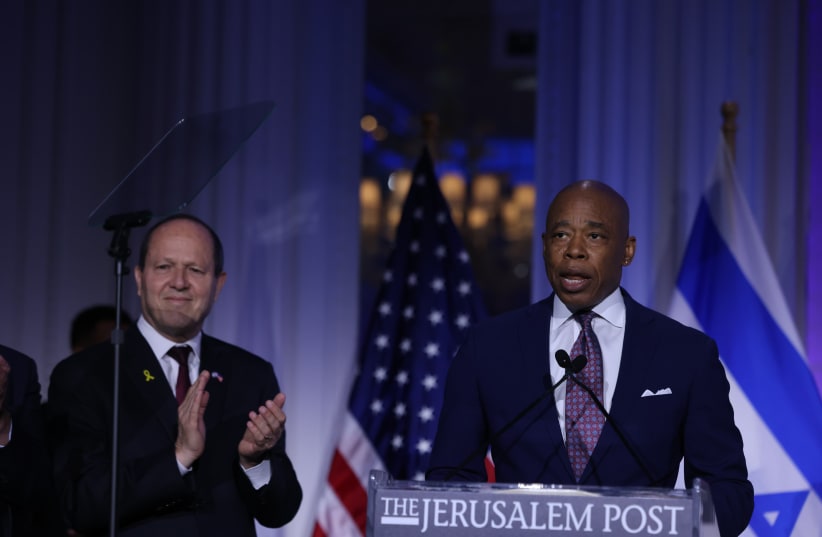
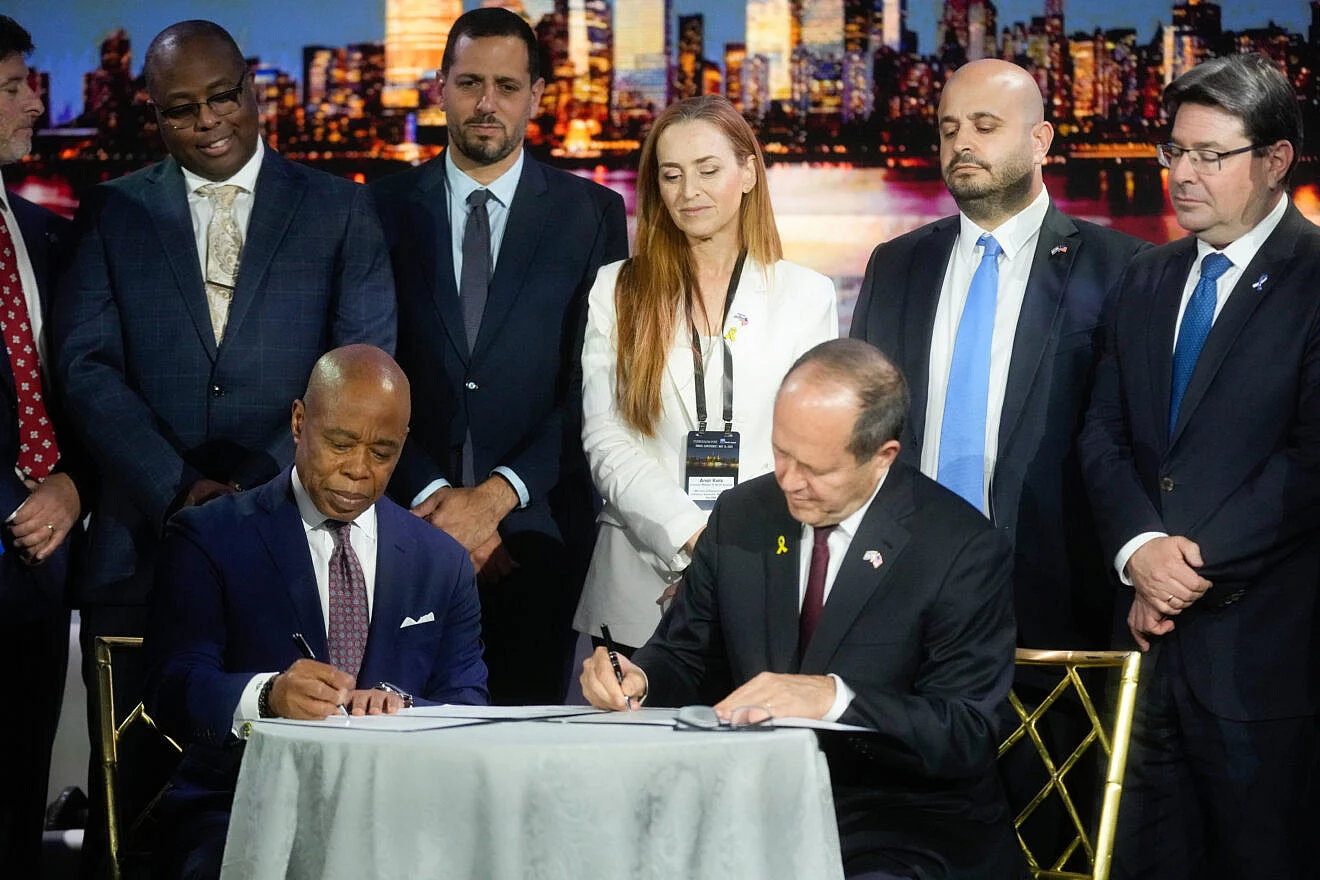
In a bold initiative underscoring the deepening economic and diplomatic relationship between the United States and Israel, New York City Mayor Eric Adams and Israeli Economy and Industry Minister Nir Barkat announced at the conference, the formation of the New York City–Israel Economic Council. As reported by The Jewish News Syndicate (JNS), this joint body aims to facilitate cross-border investment, catalyze innovation, and serve as a gateway for Israeli businesses seeking to expand into the American market—starting with the economic powerhouse of New York City.
The nonbinding declaration of intent, signed Monday, signals a significant step in institutionalizing economic cooperation between the two governments. While not a legally binding treaty, the agreement lays a robust foundation for tangible bilateral engagement in areas ranging from environmental technology to life sciences, artificial intelligence, fintech, defense technology, and agro-food innovation.
Mayor Adams, who is currently navigating a competitive re-election landscape, positioned the announcement as both an economic imperative and a reaffirmation of New York City’s historic support for the State of Israel. “Today’s announcement of a declaration of intent reflects a proud tradition of New York City mayors collaborating with Israel,” Adams said, as quoted by JNS. “It will drive innovation, create jobs, and strengthen the unbreakable bond between our two governments.”
The council’s creation spotlights New York’s enduring role as a global innovation hub and mirrors Israel’s stature as a start-up nation with a thriving entrepreneurial ecosystem. “This initiative opens new opportunities for Israeli companies to engage with the dynamic New York market, while contributing meaningful value to the city’s diverse economy,” Barkat added in remarks also cited by JNS.
For both partners, the launch of the New York City–Israel Economic Council is about far more than trade. As noted by Minister Barkat, “It is a tremendous honor to establish this joint council with one of the world’s greatest cities—New York City. A global hub of innovation, creativity, and economic leadership, New York represents a powerful partner for Israel’s thriving business ecosystem.”
In addition to headline speakers, a range of thought leaders, policymakers, business executives, and medical professionals delivered compelling addresses throughout the day.
According to The Jerusalem Post, Dr. Noam Yehudai, Director of Tzafon Medical Center near Tiberias, opened a critical discussion on the healthcare challenges facing northern Israel, especially under wartime conditions. His remarks highlighted the strain and ingenuity required to deliver care in conflict zones.
Dani Naveh, President and CEO of Israel Bonds, revealed a major milestone at the event—announcing that nearly $5 billion has been raised since the October 7 attacks to support Israel’s economy. Naveh emphasized the bond between Diaspora Jewry and the Israeli economy during times of crisis.
From the global investment sphere, Juan Delgado, Co-CEO of Hamilton Lane, noted his firm’s position as the world’s largest foreign investor in Israeli high-tech. With $950 billion under management, Hamilton Lane has been investing in Israel for two decades.
Meuhedet Chairman Eyal Gabbai, in conversation with Inbal Ann Bouskila, discussed his organization’s rapid emergency response post-October 7 and future plans to strengthen healthcare in Israel’s periphery.
Mekorot CEO Amit Lang reassured attendees that Israel’s water infrastructure is secure, thanks to a decade of investment in desalination technology and advanced systems.
Bank Leumi CEO Hanan Friedman struck a notably optimistic tone, encouraging global investors to view Israel as a beacon of economic resilience despite ongoing challenges.
The co-founders of Nefesh B’Nefesh, Rabbi Yehoshua Fass and Tony Gelbart, celebrated the growing trend of Aliyah—especially among young Jewish professionals and doctors—offering a hopeful view of Israel’s demographic future.
El Al General Counsel Sharon Brownstone shared behind-the-scenes accounts of the national airline’s critical role in the aftermath of October 7, emphasizing its unyielding commitment to serve as Israel’s aerial lifeline.
Dr. Merav Galili, CEO of the Menomadin Foundation, presented a bold “Israel 3.0” vision, urging a new national strategy centered on leadership, sustainability, and long-term societal resilience.
Culture and Sports Minister Micky Zohar (Likud) delivered a provocative message, stating that Israel may annex land in Gaza if Hamas fails to release the remaining hostages and vacate the territory.
National Unity chairman Benny Gantz offered a moving defense of Israel’s commitment to bring its hostages home, calling the country’s willingness to pay a high price for their return “a strength, not a weakness.”
US Hostage Envoy Adam Boehler highlighted the cooperation between Israeli military operations and American diplomatic efforts to secure hostage releases.
Florida Senator Rick Scott assured attendees of continued American support, affirming that President Donald Trump would “do everything he can to expand peace” and deepen U.S.-Israel ties following his visit to Qatar.
Ofer Yannay, Chairman of Nofar Energy and owner of the Hapoel Tel Aviv Basketball Club, reflected on a year of transformative growth, both on the court and off.

The Jerusalem Post has always been a left-wing Democrat enemy of Israel. It is worth reading only to monitor the enemy.
Must watch breaking news:
Unprecedented Court Rulings Rock Israel’s Government | Basic Law
https://youtu.be/4vBqDZZ4VNA?feature=shared