



|
Getting your Trinity Audio player ready...
|
By: Fern Sidman
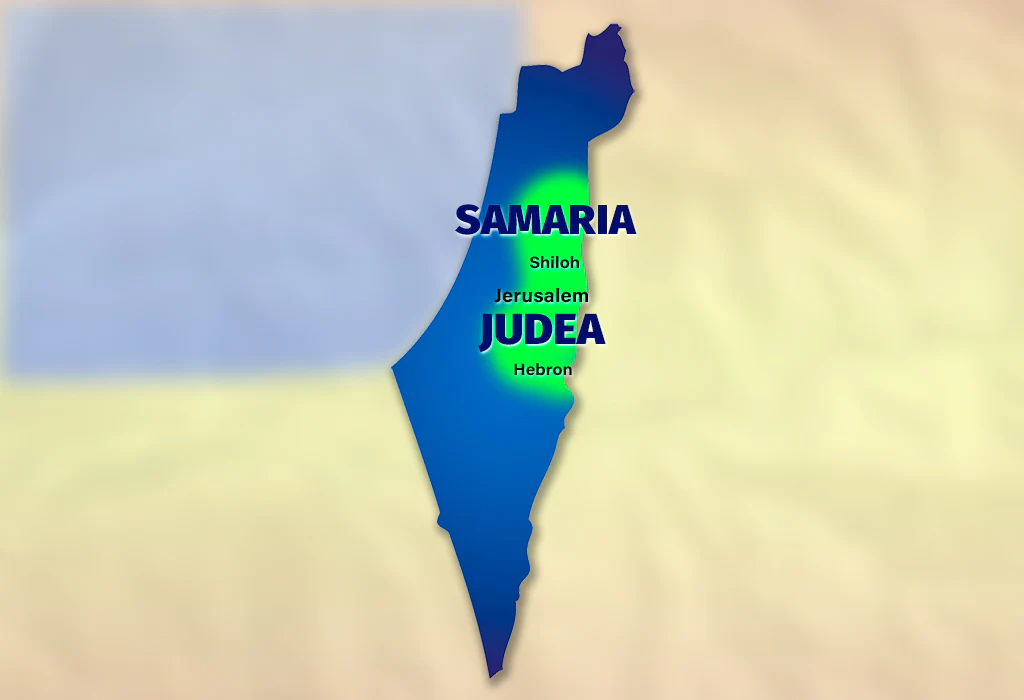
A tense weekend of diplomacy unfolded as Israel’s Yesha Council dispatched an emergency delegation to New York, pressing Prime Minister Benjamin Netanyahu to set a clear timetable for extending Israeli sovereignty over Judea and Samaria. Their urgency, however, collided head-on with President Trump’s public warning that he would not allow annexation of Judea and Samaria to move forward.
The council, which represents the umbrella organization of Jewish communities in Judea and Samaria, expressed “deep concern” following a Sunday meeting with Netanyahu in New York, where the prime minister reiterated his belief that the region is an inseparable part of the Jewish state but stopped short of committing to a timeline for formal sovereignty. According to a report on Monday at The Jewish News Syndicate (JNS), Netanyahu’s refusal to define a deadline for action drew unease among settlement leaders, who view the current geopolitical moment as critical to shaping Israel’s long-term security and national identity.
The delegation, described by the Yesha Council as “unprecedentedly large”, included senior figures from its leadership along with numerous mayors and council heads from across Judea and Samaria. Their decision to fly to New York at short notice was fueled by President Trump’s remarks the previous day, in which he told journalists in the Oval Office that he had instructed Netanyahu not to proceed with annexation.
“There’s been enough. It’s time to stop now,” Trump declared, in comments widely reported and verified by JNS. The president’s blunt words sent shockwaves through the settlement movement, which has long counted on strong U.S. support to advance sovereignty claims.
The Yesha Council, in a statement released Saturday night, warned that “the establishment of a potential Palestinian state is closer than ever, and the international pressure on Netanyahu to establish it is intensifying.” The statement added: “The coming days in the U.S. will determine Israel’s security for the years ahead. We will be there to ensure that a terror state threatening all Israeli citizens will not be established. Sovereignty is the only way to achieve this. The decision rests in the hands of the prime minister.”
During the New York meeting, Netanyahu reassured the delegation that he intended to tell President Trump that Judea and Samaria are inseparable from Israel’s national destiny. Still, he offered no indication of when or how sovereignty would be extended.
The prime minister’s office later attempted to soften the disappointment by agreeing to coordinate a follow-up meeting on Monday, after Netanyahu’s White House visit. Yet, by the time of publication, JNS reported that the Prime Minister’s Office had not formally responded to questions regarding the meeting, leaving speculation about Netanyahu’s precise commitments unresolved.
This delicate balancing act draws attention to Netanyahu’s broader diplomatic challenge: maintaining support among Israel’s nationalist base while navigating intense international pressure—particularly from Washington—to avoid unilateral moves.
Netanyahu’s New York consultations came on the eve of his fourth meeting with President Trump since the latter returned to the White House in January. The two leaders were scheduled to sit down at the White House on Monday morning, with discussions set to include both the Gaza conflict and the sovereignty issue.
Trump, speaking to Israel’s Channel 12 News on Sunday, revealed that negotiations over his 21-point plan to end the war in Gaza were in their final stages. He insisted that the plan had the backing not only of Netanyahu but also of several Arab and Muslim nations participating in the talks.
According to Trump, the plan could “potentially open the door to broader peace in the Middle East.” At the same time, his categorical rejection of annexation has rattled the Yesha Council, whose leaders see sovereignty as a non-negotiable condition for Israel’s security and long-term stability.
The question of applying sovereignty over Judea and Samaria has long hovered on the margins of Israeli politics, often peaking during moments of heightened U.S.-Israel alignment. Netanyahu’s governments have considered formal steps on several occasions, including proposals to annex the Jordan Valley.
The issue reached a critical juncture in 2020, in the months leading up to the unveiling of the Abraham Accords. At the time, expectations were high that Israel would act decisively. Instead, Netanyahu agreed to suspend annexation plans as part of the U.S.-brokered normalization deal with the United Arab Emirates, a decision widely seen as a trade-off between sovereignty and regional diplomacy.
Now, amid renewed conflict and shifting diplomatic pressures, the sovereignty debate has resurfaced with heightened urgency. Settlement leaders argue that deferring once more could squander a historic opportunity.
Netanyahu had already laid down a hard line during his address to the United Nations General Assembly on Friday, declaring that his opposition to Palestinian statehood was not merely a personal or political stance but a matter of national consensus.
“Giving the Palestinians a state one mile from Jerusalem after Oct. 7th is like giving Al-Qaeda a state one mile from New York City after Sept. 11th,” Netanyahu told world leaders. “This is sheer madness. It’s insane, and we won’t do it.”
As the JNS report noted, Netanyahu’s speech framed the conflict in existential terms, aligning Israel’s refusal to accept a Palestinian state with its broader security imperatives.
Public sentiment in Israel appears to favor the Yesha Council’s position. A poll conducted on Jan. 29 revealed that nearly 70% of Israelis support extending full legal sovereignty over Judea and Samaria.
For settlement leaders, this statistic underscores the disconnect between Israel’s domestic consensus and the international pressure emanating from Washington and beyond. Their argument, frequently cited in JNS coverage, is that sovereignty is not merely a political aspiration but a reflection of the democratic will of the Israeli people.
For Israel, the sovereignty debate is inseparable from security concerns. Judea and Samaria’s geographic position provides strategic depth critical to defending the country’s densely populated coastal plain, including Tel Aviv and Jerusalem.
The Yesha Council insists that failure to apply sovereignty leaves the region vulnerable to international schemes for a Palestinian state, which they argue would serve as a launching pad for terrorism rather than a foundation for peace. “Sovereignty is the only way to achieve security,” the council maintains, emphasizing that withdrawal or compromise would invite existential threats.
The clash between the Yesha Council’s demands and Trump’s admonition highlights a recurring tension in U.S.-Israel relations. On one hand, Trump has been described by Netanyahu as “an incredible ally and friend of Israel,” credited with recognizing Jerusalem as Israel’s capital, recognizing Israeli sovereignty over the Golan Heights, and approving strikes against Iranian nuclear facilities.
On the other hand, his latest remarks signal limits to U.S. support, particularly when annexation risks alienating Arab partners essential to broader regional diplomacy. For Netanyahu, whose political survival often depends on balancing nationalist aspirations with international legitimacy, the path forward is fraught with complexity.
The coming week may prove decisive. Netanyahu’s White House meeting with Trump, followed by continued engagement with the Yesha Council, will likely determine whether sovereignty remains on Israel’s near-term agenda or is once again deferred in favor of diplomatic considerations.
The Yesha Council has pledged to maintain pressure. Its delegation in New York represents not only the interests of the communities it governs but also the aspirations of a majority of Israelis, as reflected in recent polling.
As the JNS report observed, the council’s leaders view the present moment as one of historic consequence: “The coming days in the U.S. will determine Israel’s security for the years ahead.”
Netanyahu stands at a crossroads. On one side, the Yesha Council and a significant segment of Israeli public opinion are urging him to seize the moment and formalize sovereignty over Judea and Samaria. On the other, President Trump and key international actors are signaling that annexation could derail broader diplomatic initiatives, including an emerging truce in Gaza and potential breakthroughs in regional peace.
Whether Netanyahu opts for delay, compromise, or defiance, his decision will shape Israel’s trajectory for years to come. For settlement leaders, the message remains clear: the survival and security of the Jewish state depend on sovereignty. For Washington, the calculus is broader, balancing Israeli ambitions against the fragile architecture of Middle Eastern diplomacy.
As JNS reported, the outcome of these high-stakes negotiations may well redefine the contours of the Israeli-Palestinian conflict and the very future of the region.
