



|
Getting your Trinity Audio player ready...
|
By: Fern Sidman
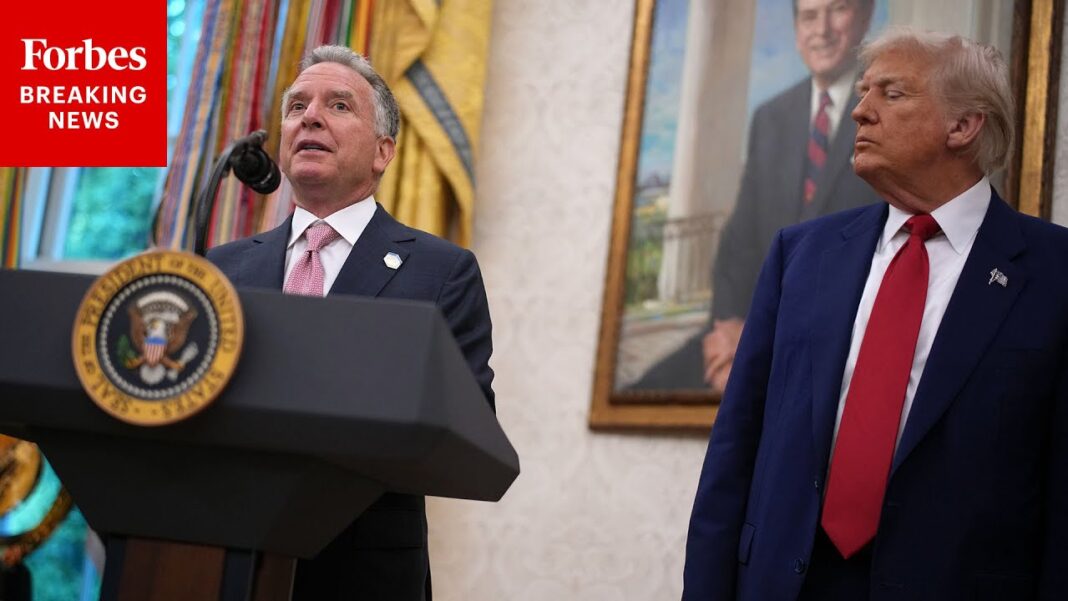
U.S. Special Presidential Envoy to the Middle East, Steve Witkoff, issued a forceful condemnation Saturday of Hamas’ latest response to a proposed ceasefire agreement, characterizing it as “totally unacceptable” and warning that the terror organization’s demands only serve to reverse progress made in the painstaking negotiations. The statement, reported by Arutz Sheva, calls attention to the growing frustration among American and Israeli officials over what they see as Hamas’ obstinate and maximalist posture.
A senior Israeli official, speaking to Arutz Sheva on condition of anonymity, provided a detailed analysis of Hamas’ counterproposal and made clear that its terms deviated sharply from the latest Israeli concessions embodied in the “Witkoff framework.” The source emphasized, “This isn’t a response — it’s a slammed door.”
According to the information provided in the Arutz Sheva report, Hamas has demanded a long-term ceasefire lasting as long as seven years, a complete withdrawal of the Israel Defense Forces (IDF) from all territories captured since March, the dismantling of the recently established Gaza Humanitarian Foundation’s aid distribution model, and a reinstatement of the previous mechanism — widely discredited for enabling Hamas to divert aid for military purposes.
“These conditions are not only out of step with the Israeli proposal but also undermine the core intent of the Witkoff plan: to secure the release of hostages and deliver aid while dismantling Hamas’ operational control,” the senior official said.
The Prime Minister’s Office in Jerusalem swiftly responded to the developments with a blunt statement published by Arutz Sheva: “While Israel has agreed to the updated Witkoff framework for the release of our hostages, Hamas persists in its refusal. As U.S. Presidential Special Envoy to the Middle East Steve Witkoff has said, Hamas’s response is totally unacceptable and is a step backward. Israel will continue its efforts to return our hostages and defeat Hamas.”
Hamas, for its part, pushed back against Witkoff’s characterization, calling his remarks “unfair” and “biased in Israel’s favor.” The terror group insisted that it had not rejected the proposal, and accused the U.S. envoy of misrepresenting its intentions. In a separate statement, Hamas claimed it had conveyed a “constructive” response to regional mediators with the goal of achieving a “permanent ceasefire, a comprehensive withdrawal from the Gaza Strip, and ensuring the flow of aid to our people.”
But Arutz Sheva has confirmed that the demands relayed by Hamas dramatically exceed what Israel — and increasingly, international mediators — deem reasonable or workable.
Among the core points of contention is the sequencing of hostage releases. According to details cited by Egypt’s Al-Ghad news channel and reported by Arutz Sheva, Hamas proposed releasing ten living hostages in three phases: four on day one, two on day thirty, and four on day sixty. The remains of 18 deceased hostages would also be returned over a similar timeline, in three separate batches on days ten, thirty, and fifty.
In exchange, Hamas has demanded the release of an as-yet unspecified number of Palestinian prisoners, further complicating the negotiating process. Israeli officials have expressed dismay at the absence of clarity and proportionality in Hamas’ prisoner exchange demands, noting the absence of guarantees that all hostages would be returned.
The group’s insistence on dismantling the Gaza Humanitarian Foundation — a U.S.- and Israeli-backed initiative designed to bypass Hamas’ control over aid distribution — has further fueled skepticism. As Arutz Sheva has previously reported, the Foundation was established precisely to ensure that humanitarian relief reaches civilians rather than being seized for military use. Its removal, critics argue, would restore Hamas’ leverage over civilian populations and enable the continuation of corruption and coercion.
Brig. Gen. (res.) Amir Avivi, founder of the Israel Defense and Security Forum, told Arutz Sheva, “This is a cynical manipulation. Hamas is trying to couch their military demands in humanitarian language. Their proposal does nothing to bring closure to the families of the hostages or end the conflict — it prolongs it.”
Behind the diplomatic drama lies a deepening sense of urgency. With the window for meaningful negotiations narrowing ahead of key deadlines, including a looming application period for expanded U.S. humanitarian involvement, American and Israeli officials had hoped that the Witkoff framework would represent a turning point. Instead, it appears to have sparked yet another impasse.
Witkoff, who has played a pivotal role in the Trump administration’s regional diplomacy, has reportedly been in continuous contact with Egyptian, Qatari, and Israeli officials in recent days. His blunt condemnation of Hamas’ response, delivered with unusually direct language, signals a shift in tone and perhaps a recalibration of expectations moving forward.
As Arutz Sheva reported, Israeli military and political leaders remain committed to the dual goals of securing the safe return of hostages and degrading Hamas’ operational infrastructure. With Hamas apparently unwilling to embrace a realistic path forward, the prospects for a lasting truce remain uncertain.
Still, the pressure is mounting on all parties. Political pressures on Prime Minister Benjamin Netanyahu’s coalition are intensifying, and international actors — including the United States — face growing calls to demonstrate diplomatic results.
For now, the Witkoff framework hangs in the balance, a potential off-ramp that may yet dissolve under the weight of intransigence and mistrust. In the words of one Israeli official speaking to Arutz Sheva: “Peace cannot be built on the lies and extortion of a terror regime. Hamas has shown the world — once again — that it does not negotiate in good faith.”

Witkoff should not be surprised. Everyone knows what the Arabs want. Israel should move the Arabs out of Gaza one way or another. Trump and Witkoff will come around and if not – so what. Problem solved at least in Gaza.
Witkoff is a Qatari Muslim terrorist enemy agent acting on Trump’s orders. Trump is stabbing Israel in the back.