



|
Getting your Trinity Audio player ready...
|
By: Jeff Gorman
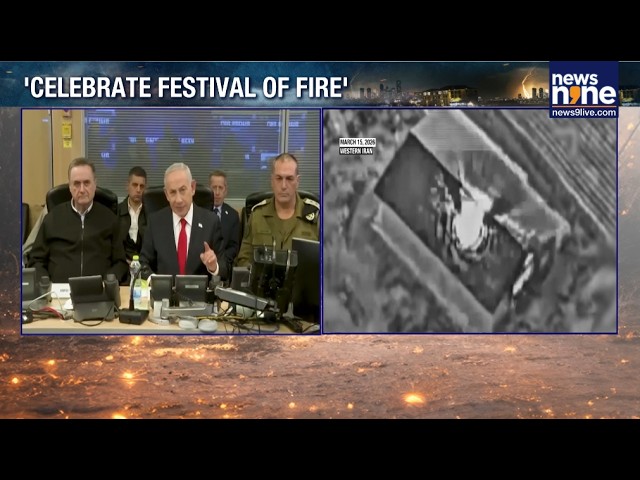
In a rare and highly symbolic address that transcended borders, Israeli Prime Minister Benjamin Netanyahu delivered a direct message to the people of Iran on Tuesday evening, marking the approach of Nowruz, the Persian New Year. The address, delivered from a fortified command center in Tel Aviv, blended military resolve with an appeal to cultural identity, reflecting both the intensity of the ongoing conflict and the enduring complexity of relations between the Iranian regime and its citizens.
According to a report on Wednesday at VIN News, Netanyahu’s remarks were carefully timed to coincide with one of the most significant and widely celebrated holidays in Iranian culture. Nowruz, observed annually at the onset of spring, carries deep historical roots and is celebrated by diverse communities, including Persian Jews. Its themes of renewal, light, and continuity stand in stark contrast to the current climate of tension and repression within Iran.
Netanyahu’s address was delivered from the Israeli Air Force command bunker located at the Kirya military headquarters in Tel Aviv, underscoring the gravity of the moment. Surrounded by senior defense officials—including the Defense Minister, the Chief of Staff, intelligence leaders, and top military commanders—the prime minister framed his remarks within the broader context of ongoing military operations.
“I am here with Israel’s Defense Minister, our Chief of Staff, the head of the Mossad, the commander of the Air Force, and our senior commanders,” Netanyahu stated, emphasizing the unity of Israel’s leadership during a period of heightened conflict.
As reported by VIN News, he went on to describe recent military actions, noting that Israeli forces had eliminated two senior figures associated with what he characterized as the Iranian regime’s apparatus of terror. He further indicated that Israeli aircraft were actively targeting operatives across various locations, including roads and public spaces.
While much of Netanyahu’s address focused on military developments, it also contained a strikingly different element: an appeal to the Iranian people themselves. He encouraged citizens to celebrate Nowruz and its associated traditions, including the Festival of Fire, a pre-New Year observance symbolizing purification and renewal.
“Our aircraft are striking terrorist operatives… This is intended to allow the brave Iranian people to celebrate,” Netanyahu said. “So go out and celebrate—and happy Nowruz. We are watching from above.”
This juxtaposition—military action alongside a call for cultural celebration—highlights the dual nature of the message. On one level, it reinforces Israel’s determination to confront perceived threats. On another, it seeks to distinguish between the Iranian regime and the broader population, positioning Israel as supportive of the people’s aspirations for freedom and normalcy.
Netanyahu’s message arrives at a time when Iranian authorities have issued stern warnings regarding public celebrations. According to reports cited by VIN News, government officials in Iran have cautioned that any “noise, commotion, or unconventional behavior” during the festivities could lead to severe consequences, including imprisonment and corporal punishment.
Such warnings reflect a broader pattern of state control over public expression, particularly during moments of cultural or social significance. The Festival of Fire, traditionally marked by public gatherings and symbolic acts, has often been viewed with suspicion by authorities concerned about its potential to serve as a platform for dissent.
The tension between cultural tradition and state control has become increasingly pronounced in recent years, as citizens seek to preserve their heritage in the face of restrictive policies.
Adding another dimension to the unfolding situation is the involvement of Iran’s exiled Prince Reza Pahlavi, who has issued a series of messages encouraging citizens to embrace the spirit of Nowruz despite official warnings.
In statements referenced by VIN News, Pahlavi called on Iranians to celebrate in neighborhoods and communities across the country, framing the holiday as an expression of resilience and hope.
He also appealed to the international community, urging observers to monitor developments and prevent the use of violence against those participating in the festivities. His remarks highlight the global attention focused on Iran during this period, as well as the role of diaspora voices in shaping the narrative.
In a separate message, Pahlavi directly addressed both President Donald Trump and Prime Minister Netanyahu, encouraging them to closely observe events during the holiday. This appeal underscores the interconnected nature of political, cultural, and international dynamics.
Despite his encouragement of public celebration, Pahlavi also urged caution. In a video message released Tuesday, he advised citizens to avoid direct confrontation with security forces while calling on those forces to exercise restraint. “These agents intend to turn your festival into something dark,” he warned, emphasizing the importance of preserving the holiday’s symbolic meaning.
This dual message—encouragement paired with caution—reflects the delicate balance faced by those seeking change within Iran. It acknowledges both the desire for expression and the risks associated with challenging authority.
Netanyahu’s address must be understood within the broader context of escalating tensions between Israel and Iran. The ongoing conflict has seen a series of military engagements, intelligence operations, and public statements that have heightened the sense of urgency on both sides.
As VIN News has reported, Israel’s strategy has increasingly focused on targeting key figures and infrastructure associated with Iran’s military and intelligence capabilities. At the same time, the Israeli leadership has sought to communicate directly with the Iranian population, emphasizing a distinction between the regime and the people.
This approach reflects a broader effort to shape perceptions and influence public sentiment, both within Iran and internationally.
Nowruz itself carries profound symbolic weight. Rooted in ancient traditions, it represents renewal, rebirth, and the triumph of light over darkness. For many Iranians, it is a time of reflection, family, and hope for the future.
By addressing the Iranian people during this period, Netanyahu tapped into these themes, framing his message in a way that resonates with the holiday’s underlying values. The reference to the Festival of Fire, in particular, underscores the idea of purification and transformation.
For Persian Jews and others who share in the celebration, the holiday serves as a reminder of cultural continuity that transcends political divisions.
The convergence of military action, political messaging, and cultural observance has drawn significant international attention. Observers are closely watching how events unfold, particularly in light of the warnings issued by Iranian authorities and the calls for celebration from figures like Pahlavi.
The situation raises broader questions about the role of cultural expression in times of conflict, as well as the ways in which political leaders seek to engage with populations beyond their own borders.
As noted in coverage by VIN News, the interplay between these factors is likely to influence both immediate developments and longer-term relationships.
The events surrounding Netanyahu’s Nowruz address encapsulate a moment of stark contrast. On one hand, there is the reality of ongoing conflict, marked by military operations and strategic calculations. On the other, there is the enduring human impulse to celebrate, to connect, and to hope for renewal.
By speaking directly to the Iranian people, Netanyahu sought to bridge this divide, offering a message that combines strength with encouragement. Whether this approach will have a lasting impact remains to be seen.
What is clear, however, is that the intersection of politics, culture, and identity continues to shape the narrative in profound ways. As the people of Iran prepare to mark the arrival of a new year, they do so under circumstances that are as complex as they are consequential.
In this moment, the themes of Nowruz—light, renewal, and resilience—take on a heightened significance, serving as both a reflection of the present and a vision of what might yet come.

Thank God for heroic Benjamin Netanyahu!