



|
Getting your Trinity Audio player ready...
|
By: Fern Sidman
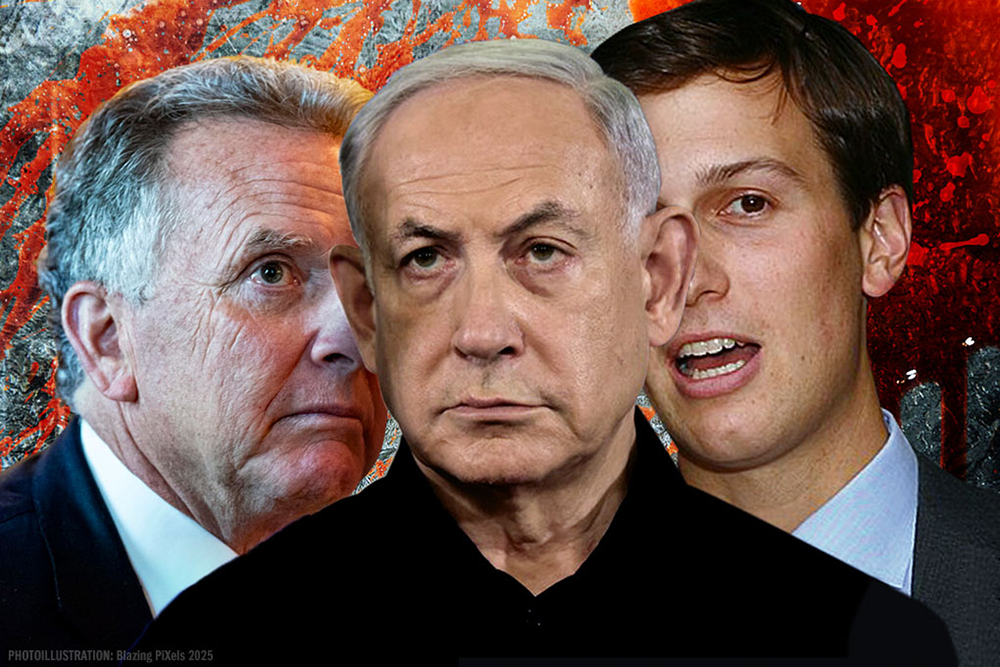
Amid a new surge of violence and uncertainty in the Gaza Strip, two senior U.S. envoys — Special Middle East Envoy Steve Witkoff and senior adviser Jared Kushner — arrived in Israel on Monday in an urgent attempt to preserve a ceasefire agreement already teetering on collapse. The high-level delegation’s visit follows a brutal attack by Hamas terrorists that left two Israel Defense Forces (IDF) soldiers dead in southern Gaza, reigniting tensions that threaten to unravel months of delicate diplomacy surrounding President Donald Trump’s 20-point Gaza plan.
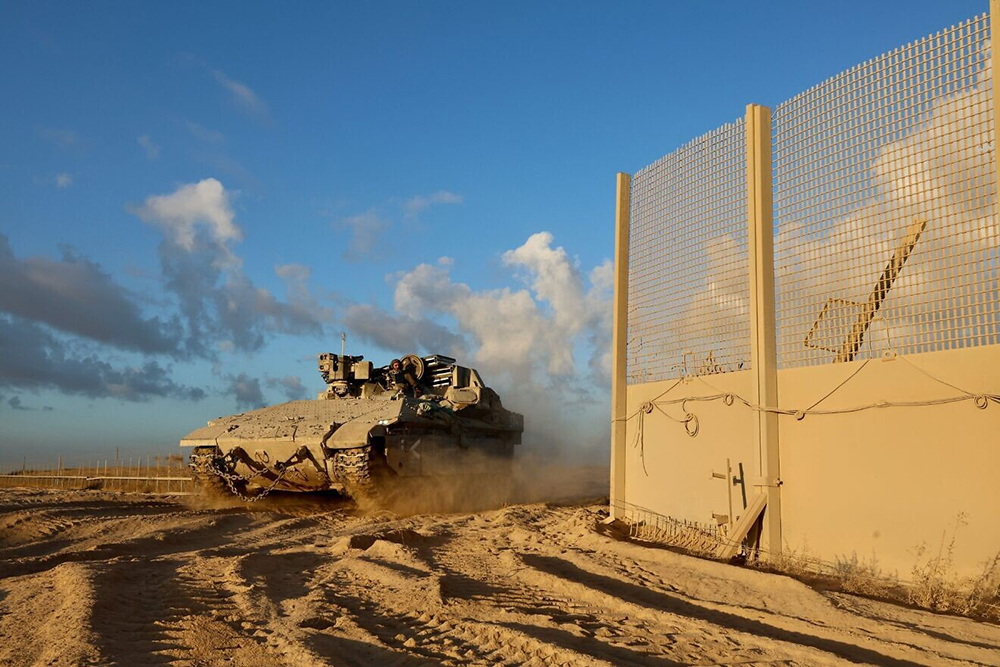
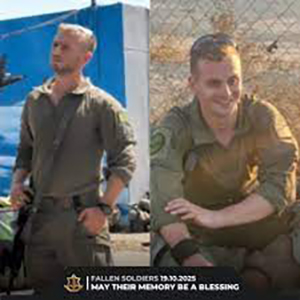
According to Israeli military officials cited by Fox News Digital, Major Yaniv Kula, 26, and Staff Sergeant Itay Yavetz, 21, both of the elite 932nd Battalion of the Nahal Brigade, were killed when a Hamas cell emerged from a tunnel near Rafah and opened fire on an Israeli excavation vehicle. A reserve soldier was severely wounded and remains hospitalized.
The attack, described by Israeli intelligence as a “premeditated violation” of the ceasefire, prompted immediate retaliatory strikes by the IDF. Overnight Sunday, Israeli fighter jets and drones pounded Hamas targets across the Gaza Strip, marking one of the heaviest bombardments since the truce began.
In a statement to The Times of Israel, the IDF confirmed that it had “carried out wide-scale precision strikes on Hamas infrastructure and operatives,” targeting dozens of sites linked to the group’s military command. The strikes destroyed a sprawling six-kilometer underground tunnel system in southern Gaza, a network the IDF said had been used to transport weapons and conceal hostages during earlier phases of the war.
According to the army’s communique, the bombardment aimed to “degrade Hamas’s operational capabilities and prevent future attacks on Israeli forces and civilians.” A report in Israel National News indicated that among those killed was Yahya al-Mabhouh, a senior field commander in Hamas’s elite Nukhba Force, believed to have orchestrated cross-border raids during the early weeks of the conflict.
IDF drones and precision artillery units also struck weapons storage depots and command centers in Khan Yunis and central Gaza, while fighter jets eliminated several mid-ranking Hamas operatives in real time. Military analysts said the strikes were part of an ongoing Israeli effort to maintain deterrence while adhering to the broad framework of the Trump-brokered ceasefire — an increasingly difficult balancing act.
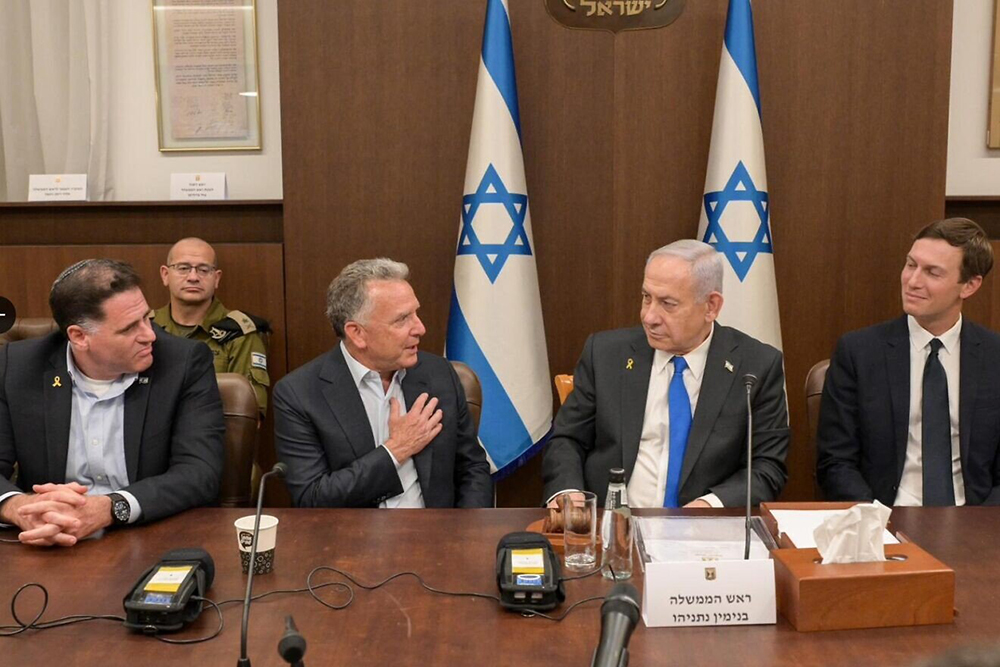
Envoy Steve Witkoff and Jared Kushner, who arrived in Tel Aviv early Monday, are expected to meet with Prime Minister Benjamin Netanyahu, Defense Minister Yoav Gallant, and IDF Chief of Staff Lt. Gen. Herzi Halevi to reinforce what administration officials describe as the “second phase” of Trump’s 20-point Gaza peace initiative.
According to the information provided in the Israel National News report, the plan’s current stage focuses on disarmament, reconstruction, and the establishment of a multinational stabilization force, potentially including contingents from Egypt, Qatar, and select Gulf states. But the United States, sources told Kan News, is under pressure from Israel to delay any Gaza rehabilitation until Hamas’s tunnels have been sealed — even those located outside areas currently controlled by Israeli troops.
“The Israeli government insists that dismantling Hamas’s subterranean network must precede any reconstruction,” one senior Israeli security official said. “We cannot rebuild above ground while terror operates below it.”
Washington reportedly favors launching a pilot reconstruction program in Rafah, a compromise that Israeli officials privately describe as “tentative at best.”
Parallel to the U.S. envoys’ visit, an Israeli delegation returned late Monday from Cairo after three hours of tense negotiations involving representatives from Egypt, Qatar, and Turkey. The talks, according to sources familiar with the discussions, centered on two issues: Gaza’s post-war rehabilitation and the composition of an interim foreign security force.
Egypt, which has historically served as Israel’s main intermediary with Hamas, is said to be pressing for a multinational Arab-led stabilization contingent to replace Israeli forces in the enclave’s southern corridors — a proposal that remains politically sensitive in Jerusalem.
While Qatari and Turkish delegates pushed for a faster reconstruction timetable, Israeli officials demanded verifiable proof that Hamas was disarming — including the neutralization of all tunnel routes and the return of hostages’ remains.
The renewed bloodshed has shaken Israel’s already fragile domestic politics. Opposition Knesset Member Merav Cohen of the centrist Yesh Atid party called Hamas’s actions “a blatant violation of the ceasefire agreement,” urging the government to adopt a firmer military and political response.
“This is no misunderstanding,” Cohen told Israel National News. “We are seeing anti-tank fire at IDF soldiers, sniper attacks, and incursions into restricted zones. Hamas has no intention of honoring its commitments — including the return of our fallen soldiers. They are stalling deliberately.”
Cohen accused the Netanyahu government of “hesitating at a critical moment,” likening the current paralysis to the complacency that preceded the October 7, 2023 Hamas massacre. “Without decisive political strategy,” she warned, “we are witnessing the erasure of the IDF’s hard-won achievements.”
The lawmaker also condemned Israel’s reliance on outside actors such as Turkey and Qatar, which she said were “maneuvering to rehabilitate Hamas’s image and infrastructure.” Cohen argued that by avoiding a substantive political debate about Gaza’s postwar governance, Israel has “allowed Hamas to reassert itself and control the humanitarian narrative before the international community.”
Her comments reflect growing frustration across the Israeli political spectrum — including among coalition partners — over the absence of a clearly articulated vision for Gaza’s future governance.
MK Avi Maoz, leader of the Noam party, warned on Monday that recent developments in Gaza risk returning Israel to a posture he described as “victims of peace,” casting sharp doubt on the government’s current handling of the ceasefire and its broader strategic choices.
In an interview with Arutz Sheva — Israel National News, Maoz said he was alarmed by what he characterized as rapid concessions following a serious Hamas breach of the truce. He criticized the government’s decision to briefly close border crossings after the attack on Israeli troops, only to reopen them under apparent American pressure. “I am very concerned that we are sliding back into the ‘victims of peace’ concept post-Oslo,” Maoz told Israel National News, arguing that such reversals signal weakness and invite further aggression.
He argued that the pace and severity of Hamas’s actions — including attacks on Israeli forces and delays in returning the bodies of slain hostages — leave Israel little choice but to resume kinetic operations aimed at dismantling the group’s military capacity.
“After violations like these, we must return to fighting and bring about Hamas’s defeat,” Maoz said, according to the report in Israel National News. He rejected the notion that Israel can tolerate a continued military balance that leaves Hamas intact, asserting that promises to disarm the organization must be enforced by force if necessary.
The Noam leader also took aim at the international dynamics surrounding the conflict. Responding to U.S. objections to Israeli plans to extend sovereignty over parts of Judea and Samaria, Maoz stressed Israel’s sovereign prerogative to act in what he described as its national interest. “It is not the American president who will tell Israel when to fight and when to stop fighting, when to defeat Hamas and when to apply sovereignty,” he told Israel National News, while adding that he respects American efforts to broker stability.
Maoz said he will press ahead with legislation to formalize Israeli sovereignty in parts of Judea and Samaria. He noted that the Ministerial Committee forwarded his proposal to coalition leadership and expressed confidence that the Knesset would again endorse a declarative move toward applying sovereignty, pointing to a prior 71-member majority for a related resolution. “I expect there will be a majority for my bill as well,” he said in the interview with Israel National News.
Casting a critical eye on the administration’s diplomatic blueprint for Gaza, Maoz warned that the plan—referred to in his remarks as the Trump plan—carries risks he considers existential. He told Israel National News that the initiative, as currently framed, could inadvertently pave the way for Palestinian statehood or permit Hamas to remain a political actor in Gaza’s future governance. “The concern is very serious,” Maoz said. “The plan opens the door to a Palestinian state; it opens the door to leaving Hamas as a partner in governance in Gaza.”
Framing the threat in stark terms, Maoz argued that Hamas and the Palestinian Authority share a common objective: undermining Israel’s existence. For Maoz, the antidote is unequivocal: declare Israeli sovereignty across the territory between the Jordan River and the Mediterranean, and eliminate any prospect of a Palestinian state in that area.
His hardline stance crystallizes an intensifying debate at the heart of Israeli politics: whether the country should prioritize immediate security measures against Hamas or pursue diplomatic arrangements that might compromise Israel’s long-term sovereignty and security.
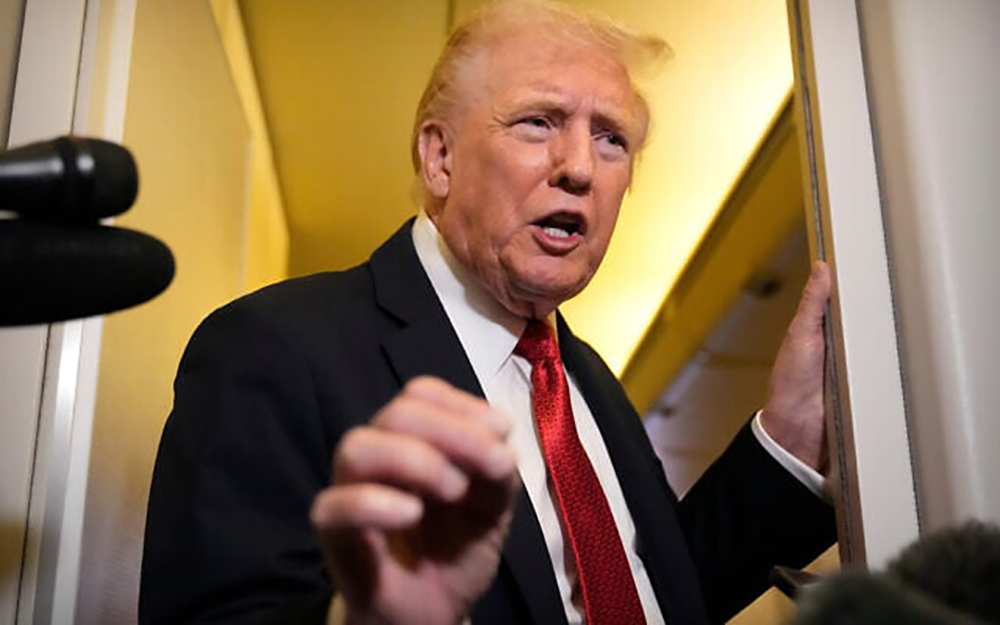
Speaking to reporters Sunday evening, President Donald Trump described the Rafah attack as “a serious breach” but said his administration would respond “toughly but properly.” He insisted the truce remained intact but acknowledged that maintaining it would require “patience and discipline on all sides.”
“We’re gonna have to see what’s happening,” Trump said, referencing Israel’s retaliatory strikes. “We want it to stay peaceful — very peaceful — but Hamas has been quite rambunctious lately, doing some shooting, and we’re not gonna tolerate that.”
In characteristic fashion, the president hinted that rogue elements within Hamas may have acted without authorization from its central leadership. “It’s possible the leadership isn’t involved — maybe some rebels within,” he told reporters.
Trump’s comments suggest that the White House is still committed to salvaging the agreement, viewing the ceasefire as essential to the broader geopolitical framework of his Middle East policy — a policy that seeks to tie Gaza’s stability to a regional economic development plan spanning Egypt, the UAE, and Jordan.
On Monday, however, Fox News reported that Trump once again warned Hamas, saying the U.S.-brokered Gaza truce must hold, and issued another blunt warning to the terrorist group.
During a White House meeting with Australian Prime Minister Anthony Albanese on Monday, Trump warned, “We’re going to eradicate them. If we have to, they’ll be eradicated. And they know that,” he told reporters, and stressed the deal’s broad backing — “59 countries that agreed to the deal” — while insisting the ceasefire remains in place and warning that any further violence would be met with decisive action.
Vice President J.D. Vance, addressing journalists at Joint Base Andrews before the administration’s team departed for Israel, described Hamas as a “disjointed network of forty separate cells,” emphasizing that “some will honor the ceasefire, many will not.”
According to a report on Monday at The Jewish News Syndicate (JNS), Vance underscored the need for Arab partners to assume an enforcement role in Gaza. “Before we can ensure Hamas is truly disarmed,” he said, “we need Gulf Arab states on the ground to impose law and order. That’s a critical component of President Trump’s 20-point peace deal.”
The vice president’s remarks reflect a strategic shift in Washington’s approach: encouraging regional actors to share responsibility for stabilizing Gaza, while allowing the U.S. to act as guarantor of the larger diplomatic framework.
The JNS report indicated that the fragile ceasefire has also reignited divisions within Israel’s governing coalition. National Security Minister Itamar Ben-Gvir demanded that Prime Minister Netanyahu “fully resume combat with maximum force,” calling any expectation that Hamas would respect its obligations “an illusion.”
“The false belief that Hamas can change its nature is dangerous to Israel’s security,” Ben-Gvir declared. “This Nazi terrorist organization must be destroyed — completely and without hesitation.”
Finance Minister Bezalel Smotrich expressed similar sentiments, responding to news of the soldiers’ deaths with a single word on social media: “War.”
These calls for escalation stand in contrast to the government’s official line, which, according to the JNS report, maintains that Israel “will continue to uphold the ceasefire agreement while responding firmly to any violation.”
The fate of hostages remains one of the most painful and politically charged aspects of the ceasefire arrangement. Under the terms of the Trump-brokered deal, Hamas was required to return all 28 bodies of Israeli hostages in its possession by October 13. So far, only 12 have been transferred to Israel, JNS reported.
Late Monday night, the Israel National News confirmed that the Red Cross had delivered the coffin of one of the deceased hostages to IDF custody. In a solemn ceremony, a military rabbi recited Tehillim (Psalms) and draped the coffin with the Israeli flag before it was transported to the National Center for Forensic Medicine in Abu Kabir for identification.
The Prime Minister’s Office later issued a statement confirming the transfer: “Israel has received, via the Red Cross, the coffin containing the remains of a deceased hostage. The coffin was handed to an IDF and ISA force inside Gaza, then brought to Israel in a military ceremony. Once the identification process is complete, formal notification will be delivered to the family.”
Officials reiterated that “the effort to return our hostages is ongoing and will not cease until the last hostage is returned.”
Despite the bloodshed, Israeli officials say they remain bound by the ceasefire — for now. “In accordance with the directive of the political echelon and following a series of significant strikes in response to Hamas’s violations, the IDF has begun renewed enforcement of the ceasefire,” the army said in a statement carried by JNS.
Military analysts, however, warn that the arrangement is eroding rapidly. The reemergence of tunnel warfare, sporadic attacks by independent Hamas factions, and the failure to return all hostages have created a volatile environment that could collapse the truce entirely.
Israeli intelligence assessments suggest that Hamas’s fragmented leadership — now operating partially from tunnels and partially from safe houses in Khan Yunis — has lost centralized control over its fighters. This, combined with rival factions seeking to undermine the ceasefire, complicates enforcement on the ground.
The violence has exposed a deeper dilemma within Israeli society: the tension between military pragmatism and political paralysis. For figures such as MK Merav Cohen, the government’s reluctance to outline a post-Hamas governance model for Gaza represents not just a strategic failure but a moral one.
“The government must not only fight terror but also fight for the narrative,” Cohen told Israel National News. “Public diplomacy matters. We cannot allow Hamas’s propaganda to dominate the world’s perception.”
Her remarks echo a broader concern that Israel is losing the battle for international legitimacy — even as it wins militarily. With universities and activist groups across the West reigniting anti-Israel protests, Israeli officials see a renewed urgency in shaping global opinion.
For Washington, the unfolding crisis is a test of whether Trump’s 20-point Gaza plan — unveiled in late September — can survive its first real challenge. The plan envisions a demilitarized Gaza under temporary foreign supervision, followed by phased reconstruction and eventual Palestinian self-governance under new leadership unaligned with Hamas.
But with each Hamas violation, the path toward that vision narrows. U.S. negotiators face a dilemma: push forward with reconstruction efforts at the risk of appearing to reward Hamas, or hold back and risk humanitarian catastrophe that could further destabilize the region.
“Phase Two was always going to be the most delicate stage,” a senior U.S. official familiar with the talks said. “It’s the moment when you have to translate paper agreements into physical realities — disarmament, reconstruction, and governance — all while rockets could start flying again.”