



|
Getting your Trinity Audio player ready...
|
By: Fern Sidman
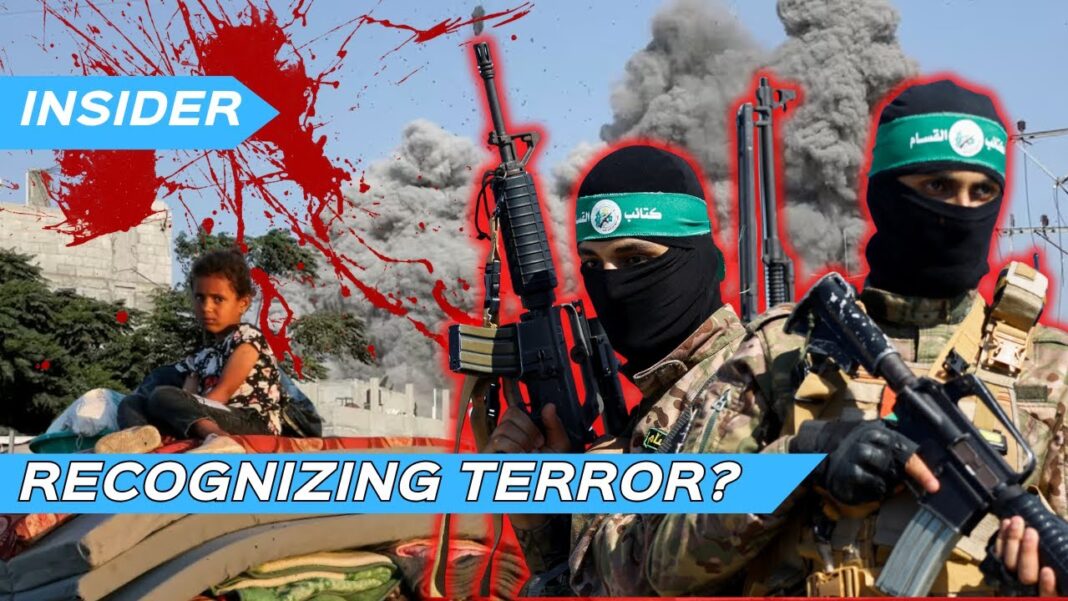
British Prime Minister Keir Starmer announced Tuesday that the United Kingdom will move to recognize a Palestinian state at the United Nations General Assembly in September unless Israel undertakes significant steps to end hostilities in Gaza and recommits to the peace process.
According to a report that appeared on Tuesday at National Public Radio (NPR), Starmer tied the decision to a broader diplomatic effort to revive the possibility of a two-state solution, long seen as a cornerstone of international attempts to resolve the Israeli-Palestinian conflict. Speaking in a televised address, Starmer said the recognition would move forward unless Israel halts annexation in Judea and Samaria, agrees to a ceasefire, and makes binding commitments toward “a long-term, sustainable peace.”
“So today, as part of this process towards peace, I can confirm the U.K. will recognize the state of Palestine by the United Nations General Assembly in September unless the Israeli government takes substantive steps to end the appalling situation in Gaza, agree to a ceasefire and commit to a long-term, sustainable peace, reviving the prospect of a two-state solution,” Starmer declared, as reported by NPR.
The announcement closely follows a declaration by French President Emmanuel Macron last week that France intends to formally recognize Palestinian statehood at the General Assembly session. Together, the U.K. and France would represent the most powerful Western nations, and the first members of the Group of Seven economies, to extend such recognition.
The NPR report noted that the British position comes as international alarm intensifies over the humanitarian crisis in Gaza. A United Nations-backed food security panel warned Tuesday of famine conditions, with the “worst-case scenario” already unfolding after nearly 22 months of war. Gaza’s Health Ministry has reported over 60,000 Palestinian deaths since October 2023, figures that cannot be independently verified.
The U.S. has expressed sharp disapproval of France’s position. Following Macron’s announcement, Secretary of State Marco Rubio said the move was “reckless” and served “Hamas propaganda.” The State Department emphasized in a statement that unilateral recognition undermines American diplomatic efforts to achieve a lasting ceasefire.
During a visit to Scotland on Monday, Starmer raised the issue directly with President Trump, who has played an active role in discussions around the conflict. Asked if he believed the U.K. should join France in recognition, Trump declined to endorse the idea, saying, “I’m not going to take a position. I don’t mind him [Starmer] taking a position. I’m looking for getting people fed right now.” The NPR report highlighted the exchange as underscoring differences among Western leaders over the timing and impact of recognition.
Israeli Prime Minister Benjamin Netanyahu issued a forceful condemnation of the British stance. In a statement circulated on social media and cited by NPR, Netanyahu said: “Starmer rewards Hamas’s monstrous terrorism & punishes its victims. A jihadist state on Israel’s border TODAY will threaten Britain TOMORROW.” Israel has consistently opposed unilateral recognition of Palestinian statehood, arguing it undermines direct negotiations and strengthens Hamas.
Domestically, Starmer won applause from members of the Labour Party, many of whom have long pressed for recognition. However, some Conservative lawmakers voiced concern that the policy disproportionately pressures Israel without imposing equal conditions on Hamas. NPR noted that BBC international editor Jeremy Bowen characterized the move as “a big change in British foreign policy,” one that could shift diplomatic dynamics in Europe and beyond.
Starmer did call explicitly on Hamas to release all remaining hostages seized during the October 7, 2023 attack on Israel — an event that left over 1,200 people dead, the majority of them Jewish civilians, and triggered Israel’s military campaign in Gaza. He further demanded that Hamas sign a ceasefire, disarm, and relinquish any role in governing Gaza.
More than 140 countries already recognize Palestinian statehood, according to the NPR report. The addition of the U.K. and France would mark a significant symbolic and diplomatic development, potentially pressuring other Western allies to reconsider their positions.
Jewish leaders in the U.K. expressed both concern and dismay over Prime Minister Keir Starmer’s announcement, which conditions recognition on Israel halting annexation in Judea and Samaria, committing to a ceasefire in Gaza, and advancing steps toward a two-state solution.
The Board of Deputies of British Jews, the country’s largest Jewish representative body, warned in a statement that the move risks “rewarding terrorism and undermining direct negotiations between Israel and the Palestinians.” The group emphasized that Jewish communities remain committed to peace but believe unilateral recognition during an ongoing war “sends precisely the wrong message” at a time when Hamas still holds hostages, including Jewish Israelis seized on October 7, 2023.
In London, Chief Rabbi Sir Ephraim Mirvis was reported to have privately expressed unease that the U.K. might set a precedent that other Western powers follow, potentially leaving Israel more diplomatically isolated. While stressing that Jewish communities desire a resolution to the conflict, he underscored that no recognition should occur until there are binding assurances of Israel’s security.
Jewish communal organizations in the United States echoed those concerns. Several leaders told NPR that the recognition debate is especially painful for Jewish families still waiting for news of loved ones held captive in Gaza. “To speak of Palestinian sovereignty while Jewish hostages are underground is a cruel inversion of priorities,” one U.S.-based Jewish leader said.
As the NPR report observed, the coming weeks are likely to prove decisive. Whether Israel takes steps that could forestall recognition, or whether the U.K. and France move forward regardless, the September session of the United Nations General Assembly may emerge as a pivotal moment in reshaping international engagement with the decades-long conflict
