



|
Getting your Trinity Audio player ready...
|
Two Years After Hamas Massacre, Another Tragedy Strikes: Mother of Nova Festival Victim Takes Her Own Life
By: Fern Sidman
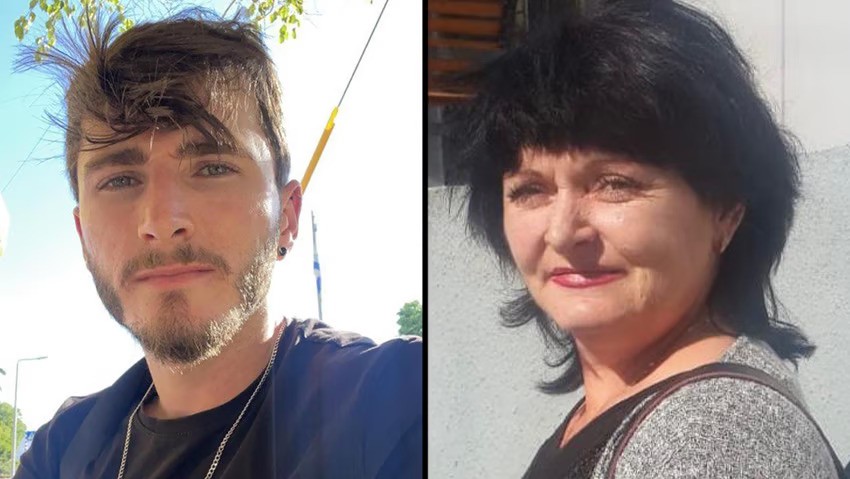
Two years after her son was murdered in the Hamas onslaught at the Nova music festival, Yelena Giler — a mother who once radiated love, laughter, and resilience — has taken her own life. Her surviving son, Sasha, says the pain of losing Slava was simply too much for her to bear.
As Jewish Breaking News reported on Sunday, Yelena’s death is the latest heartbreak in a string of devastating losses linked to the massacre that unfolded on October 7, 2023, when Hamas gunmen slaughtered more than 360 young Israelis at the outdoor festival near Re’im. For many of the victims’ families, the trauma did not end when the gunfire stopped. It has continued in silence, through sleepless nights, fractured homes, and, in Yelena’s case, a final surrender to despair.
“That day broke her,” Sasha told Jewish Breaking News in a trembling voice. “Since Slava’s murder, she couldn’t bear the pain anymore. She reached a point where I didn’t recognize her. She really lost touch with reality.”
Friends describe Yelena as a woman of quiet strength, a mother who had already endured her share of hardship long before the tragedy at Nova. Born in the former Soviet Union, she immigrated to Israel to build a better life for her sons. She worked tirelessly to support them and was immensely proud of both — especially Slava, who had been pursuing a career in music production.
But after October 7, 2023, everything changed. As the Jewish Breaking News report recounted, Yelena’s grief consumed her. She was hospitalized several times over the past two years for what doctors described as “severe depressive episodes.” Each time, Sasha said, he hoped she would recover.
“She took his death very hard,” Sasha told Jewish Breaking News. “Being evacuated from Kiryat Shmona didn’t make it easier. Every time there was a siren, every loud noise, it brought her back to that day.”
The family had been displaced from northern Israel amid rocket attacks from Hezbollah, forcing Yelena to leave her home — a space filled with photos of Slava, his music equipment, and the memories she refused to let go of.
“She kept saying she could still hear him,” Sasha recalled. “She would play his favorite songs and talk to his picture. It was like she was living between two worlds.”
Sasha spent the evening before his mother’s death with her. He said she seemed calmer than usual — tired, but peaceful. “She even laughed at something on TV,” he said. “I thought maybe things were turning around.”
But the next morning, everything went silent.
“When she didn’t answer my calls, I went to her apartment,” Sasha told Jewish Breaking News. “By 11 a.m. I called the police. They found her phone ringing inside, and then they found her lifeless on the couch.”
He described her as “a loving woman who lived for her children,” adding, “Life wasn’t kind to her, but she still gave us everything she could, even when she was falling apart inside.”
Yelena’s funeral, held in Haifa, drew dozens of mourners — family, friends, and other parents who had lost loved ones at the Nova festival. Many described her death as “another casualty of October 7,” part of a growing mental health crisis among survivors and families of the victims.
Yelena’s suicide came just two days after another Nova-related tragedy — the death of 30-year-old Roei Shalev, who survived the massacre but never recovered emotionally from losing his girlfriend, Mapal Adam, and best friend, Hilo Solomon, that same day.
According to the report at Jewish Breaking News, Roei’s father, Ronen, revealed that his son’s mother had also taken her own life shortly after the October 7 attack.
“Roei’s mother was never officially recognized as a terror victim,” Ronen told Jewish Breaking News. “She was broken after losing her son’s friends, after seeing what happened to the kids at Nova. There were 4,000 people there that day — 4,000 broken families, 4,000 survivors trying to hold on, with or without therapy, but barely surviving.”
For Ronen, the grief is compounded by frustration. He said the mental health infrastructure for those affected by the Nova massacre remains inadequate — overwhelmed by demand, underfunded, and slow to act.
“Every week, we hear about another parent, another survivor who can’t take it anymore,” he said. “The trauma is everywhere — it doesn’t go away after two years. It festers.”
The Nova music festival, meant to celebrate peace and freedom, has become an enduring symbol of loss. Survivors and their families continue to battle not just memories of that horrific day, but also a sense of societal neglect.
As Jewish Breaking News has documented extensively, dozens of festival attendees have taken their own lives since the attack — part of what psychologists are now calling “secondary victims” of terror. The psychological fallout, experts say, mirrors symptoms seen among combat veterans and concentration camp survivors: nightmares, survivor’s guilt, detachment, and chronic anxiety.
Many families feel forgotten amid the broader war that followed. The Hostages and Missing Families Forum, which advocates for those still held captive in Gaza, has drawn international attention. But the parents and siblings of Nova victims say their suffering often unfolds in the shadows.
“There are support groups,” one counselor told Jewish Breaking News, “but the scale of trauma is enormous. Each person who was there — and each parent who lost a child — carries a lifetime sentence of grief. For some, the weight simply becomes unbearable.”
In the wake of Yelena’s death, Roei’s father is calling for the creation of a national mental health initiative dedicated specifically to what he calls “the Nova families” — the network of survivors, parents, and siblings forever scarred by the massacre.
“It’s not enough to send them to therapy once a month,” Ronen told Jewish Breaking News. “These families need daily support, community programs, real follow-up. Otherwise, more people will die. They’re dying slowly already.”
He added that the government must formally recognize suicide cases linked to October 7 as terror-related deaths — granting families access to compensation and counseling services.
“Yelena was a terror victim,” Ronen said simply. “She just died two years later.”
At a small memorial gathering in Haifa, one of Yelena’s friends lit a candle and whispered through tears: “She just wanted to be with her son.”
Her words encapsulated what so many in Israel now fear — that the tragedy of October 7 continues to claim lives in silence.
As the report at Jewish Breaking News poignantly noted, “For every name etched in stone, there are others still fighting the invisible war within.”
Yelena Giler and Roei Shalev may be gone, but their stories — and the aching absence they leave behind — serve as a reminder that the toll of terror does not end when the shooting stops. It lingers, unrelenting, in the hearts of those left behind, two years on and counting.

Maybe if holocaust survivors can speak with them, maybe – just maybe – some of them won’t commit suicide. Holocaust survivors know what they are going through for obvious reasons.