




|
Getting your Trinity Audio player ready...
|
Edited by: TJVNews.com
As President Donald Trump settles into the first 100 days of his second term, on Monday, The Forward reported a marked shift in both tone and personnel — particularly among the Jewish figures who now make up a crucial part of his inner circle. Unlike the moderating Jewish voices that helped shape and, at times, soften his first-term agenda, Trump’s current Jewish advisers are deeply entrenched in some of his most controversial and policy efforts.
According to The Forward, this second-term team of Jewish confidants isn’t seeking compromise. Rather, they are helping to craft and implement policy in a way that has increasingly isolated the United States from its traditional allies while stoking internal division over issues such as mass deportations, student protests, trade tariffs, and foreign policy retrenchment.
Gone are the more centrist, pragmatic Jewish voices who once provided ballast to Trump’s more impulsive tendencies. As The Forward report noted, advisers such as Jared Kushner, Jason Greenblatt, David Friedman, Treasury Secretary Steven Mnuchin, and former economic adviser Gary Cohn played vital roles in Trump’s first term by shaping a more diplomatic and strategically restrained White House.
These figures were influential in pushing for — or in some cases moderating — key policies. Mnuchin, for example, advocated for a cautious approach to China. Kushner and Greenblatt cultivated relationships with Palestinian leaders in an effort to maintain diplomatic channels. Cohn supported globalized economic policies and resisted Trump’s early instincts for tariff wars. Cohn and Kushner, along with Ivanka Trump, were also instrumental in convincing the former president to distance himself publicly from white nationalist groups.
In contrast, The Forward report emphasized that the current cohort of Jewish advisers is not only more ideological but more combative — aligned fully with Trump’s aggressive posture on both domestic and international fronts.
These new advisers are front and center in Trump’s initiatives. According to the information provided in The Forward, they have played significant roles in crackdowns on foreign students involved in pro-Hamas campus protests, with policies aimed at detaining and deporting demonstrators deemed threats to national security as well as escalating trade tensions through the revival of tariffs, particularly against China and key European allies, departing from earlier multilateral approaches supported by figures such as Cohn.
They also play significant roles in negotiations with Iran over a potential nuclear deal, though with a harder line than Trump’s first-term team that included Ambassador Friedman, who played a key role in dismantling the JCPOA and they are making efforts to broker ceasefires and seek resolutions to the ongoing wars in Ukraine and Gaza — initiatives that sideline many of the hawkish foreign policy advisers from Trump’s earlier tenure.
According to The Forward, these second-term advisers are not merely executing Trump’s will; they are shaping it. Their shared commitment to policy disruption and their loyalty to Trump himself distinguish them from their more independent-minded predecessors.
This transformation reflects a broader trend in Trump’s second term: the marginalization of the more traditional conservative foreign policy establishment, including prominent national security hawks and staunchly pro-Israel figures — both Jewish and non-Jewish. In their place is a new guard, one less beholden to legacy frameworks and more comfortable wielding power in service of Trump’s America First ideology.
The Forward emphasized that these changes have also meant a noticeable shift in the administration’s posture toward Israel and the Jewish diaspora. While support for Israel remains strong, the style and substance of policy have changed. Instead of cultivating bilateral relationships and balancing regional diplomacy, the second-term strategy appears more tactical and transactional — aimed at quick wins rather than long-term stability.
Despite the rising prominence of Jewish figures in Trump’s second-term policy machine, American Jewish voters remain largely unconvinced. As The Forward reported, a recent poll by the Mellman Group for the Jewish Electoral Institute found that 72% of American Jewish voters disapprove of Trump’s job performance. The survey, with a margin of error of 3.5 percentage points, suggests that despite these advisers’ visibility and influence, their presence has not translated into increased support among Jewish constituencies.
This disconnect, The Forward report noted, reflects broader cultural and political divides between Trump’s core base and the majority of American Jewish voters, who tend to lean more progressive on social and economic issues, and who remain wary of the nativist and isolationist undercurrents within the Trump movement.
Here is a look at the key Jewish figures shaping Trump’s second-term agenda, according to The Forward:
Steve Witkoff: Gaza, Real Estate, and Geopolitics
Real estate tycoon Steve Witkoff may lack traditional diplomatic credentials, but under Trump’s directive, he has become the White House’s primary emissary on one of the world’s most volatile conflicts: the Israel–Hamas war in Gaza. As The Forward details, Witkoff was instrumental in securing a ceasefire and orchestrating a hostage exchange between Israel and Hamas just before Trump’s January inauguration, ending an 18-month conflict that began with Hamas’ devastating October 7, 2023, terror attack on Israel.
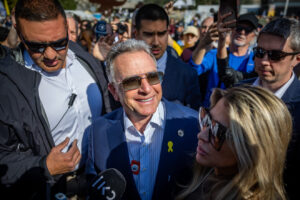
Since then, Witkoff has doubled down on efforts to maintain the ceasefire or secure additional hostage releases—most notably that of Edan Alexander, a 21-year-old Israeli-American believed to be the last known U.S. citizen still held by Hamas in Gaza. Witkoff’s involvement has added an emotional and symbolic weight to U.S. diplomatic engagement in the region.
But his influence doesn’t stop at the Gaza border. Drawing on his real estate background, Witkoff is also the architect of Trump’s proposal for U.S. oversight and reconstruction of Gaza—a plan viewed with skepticism by both regional players and humanitarian groups. Witkoff has made site visits and conducted assessments with the eye of a developer, further underscoring Trump’s unconventional approach to foreign policy.
In recent weeks, Witkoff’s role has expanded dramatically. As The Forward reports, he now leads sensitive discussions with Russian President Vladimir Putin aimed at ending the war in Ukraine. Simultaneously, he has been involved in direct talks with Iran’s foreign minister Abbas Araghchi, part of a broader push by the Trump administration to renegotiate nuclear terms with Tehran. These efforts, which have drawn sharp criticism from traditional GOP foreign policy hawks, reflect Trump’s—and Witkoff’s—willingness to sidestep conventional alliances and pursue pragmatic, if controversial, diplomacy.
Howard Lutnick: Reengineering the U.S. Economy
Meanwhile, Howard Lutnick, the CEO of Cantor Fitzgerald, is spearheading Trump’s economic team as Secretary of Commerce. As the report in The Forward highlights, Lutnick, who helped lead Trump’s 2024 transition team, has emerged as the administration’s most influential economic adviser, acting as both policy architect and media defender.
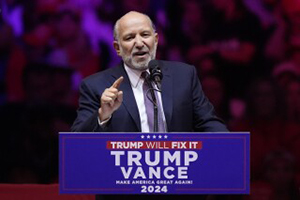
Lutnick is actively engaged in negotiating tariffs and trade policies with foreign governments, working in close coordination with Treasury Secretary Scott Bessent. His direct involvement in these negotiations signals a hands-on approach rarely seen at the cabinet level and draws attention to the administration’s commitment to economic nationalism.
Notably, Lutnick has also been charged with overseeing the Trump administration’s latest experiment in administrative streamlining: the Department of Government Efficiency. In this role, he successfully enlisted Tesla CEO Elon Musk to lead the new department, which has already overseen massive federal workforce reductions. According to The Forward, Lutnick’s influence now extends well beyond trade, touching on fiscal policy, deregulation, and technological innovation in the public sector.
Stephen Miller: Architect of Immigration and Security Policy
No figure in Trump’s orbit is more ideologically consistent than Stephen Miller, who has returned with even greater influence in the second term. Appointed Deputy Chief of Staff and Homeland Security Adviser, Miller has become the de facto architect of Trump’s immigration and law enforcement agenda.
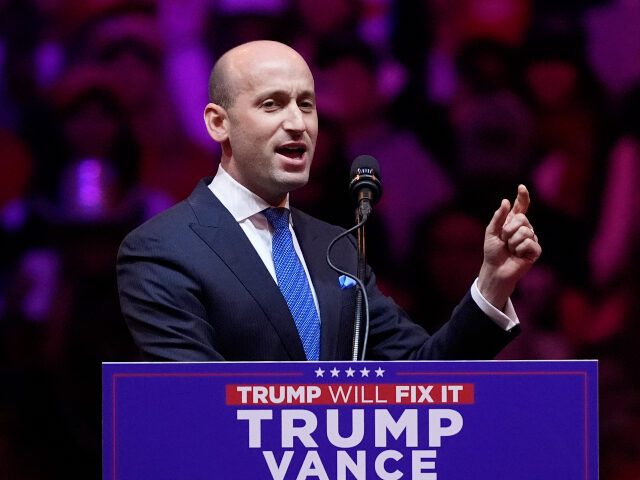
As The Forward report outlines, Miller played a central role in crafting Trump’s newly unveiled mass deportation plan, which has already begun targeting undocumented immigrants, foreign students, and individuals linked to campus protests viewed as hostile to American interests. His policies reflect a sweeping reassertion of executive authority, often brushing up against legal and constitutional boundaries.
Miller’s influence was visibly affirmed earlier this month when Trump, during a joint appearance with El Salvador’s President Nayib Bukele, publicly tasked him with pushing back against media scrutiny following the controversial deportation of Kilmar Abrego Garcia to one of Bukele’s infamous prisons. The moment captured both the power and the bluntness of Miller’s role: defending the administration’s most aggressive actions with unapologetic resolve.
Will Scharf: The Gatekeeper of Presidential Power
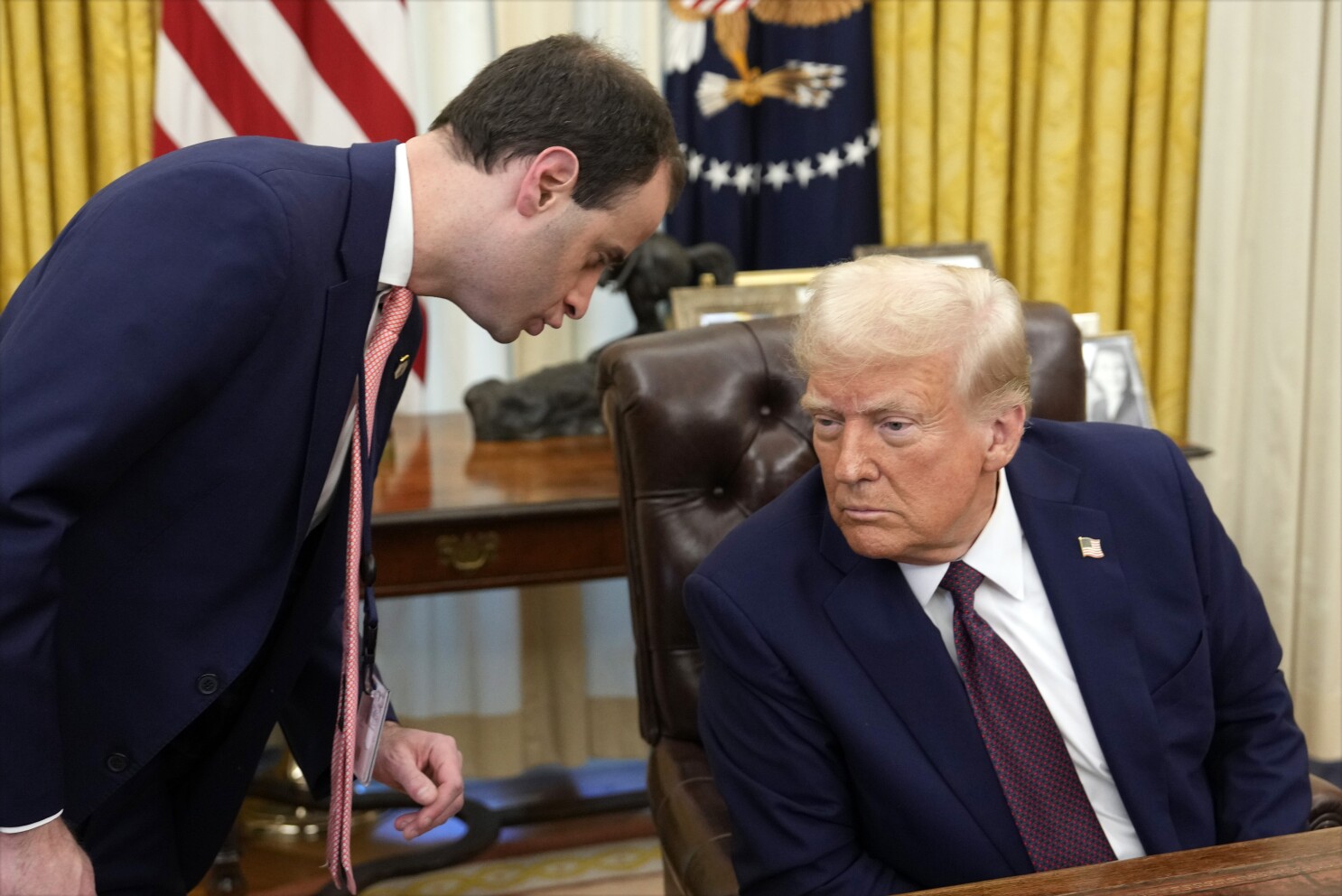
As White House staff secretary, The Forward report noted that Will Scharf holds one of the most strategically vital — and often underestimated — roles in administration. A former prosecutor and Trump’s personal attorney, Scharf oversees the flow of all information destined for the president’s eyes. This includes managing the circulation of draft executive orders and briefing documents among top advisers.
Scharf is rarely out of Trump’s sight. He frequently accompanies the president on domestic trips, often photographed by Trump’s side as he delivers the signature black leather folder containing official documents. In March, Press Secretary Karoline Leavitt captured a now-viral image of Scharf on Air Force One, flashing a thumbs-up near plates of lobster tacos. “For the record, I had the veggie tacos,” joked Scharf — an Orthodox Jew — in an Instagram repost, according to The Forward.
But Scharf’s role isn’t just procedural. His visibility around Trump signals a close personal rapport. He recently co-hosted a Passover event with Commerce Secretary Howard Lutnick and addressed a delegation from Agudath Israel of America, further cementing his connection with Orthodox Jewish institutions and Trump’s religious base.
Adam Boehler: The Deal-Maker in Hostage Diplomacy
Perhaps the most unconventional diplomatic figure in the administration, Adam Boehler — now Trump’s special envoy for hostage response — has become a lightning rod for controversy and a central player in U.S. hostage affairs. A high-ranking official from Trump’s first term, Boehler returned this year with a mandate to resolve some of America’s most high-profile hostage crises, The Forward reported.

In March, Boehler made headlines as the first U.S. official ever to hold direct talks with Hamas, negotiating for the release of American hostages held in Gaza. Though Trump personally authorized the talks, Boehler’s public optimism and praise for Hamas negotiators — including describing them as “pretty nice guys” — stunned Israeli officials and infuriated Senate Republicans.
Facing mounting political pressure, Boehler eventually withdrew his nomination for an ambassador-level role. Yet instead of being sidelined, he was elevated: Trump carved out a new role that bypasses Senate confirmation and grants Boehler sweeping authority to coordinate interagency hostage response, reporting directly to both President Trump and Secretary of State Marco Rubio.
This restructuring, as reported by The Forward, calls attention to Boehler’s value to Trump as a fixer and go-between, even if his methods strain diplomatic norms and ruffle feathers among America’s allies.
Morgan Ortagus: Confronting Hezbollah in Lebanon
While real estate magnate Steve Witkoff handles high-level diplomacy with Russia and Iran, the role of U.S. engagement in Lebanon has fallen to his deputy, Morgan Ortagus. A former State Department spokesperson and now Deputy Special Envoy to the Middle East, Ortagus has taken a leading role in executing Trump’s “red line” strategy aimed at removing Hezbollah from Lebanon’s political leadership, The Forward report explained.
Her tactics have not gone unnoticed — or uncriticized. Ortagus sparked outrage on Lebanese social media when she wore a Star of David ring during a high-profile meeting with Lebanese President Joseph Aoun, a gesture widely interpreted as a provocation given Hezbollah’s deep entrenchment in the country. She has also used her X (formerly Twitter) account to repeatedly criticize Lebanese leaders and troll Hezbollah with sarcastic and pointed posts.
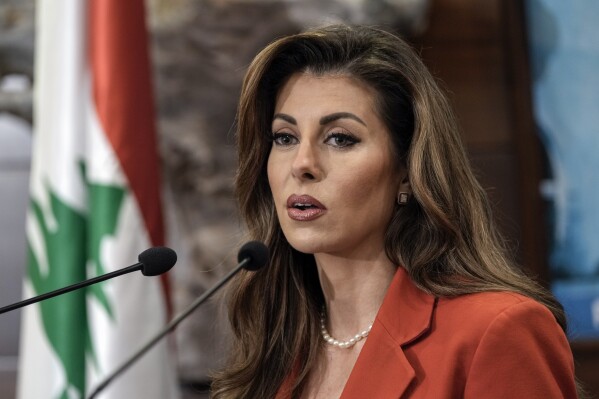
Ortagus’s unapologetic style fits squarely into Trump’s second-term ethos: confrontational diplomacy, visual symbolism, and message-driven engagement with foreign adversaries.
Laura Loomer: A Far-Right Influence Without a Title
In one of the more startling revelations from The Forward, Laura Loomer — a far-right commentator and self-described “proud Islamophobe” — has become a shadow influencer within Trump’s inner circle. Though she holds no official role in the government, Loomer has used her proximity to Trump to shape personnel decisions at the highest levels, including the National Security Council.
Earlier this month, following an Oval Office meeting with Trump, Vice President J.D. Vance, and Chief of Staff Susie Wiles, Loomer reportedly prompted the dismissal of six Biden-era staffers from the NSC. Her influence has triggered tensions inside the West Wing, even as the administration touts improved internal discipline in Trump’s second term.
On a recent podcast, Loomer revealed that her intelligence briefings led Trump to bypass his own National Security Adviser, Mike Waltz, on sensitive security matters. “Donald Trump is my biggest ally in the White House,” Loomer claimed, adding that while she doesn’t attend official events, her counsel carries real weight.

Loomer’s role was further spotlighted during the campaign, when Trump repeated a debunked claim during a televised debate with Vice President Kamala Harris that Haitian immigrants in Ohio were eating cats and dogs — a claim blamed by insiders on Loomer’s influence.
 -->1e3495c4MsoNormal">Jared Kushner
Once the undisputed epicenter of policymaking in Donald Trump’s first administration, Jared Kushner has notably faded from public view during Trump’s second term. While his influence helped shape some of the most consequential foreign policy achievements of the previous administration—including the historic 2020 Abraham Accords—The Forward reported that Kushner has chosen to remain largely absent from formal governance in 2025.
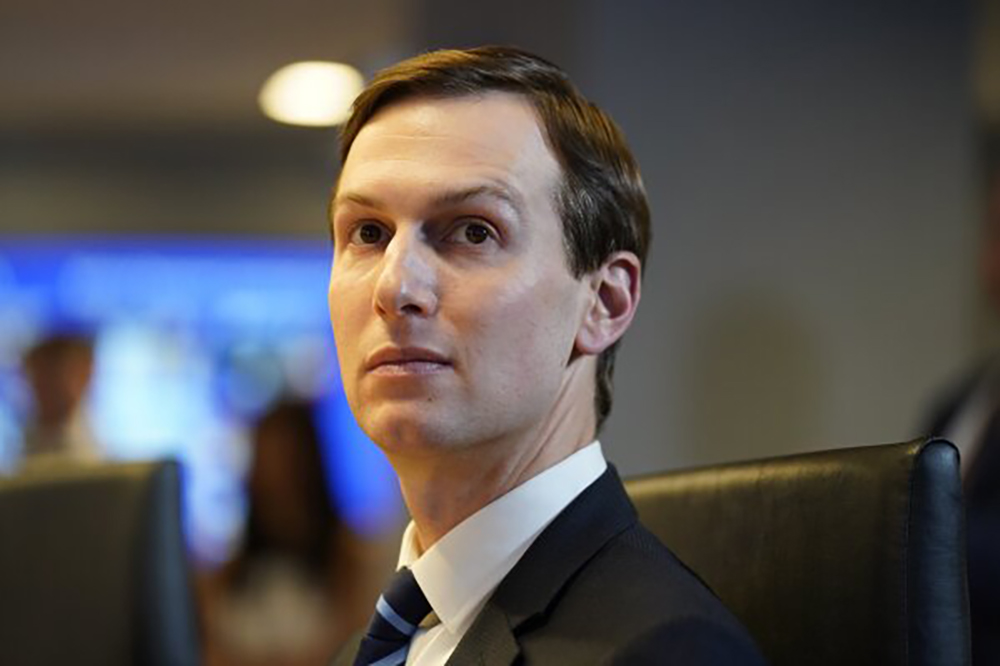
Though still widely seen as one of Trump’s most trusted confidants, Kushner’s withdrawal from the spotlight marks a dramatic shift from his once hyper-visible role as a senior adviser, diplomat, and behind-the-scenes dealmaker. In Trump’s first term, Kushner oversaw an astonishing array of portfolios—Middle East peace, criminal justice reform, pandemic response, and China trade talks—earning both praise and criticism for his expansive reach.
But in Trump’s second term, Kushner has deliberately distanced himself from the machinery of power, The Forward reported, preferring instead to focus on business ventures and personal projects, including those pursued through his investment firm, Affinity Partners.
From Frontline Diplomat to Private Citizen
According to The Forward, Kushner was briefly involved during the presidential transition, advising key allies such as Steve Witkoff and Adam Boehler, both close personal friends who now hold influential diplomatic positions in the second Trump administration. But since January, Kushner has largely disengaged, reportedly declining a request last month from Harvard President Dr. Alan Garber to help arrange a meeting with Trump as the administration escalated financial scrutiny of the university.
That decision was striking, not only because Kushner is a Harvard alumnus, but also because it marked a rare rebuff of institutional engagement. Sources cited by The Forward suggest that Kushner’s reluctance stems from a conscious choice to avoid the political fray, particularly at a time when Trump’s second-term team is populated by hardliners and ideological loyalists rather than the moderating voices of the past.
Despite his absence from daily policymaking, The Forward report noted that Kushner remains personally close to Trump, owing not only to his family ties as the president’s son-in-law, but also his enduring relationships with key players like Witkoff, who is now the administration’s lead negotiator on the Gaza ceasefire, and Boehler, Trump’s special envoy on hostage affairs.
While he no longer occupies an official title, Kushner’s personal rapport with Trump still gives him informal access to the Oval Office. However, there is a clear sense among White House insiders that Kushner has chosen to limit his influence, leaving newer voices to shape the administration’s most controversial foreign and domestic initiatives.
This strategic retreat stands in contrast to his previously dominant role in 2020, when Kushner was the chief architect of the Abraham Accords, the normalization agreements between Israel and several Arab states, including the UAE, Bahrain, Morocco, and Sudan. His absence has been felt in the current administration’s efforts to expand those accords—particularly in ongoing outreach to Saudi Arabia, which has yet to formally join the initiative.
One of the few overt political moves involving the Kushner name in Trump’s second term is the nomination of Jared’s father, Charles Kushner, as U.S. Ambassador to France, The Forward reported. Charles Kushner, a real estate developer who was controversially pardoned by Trump in the final weeks of his first term, has remained a staunch supporter of the former president and is expected to serve in the largely ceremonial role with enthusiasm.
While Charles Kushner’s appointment raised eyebrows, it also highlighted the enduring if understated presence of the Kushner family in Trump’s orbit. The ambassadorship may serve as a symbolic gesture of loyalty, but it highlights a broader reality: the Kushners are not gone — they’re just no longer at the helm.

I cannot understand TJV relying on the far-left enemy-controlled “The Forward” for its political or news analysis. It has always represented Israel‘s Democrat party enemies. This “news“ article is unfortunately, in the context of Trump’s BETRAYAL of Israel and the Jewish people which he now tragically shares with Israel‘s Democrat enemies represented by the leftist antisemites represented by “The Forward”.
It appears that this article actually soft-pedals Trump‘s betrayal, which is appreciated and supported by the Democrat enemy. The “Reform” Democrats have established a foothold in Israel. They have planted an American “Reform Temple” in Israel partnered with the Arab terrorists in Israel, supported by the leftist Nazi NGO, “New Israel Fund”.
The NGO, which is based in Ramat Gan and in the Palestinian Authority town of Beit Jala, is mainly financed by the U.S.-based naziGEORGE SOROS “New Israel Fund” as well as Swiss, German and other European Union donors.
“Thousands came to the protest today in Ra’anana against the Israeli traitors who held a Memorial Day ceremony for the [Hamas] Nukhba Forces who desecrated the honor of our children and our brothers [who died] by fire, murder, rape—they tore children from their parents and murdered them before their very eyes. They kidnapped, mutilated, murdered and raped. We will remember and not forget,” she stated.
“Three arrested after brawl at controversial Israeli-Palestinian memorial – JNS.org”
https://www.jns.org/three-arrested-after-brawl-at-controversial-israeli-palestinian-memorial/
The violent anti-Israel Democrats are already clashing with local Jewish patriots.
https://www.nif.org/wp-content/uploads/2024/08/NIF-2023-Annual-Report.pdf