



|
Getting your Trinity Audio player ready...
|
Trump’s Blunt Warning: Israel May Be Winning the War, But Losing the World
By: Tzirel Rosenblatt
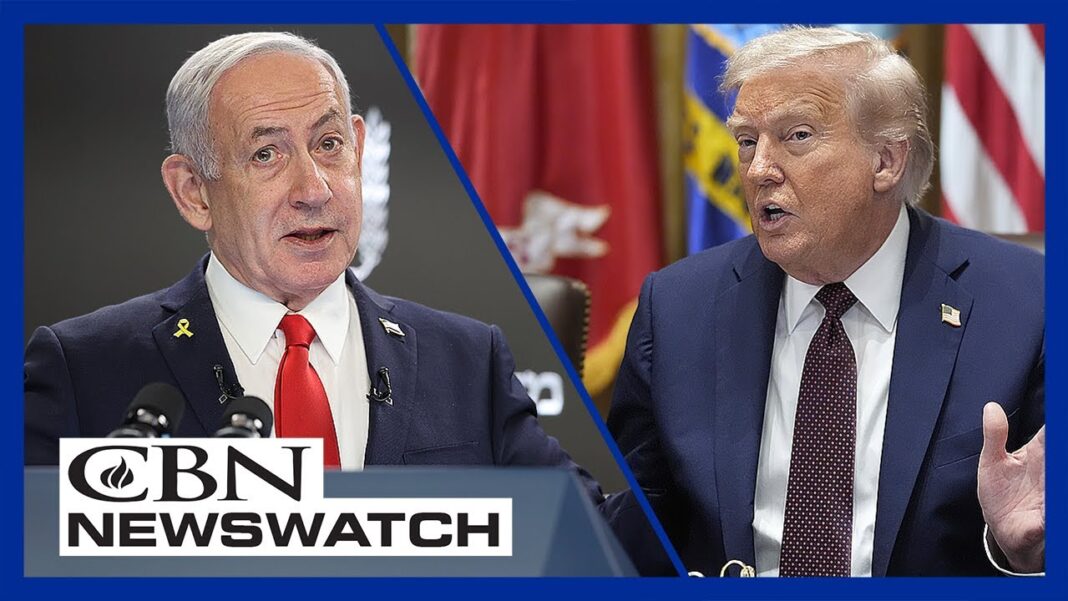
In an interview with the Daily Caller on Friday, President Trump once again delivered one of his characteristic blunt assessments about Israel’s war against Hamas. “Israel may be winning the war,” he said, “but they’re not winning the world of public relations… They’re gonna have to get that war over with.” His words, sharp and unsparing, quickly reverberated through diplomatic and media circles — and, as The Jerusalem Post reported on Tuesday, underscored a paradox that lies at the very heart of Israel’s military campaign: the longer the war continues, the more Hamas and its Iranian-backed allies are degraded militarily, yet the more Israel risks hemorrhaging legitimacy abroad.
This was not the first time Trump struck that chord. Back in March 2024, on the very day the Biden administration declined to veto a U.N. Security Council resolution calling for a ceasefire in Gaza, Trump told Israel Hayom that Israel needed to “Finish up your war… You gotta get it done.”
The consistency of Trump’s messaging is striking. He admires Israel deeply — reminding audiences that “nobody has done more for Israel” than he has — but he has grown increasingly direct in cautioning that international patience is wearing thin. In Trump’s view, Israel’s battlefield clock is not the only one ticking. The diplomatic clock, he warns, is running down faster.
As The Jerusalem Post report noted, this is both a political and strategic observation. While Israel has pursued a grueling two-year campaign against Hamas, Hezbollah, Iran, and the Houthis, the global narrative has shifted away from October 7, 2023 — when Hamas massacred 1,200 people and kidnapped 251 — toward daily images of destruction and suffering in Gaza.
The Daily Caller interview also raised eyebrows when Trump commented that 15 years ago “Israel had the strongest lobby in Congress of anything or body, or of any company or corporation or state that I’ve ever seen… They had total control over Congress, and now they don’t.”
Some critics immediately accused Trump of echoing antisemitic tropes about “Jewish control.” But context matters. As The Jerusalem Post report emphasized, Trump was describing a well-established political reality: for decades, the American Israel Public Affairs Committee (AIPAC) was the most formidable lobbying presence in Washington, maintaining a bipartisan wall of support around Israel. “You couldn’t speak badly” about Israel, Trump recalled, if you were an aspiring politician.
That was then. Today, Pew Research data shows that sympathy for Israel is eroding, especially among younger voters — including younger Republicans. For Israel, this is no minor trend. The bipartisan consensus that once shielded the Jewish state has developed fissures, leaving it more vulnerable to shifting public opinion and partisan divides.
Trump’s critique — that Israel is “not winning the world of public relations” — cannot be easily dismissed. It is true. Yet, the paradox is glaring.
Had Israel “finished up” its war in March 2024, as Trump urged at the time, the battlefield would have been frozen in a far less favorable state. Hamas still had many of its leaders and strongholds intact. Hezbollah had not been dealt severe blows. Iran’s nuclear and missile programs had not yet been struck with unprecedented ferocity. The Assad regime in Syria remained largely unscathed. And the Houthis in Yemen had not felt the sting of Israeli retaliation.
Fast forward to today: Hamas is a shell of its former self, Hezbollah has been drastically weakened, Iran has been rocked by direct strikes on its nuclear infrastructure, and the Houthis are bracing for further punishment. These strategic gains, as The Jerusalem Post report highlighted, were achieved precisely because the war dragged on, not in spite of it.
This is the paradox at the center of Trump’s remarks: the longer the war lasts, the worse it is for Israel’s legitimacy; but the longer it lasts, the more effective are Israel’s military achievements.
For decades, Israel’s defense doctrine rested on the belief that it could not afford long wars. A small nation, reliant on reserve soldiers and vulnerable to multi-front threats, Israel assumed it had to fight short, sharp, decisive campaigns. The Six Day War in 1967 embodied this ideal: lightning speed and overwhelming force. By contrast, the Yom Kippur War of 1973 — less than three weeks long — left scars of a grinding mobilization and heavy casualties, reinforcing the fear that time worked against Israel.
But as The Jerusalem Post report carefully analyzed, this war is rewriting those assumptions. Nearly two years into the conflict, with 40,000 more reservists called up this week, Israel is proving that it can sustain a long, grinding campaign.
The home front is stressed, yes, but functioning. The economy has been battered, but not broken. Families have endured long separations as reservists cycle in and out of duty, yet morale remains intact. Instead of cracking first, it is Israel’s enemies — Hamas, Hezbollah, Iran, the Houthis — who are steadily being ground down by the passage of time.
In short, Israel has demonstrated a level of societal and economic resilience far beyond what its enemies expected.
Yet, Trump’s words were not just strategic commentary; they were also a mirror held up to American politics. His observation that Israel’s once-unshakable bipartisan backing in Congress has eroded speaks volumes about shifting currents in the U.S. domestic debate.
As The Jerusalem Post report pointed out, Trump’s statement that “they had total control over Congress, and now they don’t” is not about conspiracy. It is about political reality: once, no aspiring politician could survive without pledging strong support for Israel. Today, progressive Democrats openly criticize Israel, and some even call for conditioning or cutting military aid. Younger Republicans, too, show waning enthusiasm compared to their elders.
This erosion is not merely rhetorical. It affects Israel’s ability to rely on unwavering U.S. support, especially as images from Gaza continue to dominate global media.
Trump’s latest remarks expose the central dilemma for Israel: winning the war while losing the world is not sustainable.
Prime Minister Benjamin Netanyahu insists that Israel must press on until Hamas is decisively defeated. Critics, both domestic and foreign, argue that this looks like endless war. Netanyahu counters that this is not an endless war but a transformative one, yielding historic strategic returns.
The Jerusalem Post report underscored the crux of the debate: legitimacy abroad versus endurance on the battlefield. To stop prematurely would hand Hamas a victory narrative and leave Iran’s proxies emboldened. To continue risks further isolation and international condemnation.
Trump’s point — “They’re gonna have to get that war over with” — is less about dictating military strategy and more about highlighting the steep diplomatic costs of delay.
The international environment reflects Trump’s warning. European nations such as France and Spain are advancing recognition of a Palestinian state. The U.N. continues to press for ceasefires. The Trump administration, even while arming Israel, grows impatient with the grinding pace of the war.
As The Jerusalem Post reported, Jerusalem has begun weighing retaliatory steps of its own — including extending sovereignty over parts of Judea and Samaria — in response to European moves. But these steps, too, risk deepening isolation.
This is precisely the “public relations” battleground Trump was alluding to: Israel’s strategic endurance risks being undercut by mounting diplomatic and public-opinion losses.
Trump often reminds audiences that he moved the U.S. Embassy to Jerusalem, recognized Israeli sovereignty over the Golan Heights, and brokered the Abraham Accords. He describes himself as the best friend Israel ever had in the Oval Office. And yet, his blunt warnings reveal a kind of tough love: admiration mixed with unfiltered caution.
For Israel, Trump’s words matter not only because he is a US president. His framing of Israel’s dilemma — finish the war quickly or risk losing legitimacy — is likely to shape American debate about Israel long after this conflict ends.
As Netanyahu rallies his nation for a “decisive stage” in Gaza, Trump’s reminder lingers: the war cannot go on indefinitely without eroding Israel’s international legitimacy. Yet, the very endurance of the war has produced strategic gains of historic proportion: Hamas degraded, Hezbollah diminished, Iran’s nuclear ambitions struck, Assad’s grip weakened, the Houthis deterred.
The paradox remains unresolved. Israel is demonstrating it can fight a long war, something once thought impossible. But every additional month tests its international legitimacy and bipartisan support in Washington.
In the words Trump chose for the Daily Caller interview: “They’re gonna have to get that war over with.”
It was a blunt assessment, devoid of diplomatic nuance — and, as The Jerusalem Post report noted, perhaps the most honest articulation yet of the tightrope Israel now walks: military success on the battlefield balanced against the ticking clock of global patience.

President Trump is right. But Israel needs better PR and better officials to deliver it. It doesn’t help to have a stone faced General or some curt spokesperson talking to the world press. Israel needs a Press Secretary like Carolyn Leavitt- smart, assertive, perky, attractive, with an American accent
Win the war. Ship the Arabs out of Gaza. Make it look like a ghost town if that is the only way. Stop playing games. The ‘world’ might condemn but will move on to other subjects like Ukraine. Every country has its own internal politics to deal with too. They are more important to them than Gaza. Remember – there is no substitute for victory on the battlefield – none.
Trump is the consummate political realist,
but he is unethically blaming the victim, not the evil and cynical opportunistic perpetrators in this new era of the 1930’s.
His suggestion is that Israel appease the antisemites with “peace” with the Arabs, leaving Hamas to survive. Israel cannot win that blood libel propaganda war. Virtually 100% of the world’s “news media” will consistently lie and slander it, the UN is controlled by evil antisemites, the Democrat party is a brazen enemy, as our the Europeans, British Commonwealth countries, American Jews are cooperating feckless cowards. Even Israel has its treasonous deep state.
So basically, Trump is right. But I wish he had the political courage to tell the whole truth.
The “truth” is irrelevant. As the article states, over and over, Trump told Israel to finish it more than a year ago. He backs Israel but wants them perceived as good guys, just like he himself wants to be perceived. Not so easy for tiny Israel and they wasted time and money pandering to the press with billions of dollars in handouts to the enemy. This was not what Trump meant by “finish it.”
With Democrat, Arab and European Nazis controlling the media, Israel will never be perceived as the “good guys”.