



|
Getting your Trinity Audio player ready...
|
By: Fern Sidman
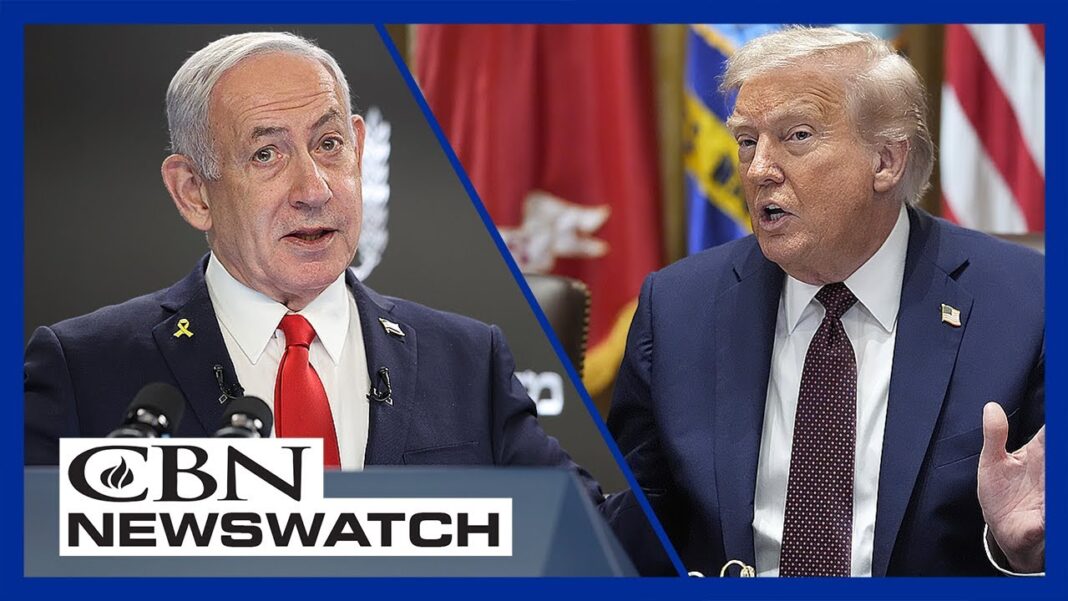
President Donald Trump issued one of his most direct appeals yet to Hamas on Wednesday, demanding the terrorist organization “IMMEDIATELY give back all 20 hostages” still believed to be alive in Gaza. The statement, made in a fiery post on his Truth Social platform, underscored the former president’s growing engagement with the hostage crisis that has haunted Israel for nearly two years since the Hamas-led October 7, 2023 massacre.
“Not 2 or 5 or 7!” Trump wrote, emphasizing the number 20 in capital letters. “If Hamas complies, things will change rapidly … IT WILL END!” His declaration suggested that the swift release of the hostages could pave the way toward a new stage of negotiations or even a resolution to the war.
As World Israel News (WIN) reported on Wednesday, Trump’s insistence on focusing on the 20 believed to be alive drew immediate reaction from the Hostages and Missing Families Forum, which has consistently lobbied for the release of all captives, including those confirmed to have been killed. In a statement, the group pushed back against Trump’s framing:
“This nightmare cannot end for our nation until ALL 48 hostages are accounted for – both those who survived and those who were brutally murdered during these 700 days of hell.” The Forum implored Trump to use his influence to push for the release of every captive, not just the survivors.
The president’s message marked a sharper and more urgent tone than his remarks earlier in the week, when he struck a cautionary note about Israel’s ongoing military campaign. In an interview published Monday, Trump said Israel “may be winning the war, but they are not winning in the court of public opinion,” a comment that triggered debate in Israel and among American supporters of the Jewish state.
As the WIN report noted, Trump’s comments reflected a dual approach: on the one hand, warning Israel about international backlash to its extended campaign; on the other, affirming his belief that securing the hostages could dramatically shift global perceptions. His call for the immediate release of 20 hostages, though narrower than some advocates wished, aligned with his long-standing view that dramatic, visible breakthroughs are essential to resetting diplomatic momentum.
While Trump’s intervention captured headlines, events on the ground in Israel underscored the immediacy of the military dimension. Prime Minister Benjamin Netanyahu declared in a recorded message to soldiers that Israel was entering “the stage of decision,” signaling that preparations for a full-scale Gaza City operation were moving into high gear.
“We are working to defeat Hamas … what began in Gaza must end in Gaza,” Netanyahu said, as was reported by WIN. He praised troops for enabling the government to make “very difficult decisions — decisions no one believed we could actually carry out.”
The speech coincided with the Israel Defense Forces’ announcement of its largest single call-up since the war began, summoning 60,000 reservists. According to the information provided in the WIN report, between 40,000 and 50,000 were ordered to report immediately after the start of the school year, with the remainder expected in subsequent waves. The mobilization means tens of thousands of reservists will spend the Jewish High Holidays away from their families as the campaign enters what officials are openly calling its decisive phase.
The mobilization was underscored by IDF Chief of Staff Lt. Gen. Eyal Zamir, who visited the Nachshonim Base on Tuesday alongside senior commanders. In remarks widely quoted by WIN, Zamir left no doubt about the military’s determination to crush Hamas once and for all.
“Our enemies, on October 7th and since then, across the Middle East, united in their attempt to harm us and to destroy us,” he told reservists. “We are operating against all of them, constantly, with determination, without pause. We are striking them, dismantling them, defeating them, and we are prevailing over them. We are operating across the entire Middle East. Hamas will have no place to hide from us. Wherever we locate them, whether they are senior or junior figures — we strike them all, all the time.”
The WIN report indicated that Zamir went on to describe how the IDF had already begun a new phase of its Gaza operations, moving into areas never previously penetrated. “We are already entering places we have never entered before and operating there with courage, strength, valor, and an extraordinary spirit,” he said. He pledged that the army would “increase and enhance the strikes of our operation,” promising escalation rather than de-escalation in the days ahead.
The hostage question remains deeply entangled with Israel’s battlefield decisions. Families of captives have repeatedly warned that time is running out for those still alive, and any major push into Gaza City could both increase the pressure on Hamas and endanger hostages held deep within its tunnel system.
Trump’s declaration that the war could “END” if Hamas released the 20 surviving captives highlighted precisely this tension. As the WIN report observed, the president framed the release as a near-magical solution to the conflict, but in practice, Israeli officials believe Hamas has weaponized the hostages to forestall decisive action.
The Hostages and Missing Families Forum, representing relatives of both living and deceased captives, has been vocal in warning against any outcome that would exclude some of the abducted. Their insistence that “all 48” must be accounted for reflects both the moral weight of the issue inside Israel and the national trauma that continues nearly two years after October 7.
For Prime Minister Netanyahu, the path forward remains fraught. On one hand, his government has pledged repeatedly that it will not stop until Hamas is dismantled. On the other, the hostage crisis exerts immense domestic pressure, with families staging near-daily protests and pressing for a deal that could endanger military momentum.
WIN has reported extensively on Netanyahu’s balancing act, noting that his rhetoric increasingly emphasizes total victory in Gaza as the only acceptable outcome. Yet his government faces mounting international scrutiny, particularly as images of devastation in Gaza fuel criticism abroad. Trump’s warnings about Israel “losing the public relations battle” reflect precisely this dynamic.
At the same time, Netanyahu’s message to soldiers — that Israel had made “very difficult decisions” but carried them out thanks to the army’s resilience — suggested a willingness to sustain heavy costs to achieve strategic goals. For him, as for Zamir, the decisive phase in Gaza is not just about territory but about restoring deterrence after October 7 shattered Israel’s sense of security.
Trump’s intervention also reflects his broader Middle East strategy, which has long emphasized bold moves to shift the diplomatic landscape. His administration was responsible for brokering the Abraham Accords, normalizing relations between Israel and several Arab states. In his Truth Social post, Trump appeared to suggest that a dramatic hostage release could serve as a new inflection point, resetting both the war and Israel’s international standing.
Yet as the WIN report emphasized, the gap between Trump’s blunt rhetoric and the complex realities on the ground remains significant. Hamas has repeatedly used negotiations over hostages to prolong its survival. Israeli officials, while eager for a breakthrough, are skeptical that the group would relinquish its remaining captives without extracting a heavy price — something Netanyahu has vowed not to pay if it compromises Israel’s security.
Trump’s demand that Hamas “IMMEDIATELY give back all 20 hostages” crystallized the agony and urgency surrounding the hostage issue, while simultaneously highlighting the divergence between American political rhetoric and Israeli strategic realities. His promise that “IT WILL END” if Hamas complies may resonate with families desperate for resolution, but in Israel, leaders continue to insist that only total defeat of Hamas can bring genuine closure.
As World Israel News has reported, Israel is preparing for its most decisive operation yet in Gaza City, with tens of thousands of reservists mobilized and commanders vowing to strike Hamas “all the time, everywhere.” The hostages remain at the center of this storm — symbols of national anguish, bargaining chips for Hamas, and potential keys to the war’s outcome.
Trump’s intervention may add pressure, but for Israel’s soldiers and citizens, the reality remains: the war will not truly end until Hamas is dismantled and every hostage, dead or alive, is brought home
