



|
Getting your Trinity Audio player ready...
|
By: Fern Sidman
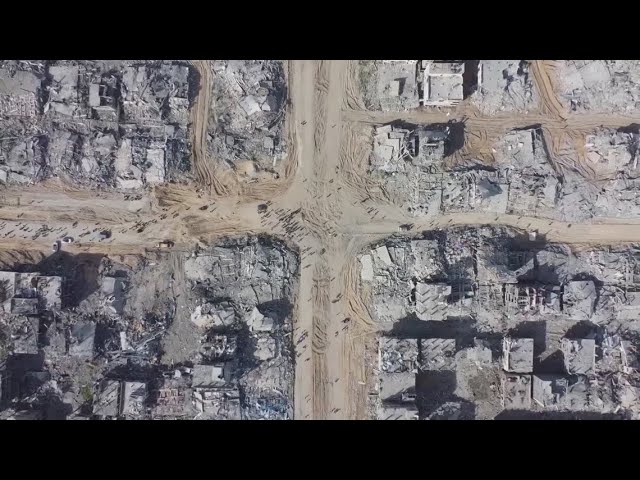
As diplomats prepare to convene in Washington for what has been billed as a pivotal meeting on the future of Gaza, a new international architecture of postwar governance is taking shape under the aegis of President Trump. According to public statements issued by Trump in advance of the gathering, countries participating in the newly constituted Gaza Board of Peace have committed billions of dollars in humanitarian and reconstruction aid and pledged thousands of personnel to support security arrangements in the battered coastal enclave. The initiative, which Trump has cast in sweeping, almost civilizational terms, is being presented as a comprehensive response to the humanitarian devastation and security vacuum that have followed years of conflict and the most recent war in Gaza.
World Israel News has closely followed the emergence of the Board of Peace since its inception, noting in a report on Sunday that the initiative represents one of the most ambitious attempts in recent memory to fuse humanitarian reconstruction with a robust international security framework. In his Truth Social post on Sunday, Trump asserted that member states have collectively pledged more than $5 billion to underwrite relief efforts and the rebuilding of Gaza’s shattered infrastructure.
He further stated that participating countries have agreed to contribute personnel to an International Stabilization Force as well as to a nascent local police framework, designed to work in tandem to maintain public order and safeguard Gaza’s civilian population.
The forthcoming meeting, scheduled for Feb. 19 at the Donald J. Trump Institute of Peace in Washington, is expected to formalize these commitments and to outline the operational contours of what Trump has described as a transformative experiment in international governance. As chairman of the Board of Peace, Trump has positioned himself not merely as a convenor but as the principal architect of a new model for post-conflict administration—one that seeks to transcend the limitations of ad hoc ceasefires and episodic humanitarian interventions. The Washington meeting will bring together representatives of founding member states, senior U.S. officials, and envoys from partner countries that have signaled their readiness to participate in the stabilization mission.
In Trump’s telling, the Board of Peace was born of a diplomatic breakthrough last October, when the United Nations Security Council unanimously adopted his proposal to end the Gaza conflict. He has repeatedly cited that resolution as the legal and moral foundation of the board’s mandate, arguing that it endowed the initiative with unprecedented international legitimacy. According to Trump, the resolution catalyzed the rapid delivery of humanitarian assistance and facilitated the release of all living and deceased hostages, achievements he has invoked as proof of concept for the board’s broader ambitions.
The World Israel News report noted that while the precise mechanisms by which the board contributed to these outcomes remain opaque, the political symbolism of the UN’s unanimous endorsement has been central to Trump’s narrative of success.
The board’s founding members, Trump said, met last month in Davos, Switzerland, where two dozen participants formally launched the body and began sketching plans to improve conditions for Gaza’s civilian population. The World Israel News report characterized the Davos meeting as a largely symbolic overture, signaling elite buy-in for the project while deferring substantive operational details to subsequent negotiations.
Yet Trump has framed that gathering as a milestone, suggesting that it marked the transition from aspirational diplomacy to institutional reality. In his words, the Board of Peace possesses “unlimited potential” and is destined to become “the most consequential International Body in History,” a claim that reflects both the grandiosity of his vision and the high stakes of the undertaking.
Central to the board’s agenda is the question of security, and more specifically, the future of Hamas in Gaza. Trump has insisted that Hamas must comply with what he termed “Full and Immediate Demilitarization,” presenting this condition as indispensable to the success of any reconstruction and stabilization effort. World Israel News has reported on Israeli officials’ long-standing position that meaningful reconstruction in Gaza is inconceivable absent the dismantling of Hamas’s military capabilities.
Trump’s insistence on demilitarization aligns with this view, yet the practical challenges of disarming a deeply entrenched militant organization remain formidable.
Adding a note of cautious specificity to Trump’s broad proclamations, two sources involved in the Board of Peace told KAN News that the process of disarming and demilitarizing Hamas could begin as early as March. The initial phase of the disarmament effort is expected to be linked to the rollout of a National Committee for the Administration of Gaza.
This technocratic governing body, envisioned as a transitional authority, would assume administrative responsibility for the Strip and lay the groundwork for coordination between international security forces and local policing structures. The establishment of such a committee represents an attempt to fill the governance vacuum that has long plagued Gaza, yet its viability will depend on both local acceptance and sustained international backing.
Trump has promised that further details on funding, personnel deployment, and operational plans will be unveiled during the Washington meeting. These details will provide a clearer picture of how the board intends to translate lofty rhetoric into concrete action. Among the questions likely to dominate deliberations are the composition and mandate of the International Stabilization Force, the mechanisms for vetting and training local police units, and the safeguards that will be put in place to prevent the diversion of humanitarian funds or the reconstitution of militant networks under the cover of reconstruction.
Beyond the immediate mechanics of security and governance, the Board of Peace initiative raises profound questions about the future of international intervention in protracted conflicts. Previous efforts to stabilize Gaza have foundered on the shoals of political fragmentation, donor fatigue, and the persistent tension between humanitarian imperatives and security concerns.
Trump’s proposal seeks to overcome these obstacles by integrating reconstruction and demilitarization into a single, coordinated framework, backed by what he portrays as unprecedented levels of international commitment. Whether this integrated approach will prove more durable than past efforts remains an open question.
Critics, whose voices have been noted by World Israel News, caution that the board’s sweeping ambitions risk colliding with the complex realities on the ground. Gaza’s social fabric has been frayed by years of conflict, blockade, and political division, and the imposition of an externally designed governance structure may provoke resistance from local actors wary of foreign tutelage.
Moreover, the prospect of deploying thousands of international personnel into a volatile security environment carries inherent risks, not least the danger that stabilization forces could become entangled in local power struggles or targeted by terrorist factions seeking to undermine the postwar order.
Proponents of the initiative counter that the scale of Gaza’s devastation demands an equally expansive response. Trump’s emphasis on billions of dollars in pledged aid reflects an understanding that reconstruction is not merely a matter of humanitarian relief but of rebuilding the economic and institutional foundations of civilian life.
World Israel News has reported that the board’s planners envision large-scale investments in housing, infrastructure, healthcare, and education, designed to create conditions in which extremism loses its appeal. In this vision, security and development are mutually reinforcing: demilitarization creates space for reconstruction, while economic renewal undercuts the grievances that fuel militancy.
The international dimension of the Board of Peace further complicates the picture. Trump has suggested that the board’s remit may eventually extend beyond Gaza, positioning it as a template for addressing other global conflicts. Such aspirations echo earlier attempts to craft multilateral frameworks for post-conflict stabilization, from the Balkans to Afghanistan, with mixed results. The board’s success or failure in Gaza may therefore reverberate far beyond the Middle East, shaping debates about the efficacy of internationally led reconstruction efforts in fractured societies.
As the Washington meeting approaches, the Board of Peace stands at a crossroads between promise and peril. Trump’s declarations of “unlimited potential” and historical consequence reflect a belief in the transformative power of decisive, centralized leadership. Yet the durability of the initiative will ultimately depend on factors that lie beyond any single leader’s control: the willingness of member states to sustain their commitments, the capacity of international forces to operate effectively and impartially, and the receptivity of Gaza’s population to a new governing framework.
In the final analysis, the Board of Peace represents a bold wager on the possibility of reconstructing a war-torn society through a fusion of international resolve and local governance reform. Whether it will inaugurate a new chapter in the management of protracted conflicts or join the long list of well-intentioned but faltering initiatives remains to be seen. For now, the world watches as Washington prepares to host what Trump has framed as a defining moment in the quest to transform Gaza from a perennial flashpoint into a locus of stability.
