



|
Getting your Trinity Audio player ready...
|
Trump Admin Reportedly Approached Palestinian Businessman in Canada for Potential Post-War Gaza Leadership Role
By: Fern Sidman
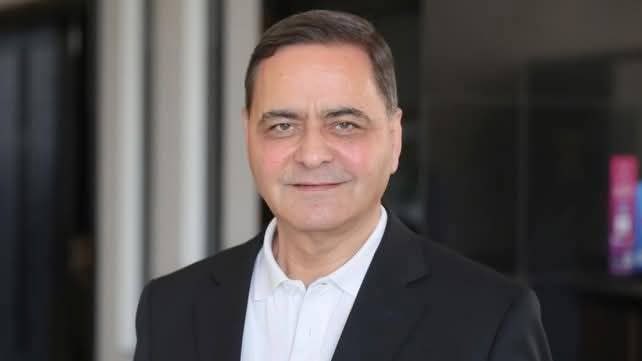
A Palestinian businessman residing in Canada has claimed that he was approached by the United States to lead a prospective post-war administrative body in Gaza — a development that, if true, could add another layer of complexity to the already fractious debate over the Strip’s future governance. In an interview with Israel’s Arabic-language Nas Radio, 57-year-old Samir Halilah said that the outreach came directly from the Trump administration, which, he asserted, viewed his political independence and lack of affiliation with Fatah as potential assets.
World Israel News reported on Wednesday that Halilah, though positioning himself as “politically independent,” has deep institutional and economic ties to the Palestinian Authority (P.A.), the governing body led by Mahmoud Abbas. His career trajectory includes decades of service in official P.A. structures, along with prominent roles in businesses closely aligned with Ramallah’s leadership.
Born in Jericho, Halilah entered Palestinian politics and governance in the 1990s, serving as assistant undersecretary at the Ministry of Economy and Trade. By 2005, he had risen to become secretary-general in the third government of former Palestinian Prime Minister Ahmed Qurei, where, according to All4palestine, he “spearheaded initiatives from the Prime Minister’s Office.”
As the World Israel News report recounted, Halilah subsequently moved into the business sector, holding leadership roles in real estate companies widely viewed as linked to the Abbas regime. His influence expanded further in 2022 when he was elected chairman of the board of the Palestine Stock Exchange — a position underscoring his continued connection to the upper echelons of Palestinian economic and political life.
Halilah told Nas Radio that the U.S. outreach occurred more than a year ago, before the latest Gaza war began. He said he made it clear from the outset that he would only consider such a leadership role “with the approval of the Palestinian Authority and donors.”
Speaking to Sky News Arabia, Halilah described himself explicitly as “a son of the Palestinian Authority” and emphasized that any potential appointment had been the subject of “intensive consultations” involving P.A. President Mahmoud Abbas, Prime Minister Mohammad Mustafa, and “other parties” tied to Ramallah.
As reported by World Israel News, Halilah also claimed that Hamas — the terrorist organization currently in control of Gaza — would have “no problem with an independent administrative committee” taking over governance after the war. He suggested that Hamas had already agreed not to be an official part of any post-war government structure.
Despite Halilah’s assertions of consultation, a fierce rebuttal came from within the P.A. leadership. The Arabic-language Jaffa News Network, cited by World Israel News, quoted a senior official in the Palestinian presidency as flatly denying any such agreement.
This official accused Halilah of “spreading falsehoods” and of trying to “circumvent the official position” of the Palestinian Authority — namely, its steadfast opposition to “any Israeli project seeking to separate the Gaza Strip from the West Bank.” The official called Halilah’s stance “disgraceful” and urged him to cease his public claims.
Egypt’s Independent newspaper, quoting Palestinian news agency Wafa, added that a source in the presidency reiterated the formal position: that “the State of Palestine” — under the leadership of a government minister — would be the sole authority responsible for administering Gaza.
The World Israel News report noted that the public repudiation may have been triggered less by Halilah’s policy positions and more by the perception that he was publicly positioning himself as a candidate for a role the P.A. considers its own exclusive right to fill.
Halilah has articulated a vision for Gaza’s post-war recovery that centers on the adoption of Egypt’s $53 billion reconstruction plan, announced in March 2025. According to the information provided in the World Israel News report, Cairo’s blueprint involves extensive rebuilding of housing, infrastructure, and industry in the war-torn enclave.
At the time of the plan’s unveiling, Egyptian Foreign Minister Badr Abdelatty said the initiative had been coordinated with Palestinian counterparts and that there was consensus on appointing independent, professional Palestinian technocrats — individuals unaffiliated with either Hamas or Fatah — to oversee the Strip’s day-to-day management. Abdelatty further indicated that the names of the prospective committee members had already been finalized.
Halilah has endorsed this framework, portraying it as a pragmatic, donor-backed route to stabilization. His support for the Egyptian model appears to align with his broader positioning as a technocrat with both business and political experience, rather than as a factional powerbroker.
The notion of installing a politically independent Palestinian figure to lead Gaza in the aftermath of Hamas’s removal is not new. The World Israel News report pointed out that both American and some Arab policymakers have floated the idea as a means of circumventing the entrenched political rivalries that have long paralyzed Palestinian governance.
In this context, Halilah’s lack of formal party affiliation could have been viewed by U.S. officials as a way to bridge divides — particularly between Hamas, the P.A., and international stakeholders. Yet, his long-standing ties to the P.A.’s economic and bureaucratic networks may undermine that perception of independence.
Halilah’s claim that Hamas would not object to an independent administrative committee, if accurate, marks a notable departure from the group’s traditional insistence on controlling governance in Gaza. The World Israel News report observed that Hamas has signaled in recent months a willingness to take a step back from direct administrative roles, possibly as a concession to secure its political survival in some form after the war.
However, the group’s history of indirect influence and manipulation of nominally independent governing bodies raises questions about how much autonomy any post-war administration could actually exercise.
The debate over Gaza’s post-war leadership is playing out against a backdrop of shifting regional alignments. Egypt’s prominent role in shaping the reconstruction agenda, the U.S.’s search for a viable Palestinian partner, and the P.A.’s insistence on sole administrative control all converge in this dispute over Halilah’s potential candidacy.
The P.A. faces a delicate balancing act: asserting its authority without alienating donors or Arab allies, while also confronting internal challenges from rival factions. Publicly rejecting figures like Halilah may be one way for Ramallah to reaffirm its primacy in Palestinian politics — even if that risks alienating international partners eager for technocratic solutions.
The controversy surrounding Samir Halilah’s claim encapsulates the intricate political, personal, and diplomatic calculations involved in determining Gaza’s post-war trajectory. While World Israel News reported that Halilah presents himself as a politically neutral, donor-approved technocrat willing to work under P.A. oversight, the fierce rebuttal from Ramallah suggests that any perceived deviation from the P.A.’s official narrative will be met with swift and public rejection.
Whether Halilah’s name was seriously considered by the Trump administration or whether his candidacy is primarily a personal initiative remains unclear. What is evident, however, is that the battle over who will lead Gaza — and under what terms — is as much about symbolism, legitimacy, and control as it is about reconstruction plans and governance structures.
In the weeks and months ahead, the interplay between U.S. diplomacy, Egyptian reconstruction initiatives, Hamas’s political maneuvers, and the P.A.’s entrenched authority will determine whether independent technocrats like Halilah can find a role in shaping Gaza’s future — or whether they will remain on the outside, watching as established factions reassert their dominance.