



|
Getting your Trinity Audio player ready...
|
By: Fern Sidman
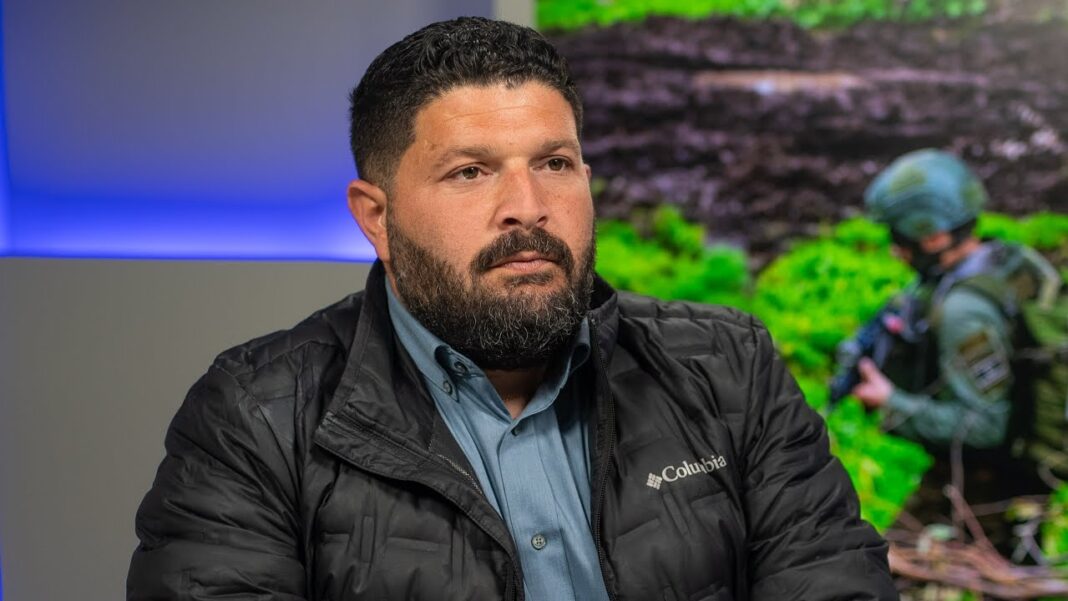
In a country still struggling to absorb the trauma of October 7, when Hamas terrorists launched the deadliest attack in Israel’s history, a fresh and deeply unsettling controversy has erupted—this time from the floor of the Knesset itself. As reported on Thursday by VIN News, Deputy Minister Almog Cohen of the Jewish Force party delivered a blistering address on Wednesday that has reopened one of the most painful questions haunting the Israeli public: what was known in the hours before the massacre, and why was decisive action not taken?
Speaking from the Knesset podium, Cohen alleged that Israel’s internal security agency, the Shin Bet, received concrete and alarming intelligence on the night preceding October 7 indicating unusual terrorist activity in the Gaza Strip—intelligence which, he claims, was not transmitted in real time to the appropriate decision-makers or security forces. The charge, delivered with raw emotion and personal gravity, has sent shockwaves through Israel’s political and security establishment, according to the VIN News report.
At the heart of Cohen’s claims is a timeline that, if substantiated, raises profoundly troubling implications. According to his account, Shin Bet Director Ronen Bar convened senior division heads of the organization at approximately 3:30 a.m. on Simchat Torah at a Shin Bet facility. At that same hour, Cohen asserted, a Shin Bet intelligence asset operating inside the Gaza Strip—identified by the codename “Green Sardine”—sent a warning to his handlers.
The warning, Cohen said, concerned an unusual gathering of Hamas’ elite Nukhba terrorists inside mosques across Gaza, hours before the customary morning prayer. As the VIN News report detailed, the early timing was itself anomalous: the morning prayer was not scheduled to begin until approximately 5:15 a.m. The deviation, Cohen argued, should have set off immediate alarm bells, suggesting preparation for a coordinated operation rather than routine religious observance.
“These were not random movements,” Cohen declared, according to VIN News. “This was a concentration of terrorists at an abnormal hour, in locations known historically to precede operations.”
Yet despite what Cohen characterized as highly specific and time-sensitive intelligence, Israel’s border communities were left unalerted, reserve forces were not mobilized, and defensive postures remained unchanged.
Cohen’s speech was not a detached policy critique. It was a deeply personal indictment, forged in combat and loss. Cohen himself fought Hamas terrorists in the southern city of Ofakim on October 7, where civilians and security personnel were slaughtered in the streets.
“Why was this information not brought to the attention of the citizens of the state?” Cohen demanded from the podium. “Why did we have to die there in the streets?”
The questions struck a nerve precisely because they echo those asked by thousands of Israelis—bereaved families, survivors, soldiers—who continue to grapple with the sense that the catastrophe was not only brutal but avoidable, or at least mitigable. Cohen argued that had the intelligence been transmitted to “the appropriate places” in real time, the massacre might have been prevented entirely or, at the very least, its scale significantly reduced.
As the VIN News report noted, Cohen stopped short of accusing any individual of intentional wrongdoing. But his remarks unmistakably suggested systemic failure at the highest levels of Israel’s intelligence apparatus.
The Shin Bet, long regarded as one of Israel’s most formidable and effective security institutions, has been under mounting scrutiny since October 7. While official investigations remain ongoing, public trust has been shaken by revelations of missed signals, misjudged intentions, and an overarching belief that Hamas was deterred.
Cohen’s remarks intensified that scrutiny by alleging not a vague intelligence lapse but a specific, actionable warning that was allegedly not escalated.
The Shin Bet has not publicly responded to Cohen’s claims in detail, and the agency traditionally refrains from addressing operational allegations in public forums. Still, the accusations strike at the core of its mandate: to provide early warning and prevent precisely the kind of attack that unfolded that morning.
The fallout was immediate. Within hours, Knesset Member Merav Ben Ari, chair of the Yesh Atid faction and the opposition whip, moved swiftly to counter Cohen—not on the substance of his claims, but on their legality.
As reported by VIN News, Ben Ari submitted a formal appeal to Attorney General Gali Baharav-Miara, calling for a criminal investigation into Cohen’s statements. In her letter, she argued that his remarks raised a “serious suspicion of the disclosure of classified security information,” including identifying details relating to a Shin Bet agent and the manner of his operation.
According to Ben Ari, the information referenced by Cohen had been under a publication ban for months due to the grave danger posed by exposing an intelligence asset’s identity and operational methods. She warned that such disclosures could endanger lives and compromise ongoing intelligence efforts.
The clash crystallized a broader tension that has come to define Israel’s post–October 7 reality: the collision between the public’s demand for accountability and the security establishment’s insistence on secrecy.
This tension is not new—but it has rarely been so raw or consequential. On one hand, Israel’s democracy depends on transparency, oversight, and the willingness of elected officials to confront institutional failures. On the other, its survival depends on protecting intelligence sources, methods, and operational integrity.
Cohen’s supporters argue that without public exposure, the truth risks being buried beneath internal reviews and bureaucratic language. They contend that only through open confrontation can Israel ensure that such a disaster never happens again.
Critics, however, insist that Cohen crossed a red line by airing sensitive intelligence matters in a public forum, potentially endangering agents and compromising future operations. As VIN News reported, they fear that political grandstanding could come at the expense of national security.
Beyond the immediate political and legal ramifications, the episode underscores a deeper national reckoning. Nearly every Israeli family has been touched—directly or indirectly—by the events of October 7. The demand for answers is not academic; it is existential.
What warnings were received? Who evaluated them? Who decided they did not warrant action? And why?
Cohen’s allegations have forced these questions back into the public square, where they refuse to be ignored. Whether his claims ultimately prove accurate in their entirety or not, they reflect a profound erosion of confidence in systems once considered infallible.
Attorney General Baharav-Miara has not yet announced whether a criminal investigation will be opened into Cohen’s remarks. Nor has there been an official confirmation or denial of the specific intelligence claims he raised. What is clear is that the political, legal, and moral reverberations are only beginning.
In the coming months, as official commissions of inquiry proceed and classified findings gradually emerge, Israel will be forced to confront uncomfortable truths about preparedness, hubris, and the price of miscalculation.
For now, Cohen’s words hang heavily over the Knesset and the nation at large—a stark reminder that the deadliest silence is not always the one imposed by the enemy, but the one that follows an unanswered warning.