




|
Getting your Trinity Audio player ready...
|
By: TJVNews.com – Jewish Voice News
It began as a story too grotesque to be true — a video purporting to show Israeli Defense Forces soldiers committing sexual assault against captured Hamas terrorists in the so-called “Yemeni Field” of Gaza. Released at the height of international scrutiny of Israel’s military operations, the footage spread across social media and major networks like wildfire. Its impact was devastating: global condemnation, an explosion of anti-Israel sentiment, and a fresh wave of anti-Semitic vitriol that reached campuses, city squares, and diplomatic halls around the world.
Now, as the dust begins to settle, it is becoming clear that the entire episode — from the leak to the attempted cover-up — represents one of the most damaging and politically consequential scandals in Israel’s recent history. What is emerging, according to new reports first detailed by Israel’s Channel 14 and examined in depth by numerous media outlets, is a portrait of systemic rot within the upper echelons of Israel’s legal and prosecutorial establishment — a tightly woven network of elites shielding one another from scrutiny in what critics are calling a “juristocratic cartel.”
The scandal — widely referred to as the Yemeni Field Affair — is no longer just about a fabricated video. It is about a culture of legal impunity, selective justice, and a corrosive system of mutual protection that, critics argue, has prioritized the preservation of institutional power over the protection of truth, national security, and Israel’s soldiers.
The False Video That Shook the World
The affair began with a leak — one that would ultimately shatter Israel’s international reputation.
A video allegedly depicting IDF soldiers raping captured Hamas Nukhba terrorists in a “Yemeni field” was sent to journalist Guy Peleg of Channel 12, where it was broadcast as part of a sensationalized report. The clip quickly gained traction, amplified by anti-Israel influencers, NGOs, and foreign news agencies eager to seize upon any evidence — real or fabricated — of Israeli misconduct during the war in Gaza.
Within hours, the footage appeared in United Nations reports, human rights briefings, and international social media campaigns accusing Israel of war crimes. The effect, as multiple Israeli analysts told Israel National News, was “catastrophic” — a blood libel of the modern age that painted the Jewish state as barbaric, reigniting the same medieval tropes that have justified centuries of persecution.
But the “rape” never happened.
As forensic and intelligence investigations later confirmed, the video had been heavily edited and manipulated. The IDF soldiers depicted in the footage were not engaged in sexual assault, and no credible evidence ever substantiated the claims. In fact, the final indictment filed months later contained no rape charges whatsoever.
The question, then, was not merely who created the fake video — but who leaked it, who approved its dissemination, and why the apparatus responsible for safeguarding Israel’s integrity appeared to have facilitated its own defamation.
The Chain of Cover-Ups: From the MAG to the Attorney General
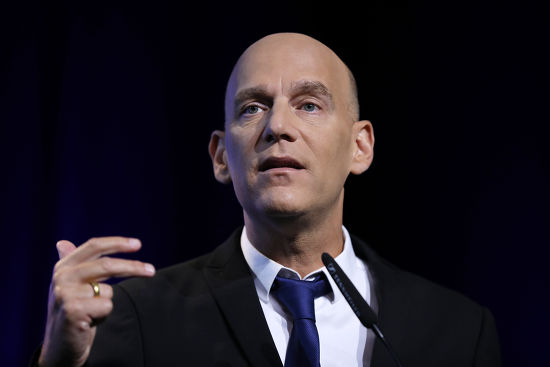
At the center of the storm now stands Major General Yifat Tomer-Yerushalmi, the Chief Military Advocate General (MAG). Once considered one of the most powerful legal figures in the Israeli defense establishment, Tomer-Yerushalmi has been placed on leave amid growing suspicions that she approved — and possibly orchestrated — the leak of the falsified video to Channel 12.
Sources cited media outlets allege that the MAG’s office deliberately leaked the footage to create the appearance that Israel was actively investigating potential war crimes. The goal, investigators believe, was to shield the IDF and the government from international legal exposure, particularly at the International Criminal Court (ICC) in The Hague.
In doing so, however, the leak had the opposite effect: it legitimized a falsehood on the world stage and inflicted irreversible damage on Israel’s standing.
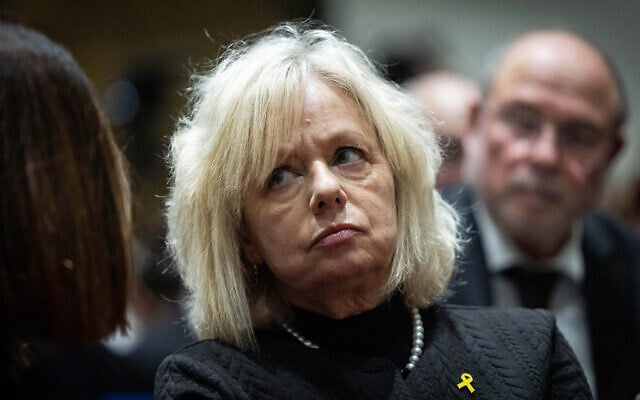
According to reports, the rot does not stop with the MAG. Attorney General Gali Baharav-Miara, the state’s top legal authority, is now facing allegations that she not only endorsed the MAG’s actions but actively sought to obstruct a full investigation into the affair.
Baharav-Miara, who publicly positioned herself as a neutral supervisor, reportedly requested to oversee the inquiry personally — a move critics have called “an outrageous conflict of interest.” As one senior jurist quoted by Israel National News put it, “The Attorney General supervising the investigation into her own office’s misconduct is not oversight — it’s self-exoneration.”

The scandal has laid bare what many Israelis have long suspected: that a small, insular network of legal elites — encompassing the Attorney General’s Office, the Military Prosecutor’s Office, and sympathetic elements within the High Court of Justice — operates as a self-protecting oligarchy.
This “hand washes hand” system, as Israeli commentators have described it, is defined by mutual protection, selective transparency, and strategic leaks — mechanisms designed not to advance justice, but to preserve authority.
At the center of this network are figures such as Justice Dafna Barak-Erez, Justice Yitzhak Amit, and Attorney General Baharav-Miara herself, who have repeatedly defended one another in controversial rulings and disciplinary disputes. Critics argue that this legal fraternity has evolved into a “deep state” — a permanent, unelected layer of bureaucratic power capable of shaping national policy beyond democratic oversight.
The High Court’s Role: A Case of Judicial Shielding
When right-wing legislators and civil society groups demanded an independent inquiry into the leak, the High Court of Justice moved swiftly — not to expose the truth, but to contain it.
A petition filed by advocacy groups and several former IDF officers demanded an external investigation, arguing that the MAG’s office and the Attorney General’s involvement rendered any internal review inherently compromised.
But the State Prosecution, represented by Attorney Aviad Glickman — widely seen, as Israel National News phrased it, as “a mouthpiece for the juristocracy” — dismissed the petition. The state claimed that “no damage was caused to national security” and urged the Court to dismiss the matter.
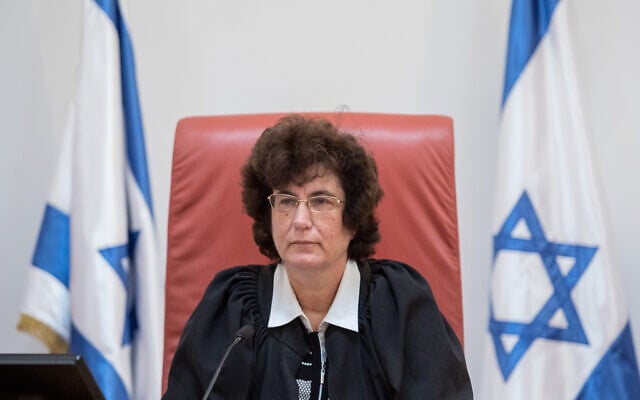
The High Court, led by Justice Barak-Erez, obliged. It ruled against the petitioners, effectively endorsing the internal handling of the affair. To critics, this was a decisive moment: the judiciary closing ranks around its own.
As one editorial noted, “The same hands that leaked, covered, and defended the falsehood are now investigating it. This is not accountability — it is an anatomy of institutional decay.”
The Political Earthquake: Zini, Katz, and the Collapse of the “Old Guard”
The scandal’s unravelling comes at a time of profound political volatility. With Yoav Gallant dismissed as Defense Minister and Herzi Halevi having stepped down as IDF Chief of Staff, the appointment of new figures such as David Zini and Israel Katz has dramatically altered the power dynamics within Israel’s defense and legal apparatus.
According to reports, these changes have allowed for the exposure of previously buried information, including evidence suggesting direct coordination between the MAG’s office and the Attorney General in managing — and concealing — the Yemeni Field affair.
“The system is beginning to crack,” one senior government source told Israel National News. “For years, these offices operated under an unspoken pact — to protect one another, no matter the cost. Now, for the first time, that code of silence is breaking.”
The Consequences: A Global Blood Libel
The most tragic aspect of the Yemeni Field affair, however, remains its external consequences.
By legitimizing a falsehood, Israeli legal authorities inadvertently handed ammunition to those who seek Israel’s destruction.
In the weeks following the leak, the United Nations Human Rights Council, Amnesty International, and numerous pro-Palestinian organizations cited the false “rape” video as “evidence” of Israeli atrocities. The footage was used in international resolutions, protest propaganda, and even university lectures to justify anti-Israel boycotts and campus harassment campaigns.
“Once a lie of this magnitude enters the bloodstream of global discourse, it becomes almost impossible to remove,” wrote an Israel National News columnist. “It was not only a slander against IDF soldiers — it was a slander against the Jewish people.”
The incident is now widely regarded as one of the most severe information warfare victories for Hamas and its allies, achieved not through military means, but through Israel’s own institutional dysfunction.
The Psychological War Within
What makes this episode uniquely corrosive is that it blurs the line between internal betrayal and external attack.
According to reports, there is growing consensus within Israeli intelligence circles that the real war being waged is no longer only on the battlefield — it is in the domain of narrative, perception, and legitimacy.
In this context, the Yemeni Field leak was not simply a public relations disaster; it was a strategic implosion — the self-inflicted equivalent of an information suicide bombing.
The MAG’s office and the Attorney General’s complicity — whether motivated by misplaced legal caution or outright malice — exposed the vulnerabilities of a system unable to defend itself from psychological warfare.
“The deep state fears the people more than it fears the enemy,” one military commentator said. “That is why it rushes to appease international courts instead of defending our soldiers. It’s not justice — it’s survival.”
A Crisis of Legitimacy
As investigations widen and new evidence surfaces, Israel faces a reckoning that extends far beyond the Yemeni Field scandal.
At stake is not merely the credibility of a few senior officials, but the very foundation of Israel’s civil-military trust — the invisible covenant between those who fight and those who govern.
For years, many within Israel’s defense establishment have warned of growing judicial overreach, with unelected legal advisers wielding disproportionate power over military and political decision-making. The Yemeni Field affair, analysts argue, has turned that long-simmering concern into a national crisis.
“The people no longer trust the system,” an editorial in Israel National News concluded. “The law, once a shield, has become a weapon — wielded not against Israel’s enemies, but against its defenders.”
Toward Accountability — or Collapse
With Chief Military Advocate Yifat Tomer-Yerushalmi now suspended and the Attorney General under mounting pressure, the coming months will determine whether Israel’s leadership is willing to confront the rot within its own ranks.
If the investigations proceed without interference, they could trigger the most significant legal and institutional reform in decades, dismantling what many have described as Israel’s “juristocratic fortress.”
But if the old system succeeds in containing the fallout — if, once again, a hand washes a hand — the damage will extend far beyond the legal sphere. It will entrench the perception that truth and justice in Israel have become the property of a privileged few, inaccessible to the public and indifferent to the soldiers who risk their lives in its defense.
The Cost of Silence
The Yemeni Field affair is not merely a scandal — it is a mirror held up to a nation grappling with the consequences of internal decay.
A fabricated video may have ignited the fire, but it was the complicity, arrogance, and secrecy of Israel’s most powerful legal institutions that fanned it into a conflagration of distrust and disillusionment.
For now, as the investigation unfolds under the watchful eye of new leadership figures such as David Zini and Israel Katz, there remains a narrow window for redemption.
“If those who protect the law have themselves become lawless — if truth can be sacrificed for politics, and justice for self-preservation — then Israel’s greatest threat will not come from without, but from within,” said one editorial on the subject.
The Yemeni Field affair, born of deceit and sustained by denial, may yet become the catalyst for the most painful but necessary reckoning in Israel’s modern history — a reckoning that redefines not only how justice is done, but whom it serves.

None of these horrible traitors can be permitted to remain in office for one more day! The Supreme Court judges, Attorney General and other top Israeli officials… this is a national emergency! The true guardians of Israel must step in NOW and start making immediate arrests.
Justice Barak-Erez must be immediately removed from office! This evil treasonous conspiracy against Israel should be treated as a national conspiracy requiring mass arrests of all of the conspiring traitors.