



|
Getting your Trinity Audio player ready...
|
Josh Hasten
(JNS) Despite Israel’s ceasefire with Hamas in Gaza, and with the government in Lebanon, organizations and individual volunteers who have been supporting Israel Defense Forces soldiers since Oct. 7, 2023, insist the war is not over, and therefore the troops still need a large amount of backing.
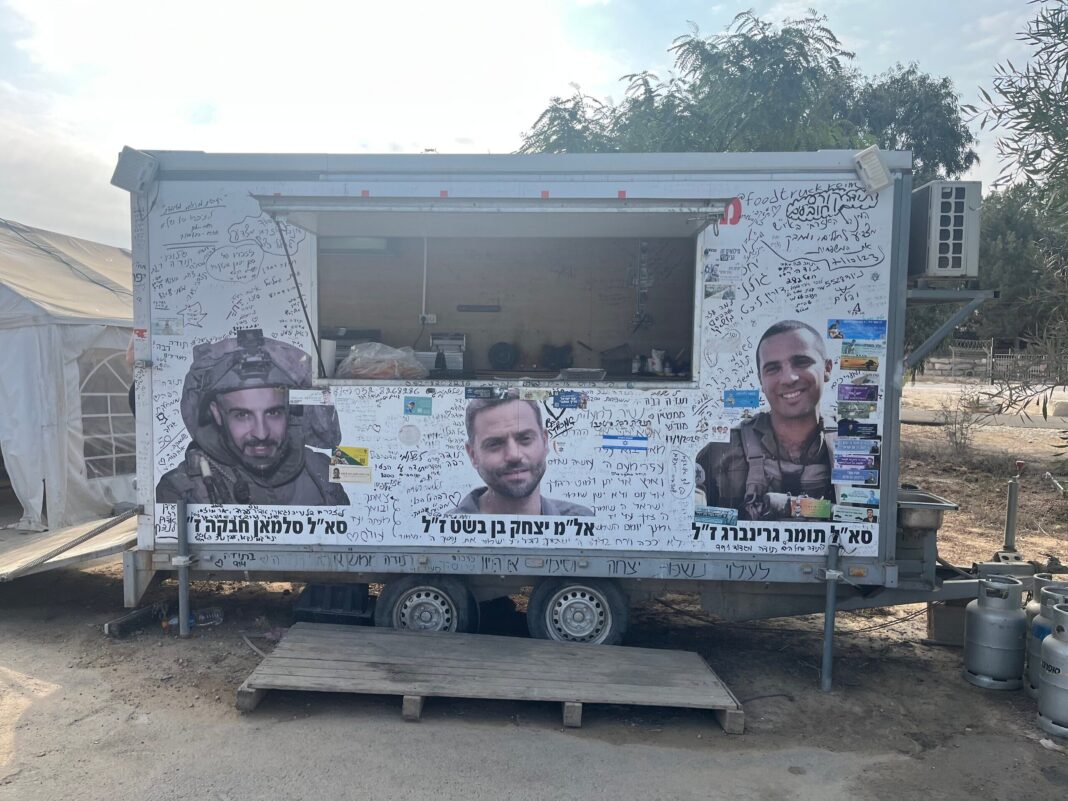
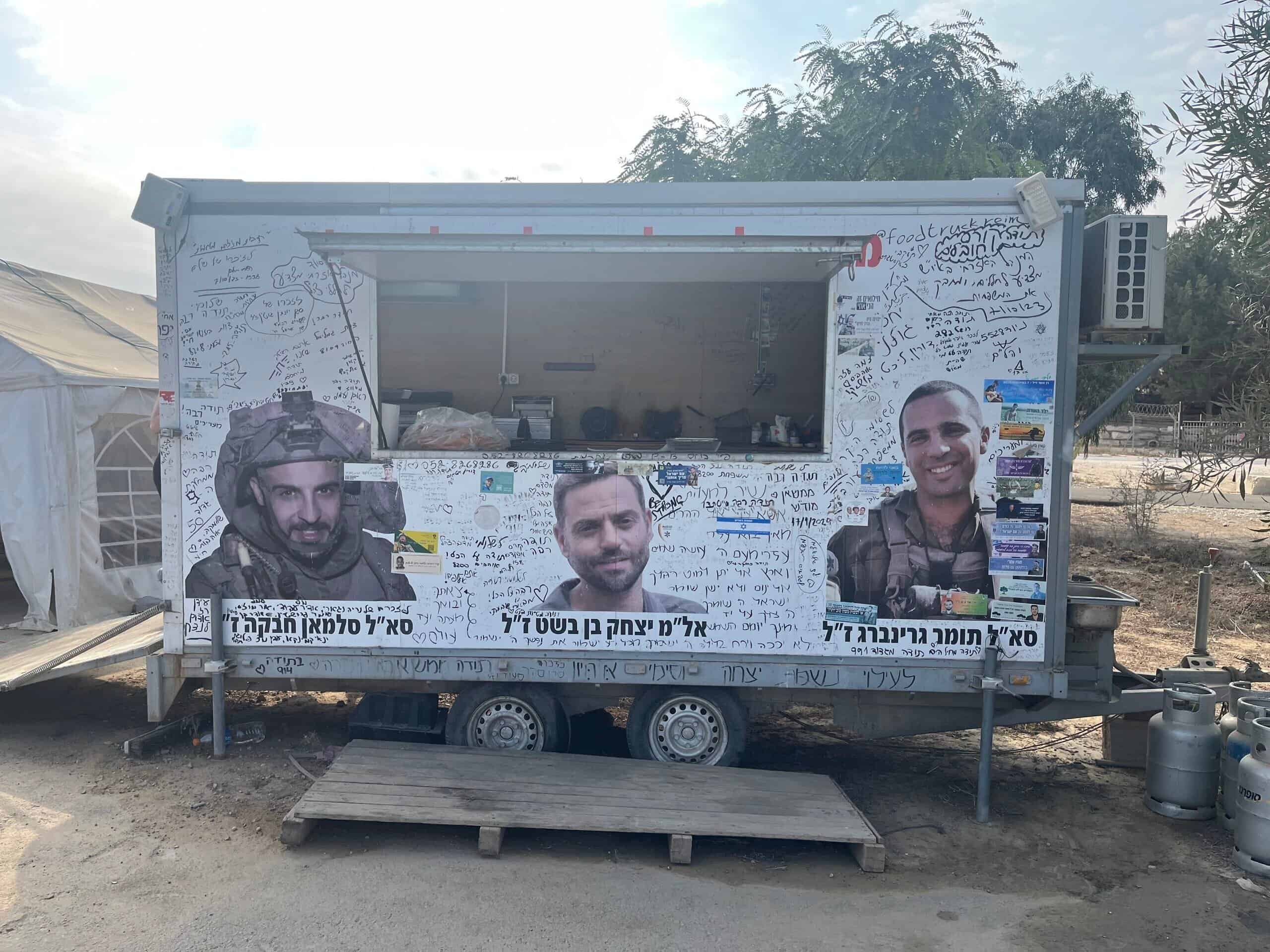
Shlomi Ohaion, a disabled IDF veteran who has been operating a volunteer food truck, feeding hundreds of soldiers a day along the Gaza border since the start of the war, told JNS on Thursday that he is busier than ever.
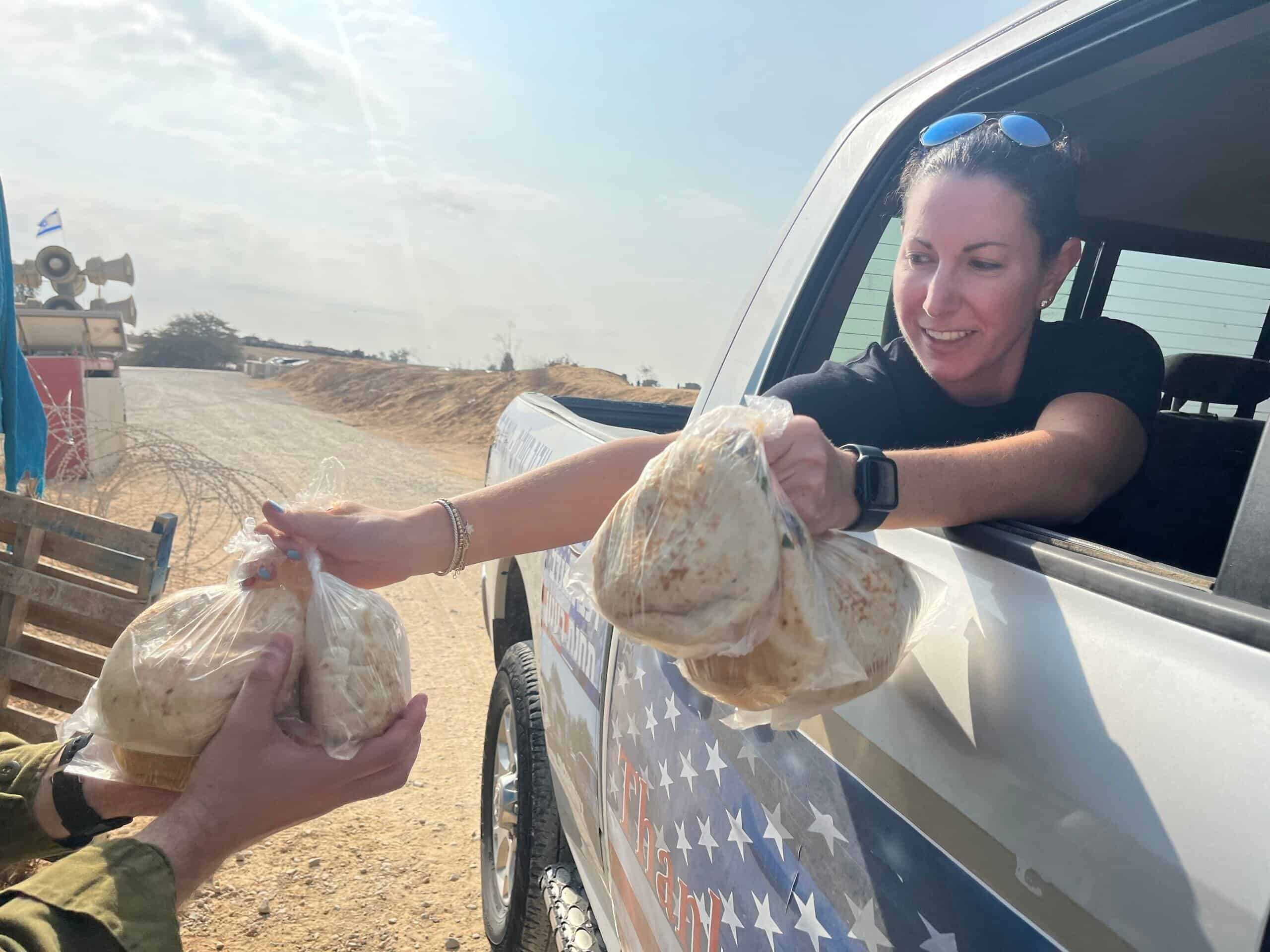
Inching his pickup truck up to an IDF post where troops were securing the border in the Eshkol region, he stopped to hand out falafel and shakshuka sandwiches to the soldiers. Gesturing toward an IDF tank being towed on a flatbed truck, he asked this reporter, “Do you see that tank crossing into Gaza? How can anyone say the war is over, as long as our soldiers are in Gaza and not at home?”
Thirty minutes earlier, Ohaion and a group of 10 other volunteers from Israel and abroad were busy cooking in his food truck and preparing more than 500 fresh sandwiches, assembly-line style, inside a tent just outside Kibbutz Be’eri to be distributed to soldiers in the area.
As explosions rang out in Gaza in the near distance every few minutes, Ohaion shared that he was also active in feeding soldiers in all of Israel’s previous military rounds with Hamas in 2009 (“Operation Cast Lead”), 2012 (“Operation Pillar of Defense”) and 2014 (“Operation Protective Edge”).
He acknowledged that the IDF provides soldiers food daily, but he said his goal is to provide a boost of morale, with a warm sandwich, delivered straight to them in the field.
Even though Ohaion is a volunteer and has heavily dipped into his own savings to operate the food truck, he views his efforts as a full-time job.
“I don’t tell people I’m going to volunteer; this is work. We’re doing this so that the soldiers know we haven’t forgotten about them. We are one big family,” he said.
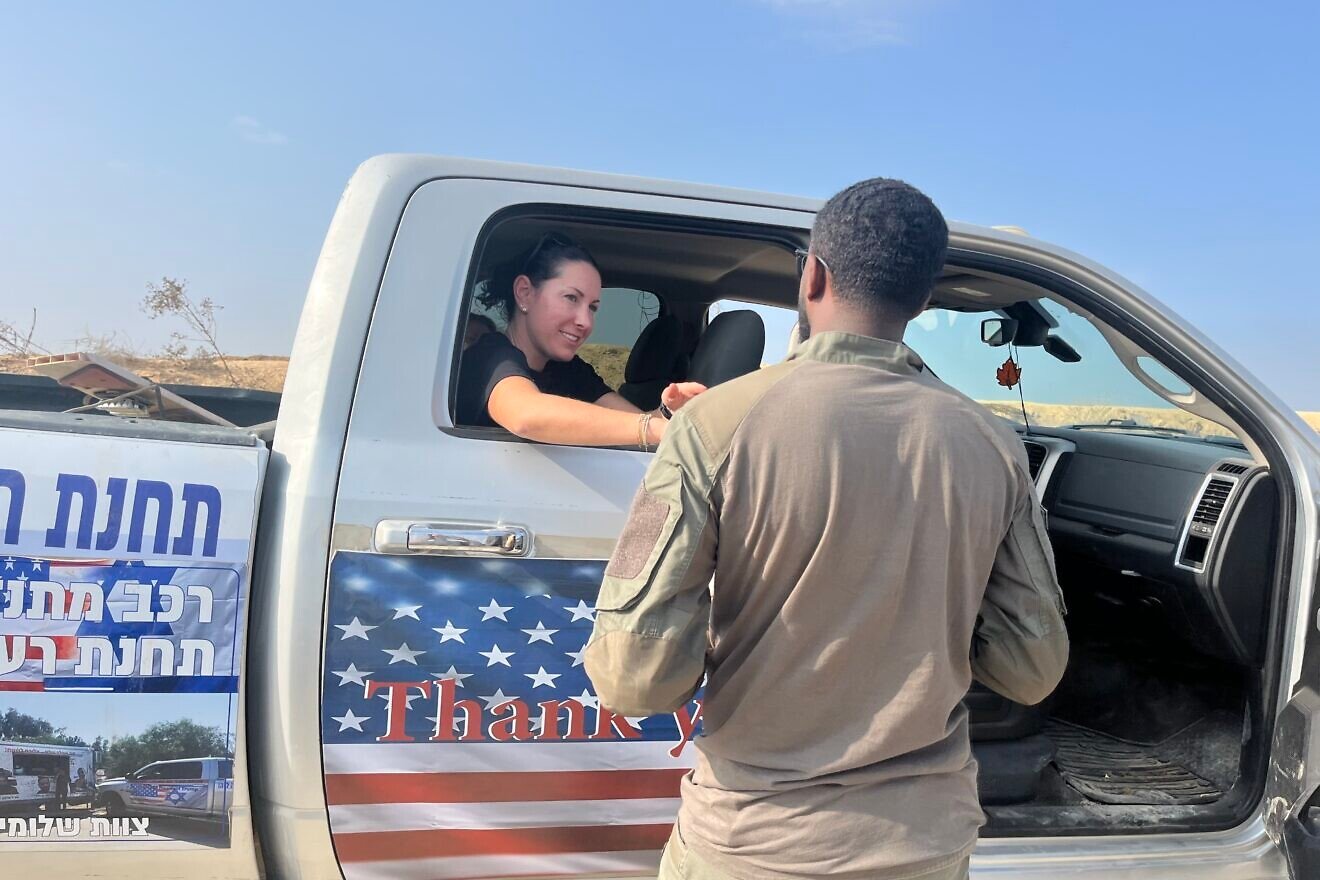
Chaya Hitin, a financial manager from Rehovot who is also the logistics coordinator for initiative, told JNS the premise that the war is over is misleading.
“A ceasefire means we are holding back on offensive operations, but in terms of our enemies and their murderous intentions, we are in full defensive mode on all fronts and borders,” she said.
The Alliance for Secure Jewish Future Inc., which was founded by Daniel Mael, has raised the funds and delivered more than 27,000 combat helmets for IDF soldiers, along with bulletproof vests and plates, and a wide range of tactical gear.
She said the organization’s focus now is to assist the soldiers in harm’s way who support combat troops, including combat medics, D9 armored bulldozer drivers and others on the frontlines who don’t always have the appropriate equipment.
There is also a focus on providing critical equipment to soldiers who might not have the means to purchase it on their own.
She explained: “Our sliding scale subsidy system enables soldiers who can afford to replace their equipment, to purchase independently, [through our connections], and this way we can ensure that every dime of public funding goes to those who are truly needy.”
While the IDF has significantly caught up with much of its distribution and purchasing, the soldiers who reach out to her are usually a class of soldiers the military overlooks or the quality of the equipment they receive is not suitable for their missions, she said.
Hitin emphasized how meaningful and significant it was for her and her colleagues to support the troops.
“As long as there are soldiers out there without basic protective equipment, none of us is safe. They are the frontline defense,” she said.
She added that a lot of soldiers feel left behind, as it seems the country, under a ceasefire, has moved on, “but they are out there because they care and love this country, and want to restore our safety for future generations. By investing in equipment, you’re [donors] are saying, ‘We value that you are paying that price for us.’”

Uri Gobey, a high-tech worker from Yavne, has been utilizing his extensive social media presence to raise substantial funds to support IDF soldiers, including the purchasing of gear, and hosting events for the troops, over the past two years.
Posting under the “Documenting Israel” handle, Gobey has embarked on collaborations with his international followers since right after the start of the war.
He is currently involved in organizing upscale barbeques and parties showing appreciation for soldiers in villas lent out by owners free of charge in various cities.
He told JNS the events are all about boosting soldier’s morale and showing them love.
“On my social media I repeat that the war isn’t over. This is a temporary and ‘fake’ ceasefire,” Gobey said.
He explained that he visits the Gaza border-area soldiers regularly and hears the explosions and shooting all day. He added that he speaks to IDF commanders in the area who say straight up that “they [the terrorists] are trying to kill our soldiers or infiltrate daily,” he said.
Gobey said he also shares videos regularly showing Israeli Air Force strikes in Gaza, documenting that the ceasefire is an illusion.
“I’m still getting requests for gear. Whether it’s helmets, medical equipment, near Gaza, or for use in Judea and Samaria, where it’s now a very active front, there is no ceasefire,” he said.
He also worked with partners raising substantial sums to pay for the weddings of soldiers from poor households, or those who lost money after their wedding halls were booked and were forced to cancel without refund as a result of the war.
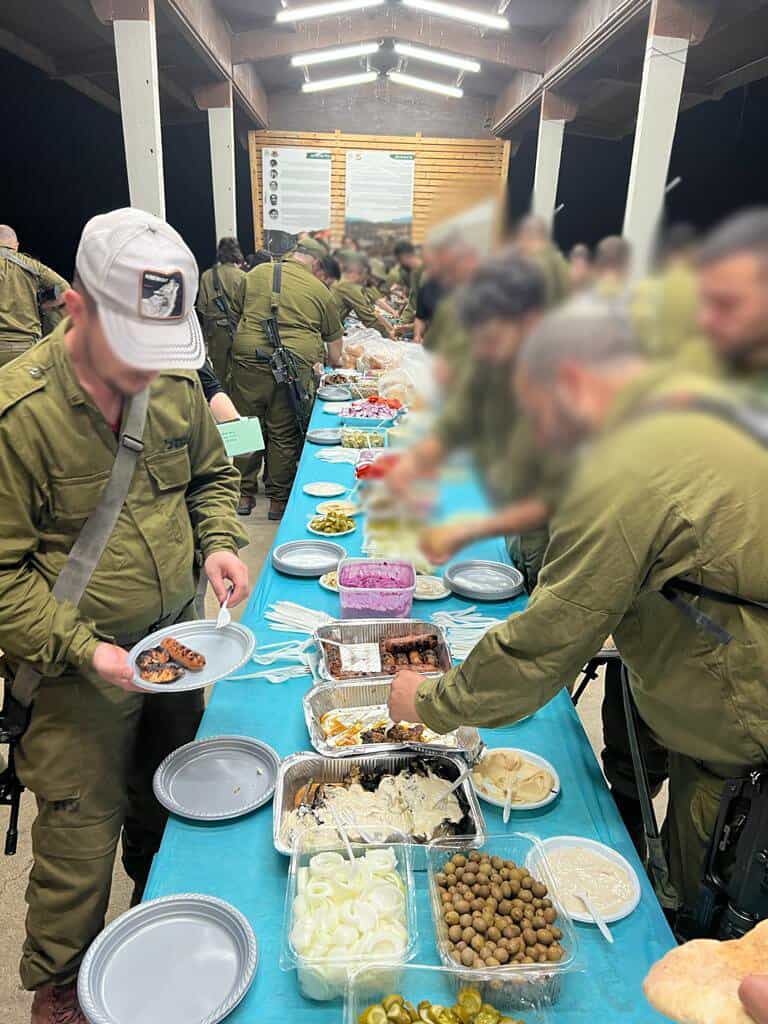
Elliot Auerbacher, co-founder of the “Grilling for IDF” organization, said that since Oct. 8, 2023, his group, which barbeques for the troops, has served more than 296,000 meals for soldiers stationed throughout the country.
He is hosting three times more events with the ceasefire in place, he told JNS.
He said this was his busiest time other than the first few months of the war, with his organization now feeding hundreds of wounded soldiers a week, even setting up grills at taxi stations in hospital parking lots to reach those receiving treatment.
“After two years of fighting, the soldiers need a morale boost, as fatigue has set in everywhere,” Auerbacher said. “The soldiers need to know, now more than ever, that we are here for them. They are grateful and tell us that it is not ‘muvan me’elav’ [taken for granted] that people out there are willing to do this for them.”