



|
Getting your Trinity Audio player ready...
|
By: Fern Sidman
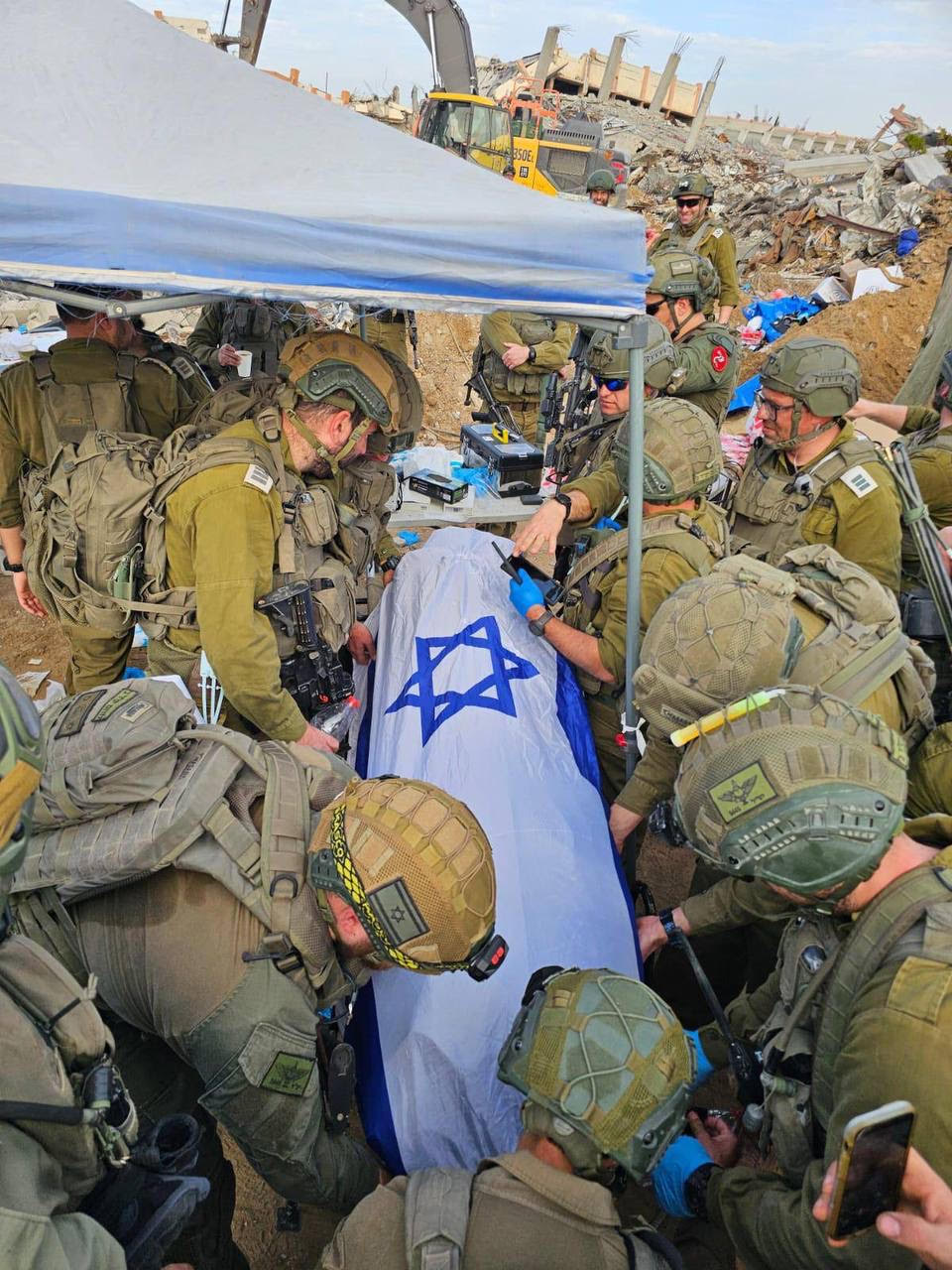
In a moment heavy with grief, reverence, and historical gravity, the State of Israel has closed one of the darkest chapters in its modern national memory. On Monday, the Israel Defense Forces formally announced that Sergeant First Class Ran Gvili — the final hostage held in the Gaza Strip, alive or deceased — has been identified and will be returned for burial in Israel. With his return, there are no longer any Israelis in captivity in Gaza for the first time since 2014 — a somber milestone that carries both relief and unbearable sorrow.
According to a report at Israel National News, the identification process was completed by the National Institute of Forensic Medicine in cooperation with the Israel Police and the Military Rabbinate. Following this confirmation, IDF representatives notified the Gvili family that their beloved son, brother, and protector had been identified and would finally be brought home to rest in the soil of the country he died defending.
Israel National News reported that this moment marks a historic turning point: for the first time in over a decade, no Israeli hostages remain in Gaza — neither living captives nor fallen heroes whose bodies were held as bargaining tools by terrorist organizations. It is a sentence that carries both national relief and unbearable tragedy, because its meaning is not victory, but closure — the end of a long season of anguish, uncertainty, and suspended mourning.
For the Gvili family, closure does not mean healing. It means the end of waiting. It means the beginning of grief without ambiguity. It means a grave instead of hope. A funeral instead of prayers for rescue.
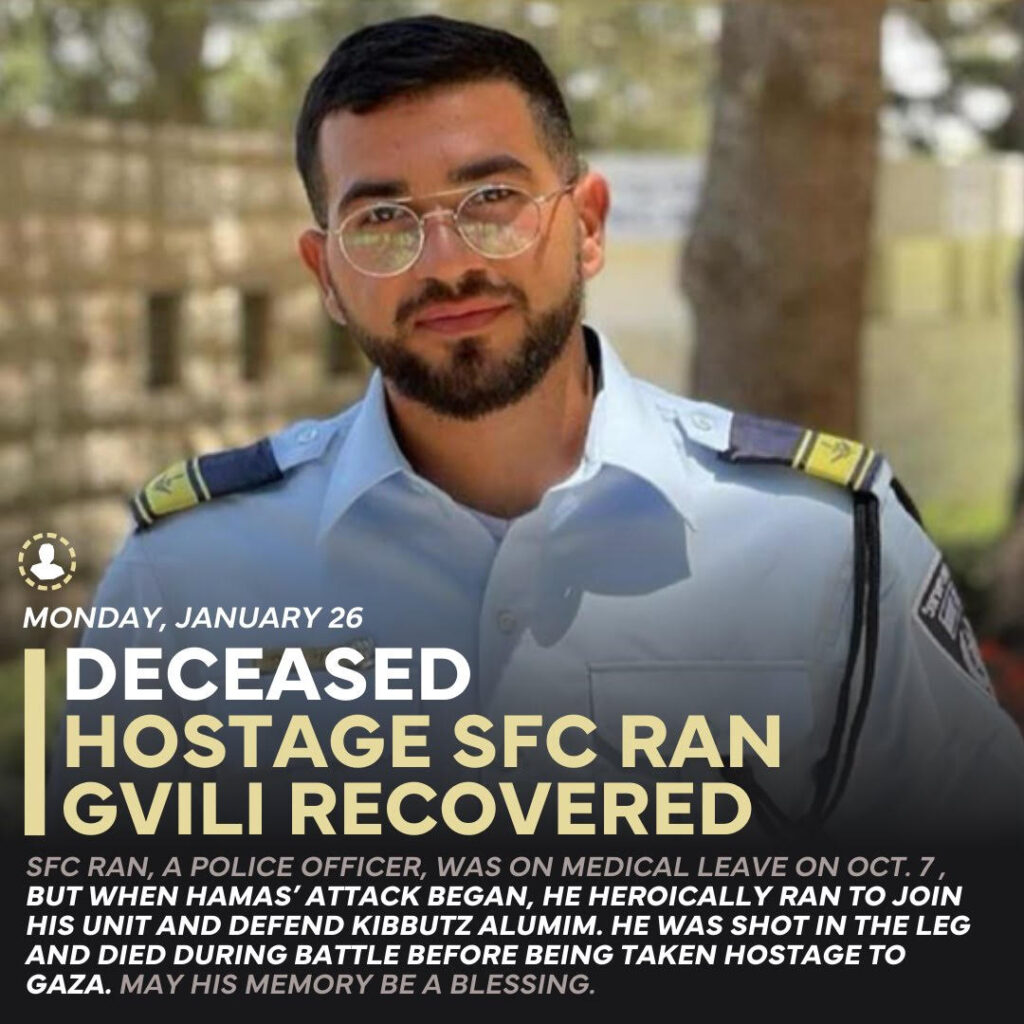
Staff Sergeant Ran (Rani) Gvili, from Meitar, was not meant to be on the battlefield on the morning of October 7, 2023. According to the report at Israel National News, he was at home recovering from a motorcycle accident. His shoulder was fractured. His body was injured. His duty had not summoned him.
But his conscience did.
When news broke of the terrorist infiltration into southern Israel, when the alarms of chaos and massacre began to echo across the country, Ran did not hesitate. Israel National News recounts that he immediately put on his uniform and left his home — not because he was ordered to, but because he could not stay behind.
רני, אנחנו מצדיעים לך 🇮🇱 pic.twitter.com/I6ZQ0I3nO3
— משטרת ישראל (@IL_police) January 26, 2026
He was a YASSAM Negev fighter in the Southern District of the Israel Police — an elite operational unit trained for counterterrorism, high-risk arrests, and frontline combat. But on that morning, he was not acting under command. He was acting under instinct, loyalty, and moral clarity.
Ran drove toward danger.
On his way, he encountered terrorists at the entrance to Kibbutz Alumim. According to Israel National News, he engaged them directly, fighting with courage and determination on the front line, absorbing the first waves of violence meant for civilians inside the kibbutz.
Members of the Alumim community would later give him a name that now belongs to history: “Ran, the Defender of Alumim.”
Not a title bestowed by rank.
Not a medal.
Not a citation.
A name given by civilians who lived because he stood where they could not.
After the battle, Ran was taken captive. His fate became part of the long, agonizing list of hostages whose lives, deaths, and conditions were unknown. His name joined a national ledger of waiting — parents waiting, siblings waiting, a nation waiting.
Israel National News reported that with his return, the hostage chapter that began in 2014 with earlier conflicts has now formally closed. For over a decade, Israel has lived in a state of suspended mourning — not knowing where sons, daughters, soldiers, and civilians were held, whether they were alive, whether they were suffering, whether they would ever return.
That era is now over.
But it ends not in triumph — it ends in funerals.
In its official statement, reported by Israel National News, the IDF expressed deep condolences to the Gvili family and reaffirmed its commitment to supporting both the families of the fallen and the returned, while continuing to strengthen the security of Israel’s citizens.
But beyond official language lies something deeper: an unspoken national covenant — that no Israeli is forgotten, no soldier is abandoned, no body is left behind.
Ran Gvili’s return is not merely a forensic event. It is a fulfillment of that covenant.
It is the state saying: We did not forget you. We did not give up. We did not move on.
Even in death, the return of a fallen hostage carries profound meaning in Israeli culture — because burial in the homeland is not symbolic; it is sacred.
Ran is survived by his parents, Talik and Itzik, his brother Omri, his sister Shira, and an extended family whose lives have been defined by uncertainty since October 2023. The Israel National News report described a family that waited through seasons of silence, reports, rumors, negotiations, military operations, and international diplomacy — never knowing when the waiting would end, or how.
Now the waiting is over. But grief is permanent. There will be no reunion. No embrace. No hospital room miracle. No doorway moment. There will be a funeral. There will be a flag. There will be a uniform. There will be earth. And there will be a nation standing with them.
The Israel National News report emphasized the historical magnitude of this moment. Since 2014, Israel has lived with hostages in Gaza — soldiers, civilians, bodies held for leverage, negotiation, propaganda, and psychological warfare.
This is the first time in eleven years that Gaza holds none.
That reality reshapes Israel’s strategic, moral, and psychological landscape. It closes a chapter that defined entire military doctrines, diplomatic efforts, and national anxieties.
But it does so through loss — not victory. Through funerals — not celebrations.
Ran Gvili’s story will not remain only in military archives or police records. His name now belongs to the moral memory of the nation — alongside those who ran toward danger when they could have stayed home, who fought while injured, who stood at entrances instead of doorways, who chose protection over preservation.
Israel National News has repeatedly highlighted the symbolic power of individuals like Ran — ordinary citizens who become extraordinary through action, not ambition.
He did not seek heroism. He did not seek recognition. He did not seek history. History found him.
The return of Ran Gvili marks the end of a national hostage era — but not the end of national mourning.
Israel National News reported that this moment carries a dual truth: relief that captivity has ended, and sorrow that so many stories ended in death rather than return.
It is closure without comfort. Resolution without peace. Completion without healing.
As Israel prepares to lay Ran Gvili to rest, it does so not only as a soldier, not only as a policeman, not only as a hostage — but as a symbol of a generation that refuses to abandon each other.
A generation that runs toward fire. A generation that answers without orders. A generation that understands duty not as obligation, but as identity.
Israel National News has chronicled many moments of war, heroism, and loss — but this one stands apart because it closes a chapter that began years ago and ended in silence.
No more hostages. No more waiting. No more lists. Only memory. Only graves. Only names.
And among them, forever carved into Israel’s moral stone:
Ran Gvili — Defender of Alumim.
Son of Israel.
Guardian of strangers.
Warrior of conscience.
Last hostage returned home.
May his memory be a blessing.
May his name be a shield.
May his story be a compass.
And may Israel never again have to close a chapter like this one.
